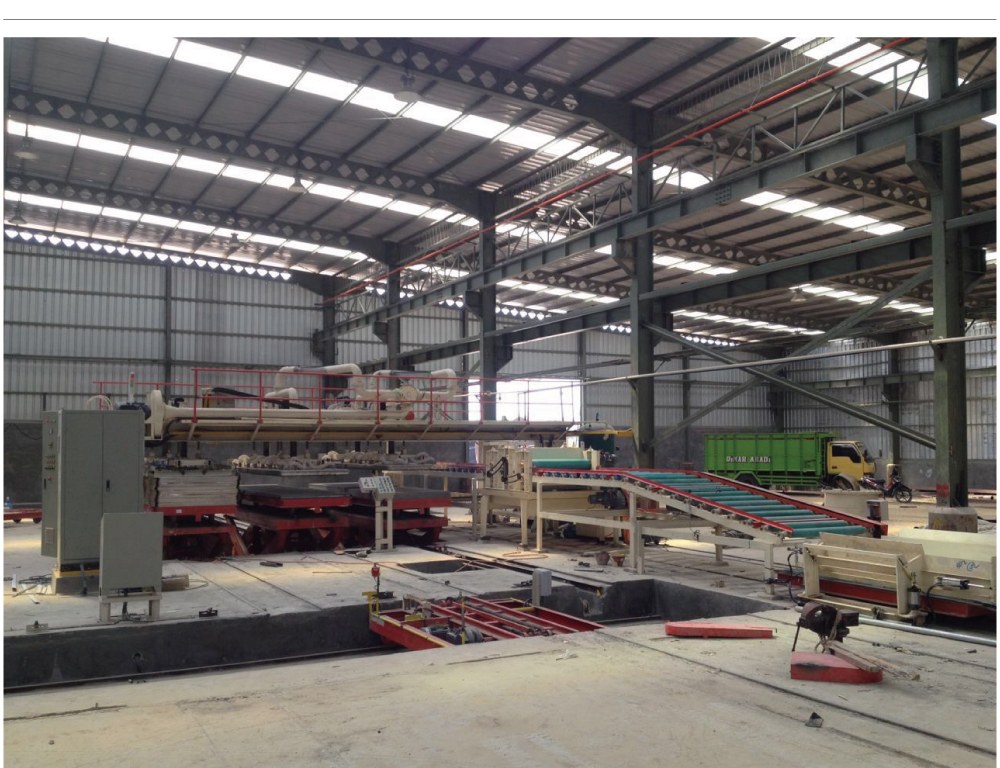
Felts and meshXinhuibo
Fiber-cement forming felt 94047-1 · 1650 g/m²
Basis weight1650г/м²
- TAMINOTA part number
- TMN-XHB-F02
- Manufacturer part number
- 94047-1
A forming felt for fiber cement stock. Plain weave, good dewatering. Sized to the width of the customer’s machine.
- Brand
- Xinhuibo
- Category
- Felts and mesh
- Industry
- Asbestos and fiber cement
- Availability
- Made to order
What to send for selection
- 01Machine model and forming method
- 02Slurry: asbestos cement or fiber cement
- 03Belt length under tension and width — from the machine passport or a previous order
- 04Joint: endless or seamed
- 05Photos of the machine nameplate and the old felt
Specifications
TMN-XHB-F02
- Weave
- Полотняное
- Purpose
- Фиброцементная масса
Dimensions for ordering
- Basis weight
- 1650 г/м²
- Width
- confirmed from your machine dimensions
- Belt length
- confirmed from your machine dimensions
- Thickness
- confirmed from your machine dimensions
- Air permeability
- confirmed from your machine dimensions
How to get this item
- 01You send the part number or a nameplate photo
- 02You get the plant’s invoice and a lead time
- 03Inspection at the plant, delivery, documents
Related articles
- Plant or trader: who replaces a defective partA defect is claimed from the party you signed the contract with. If the contract is with the manufacturing plant, the plant replaces the part. If it is with a trader, it depends on whether the trader has a contract with the plant.
- How to put together a request for several spare parts at oncePut all items into one table: one row, one spare part. In each row give what it is, the model or marking, the dimensions, the quantity, the machine it sits on and a photo. The supplier can work through such a request at once, without a dozen emails asking you to clarify.
- When to order a sample before the lot, and when you don't need oneA sample is needed when quality cannot be described by a number: forming fabrics, screens, knives, rubber products, parts made to a drawing, a new plant. It is not needed for a standard unit with a catalog number, such as a bearing or a motor. An approved sample becomes the reference against which the whole lot is checked.
- Wrong part or defect arrived: what to do, step by stepDo not install the disputed part on the machine. Photograph it, record the discrepancy in a report, check it against the order and notify the supplier in writing: what was ordered, what arrived, and what you want: a replacement, a supplementary delivery or a fix. The sooner and more precise the paper, the shorter the dispute.
- Which spare parts to keep in stock so the line does not stopKeep in stock what fails suddenly, stops the whole line and cannot be found in Uzbekistan: bearings for critical units, controllers and modules, sensors, forming fabrics, knives, seals. What is sold locally or has a standby on the line can be ordered as needed.
- Forming felt for sheet lines: how to choose and when to changeChoose the felt by the slurry the machine runs on (asbestos cement or fibre cement), the type of fabric (woven or needle-punched), the density in g/m² and the exact width and length of your machine. Change it when it clogs and drains poorly, stretches or starts to mark the sheet.
- Why forming felt clogs fast and how to make it last longerThe felt on a sheet machine is clogged by cement and fines from the slurry; this is unavoidable. It clogs fast when washing cannot cope, when the slurry is not what it should be, or when the felt does not suit the slurry. Its life is extended by sprays, suction, correct tension and a stable slurry, not only by changing the supplier.
- Fitting a new felt on the machine without ruining it in the first daysA new felt goes onto a clean machine with checked rolls, doctors and sprays, strictly along the direction arrow. Tension it gradually, bring it up to speed with water and only then feed slurry. A new felt is ruined by skew, dirt on the rolls, sudden tension, a dry start and knocks against the edge.
- How to measure a forming felt and cylinder screen for an orderTo order a felt you need the length of the closed loop under working tension, the width, the joint type (endless or seamed), the fabric type and density, the slurry and the machine. Take the length from the machine passport or a previous order; if you measure on the machine, use a non-stretch cord with the tensioner at mid-travel, never the old felt lying on the floor.
- How to trial a felt from another maker without risking outputA new felt is trialed on one machine, with a proven felt in reserve nearby. Before installation, record how your current felts perform; during the trial, record vacuum, sheet thickness and moisture, marks on the sheet, washes and the day of removal. Compare felts of the same age. One trial felt shows whether the fabric suits your machine at all, but does not prove the whole lot will be the same.
- European line: can you use Chinese equivalents of spare partsYou can, but not equally for everything. Standard units — bearings, motors, pneumatics, general-purpose pumps — are chosen by the parameters and marking of the unit itself: their dimensions are common under international standards. Felts and screens only after a trial on the machine. Proprietary electronics and unique parts of the line are safer to take from its manufacturer or to make from a sample with checking.
- How to draw up a slate plant's annual request for parts and feltsAn annual request is one table by lines and units: item, marking or size, consumption per year, stock, how much to order, urgency, who approved. Consumption is taken from the replacement log, not from memory. Items are divided into long (felts, screens, parts to drawing) and quick, and the long ones are sent as one package in advance.
- How to choose a felt and screen supplier: what to ask before orderingBefore ordering, find out five things: whether the supplier makes the felts himself or resells them; on what slurries and machines his felts already work; whether there is a data sheet with the test methods; how he keeps lots uniform; how he handles a claim. Then one trial felt on your machine, and only after that a stock.
- Why a slate sheet delaminates and how to find the causeA sheet delaminates when the layers built up on the format drum did not bond to each other. Look for the cause along the path of the sheet: slurry, screen, felt, vacuum, drum pressure and press, curing, demolding. Most often the culprits are a film that is too wet or too dry, a clogged felt and weak compaction.
- Sheet thickness varies across or along: what has gone wrongThickness that varies across the width of the sheet almost always comes from an uneven layer building up on the screen or felt: a clogged screen, a skewed or worn felt, uneven vacuum across the width. Thickness that varies along the length and from sheet to sheet comes from slurry concentration and the number of turns on the format drum.
- Felt or screen marks on the sheet surface: defect or normalA light, even felt pattern on the underside of a corrugated sheet is normal: under GOST the back of the sheet is by definition the surface with felt or mesh imprints. The mark becomes a defect when it is sharp and uneven: a stripe from the seam, the imprint of a coarse yarn, patches from clogged areas. Then it points to a worn or greasy felt, wrong tension or wrong squeezing.
- Slate lets water through: watertightness and water absorptionWatertightness is whether water passes through the sheet: under the GOST a column of water is placed on the sheet and after a day the underside is checked for drops. Water absorption is how much water the sheet soaks up; the GOST does not set a limit for it but gives a method. A porous sheet that soaks up a lot of water and lets it through most often has too little cement, weak compaction or early curing.
- The Hatschek process in plain words: how a sheet is made from slurryIn the Hatschek process the sheet is built from many thin films. A mesh cylinder in a vat of liquid slurry filters out the water and leaves a film on the screen, the felt lifts it off and carries it over the vacuum to the format drum, and the drum winds it on layer after layer to the required thickness. Then the wrap is cut open, the sheet is corrugated or left flat, and sent to curing.
- How much vacuum a sheet needs, and what too little or too much doesThe vacuum under the felt sucks water out of the film before it reaches the format drum. Too little vacuum and the film arrives wet, the layers press together poorly, and the sheet slumps and delaminates. Too much and the film dries out and bonds worse with the next layer, and the felt wears and clogs faster. There is no single number for all lines: the vacuum level is set by the regulations and watched by the gauge and by the sheet.
- EN 494 and ISO 10904: when you need them instead of GOSTEN 494 is the European standard for fibre-cement profiled sheets, ISO 10904:2011 the international one; ISO 9933 was withdrawn in 2011 and replaced by ISO 10904. Both describe asbestos-free sheets and test them differently from GOST: classes by profile height, breaking load and bending moment, and ageing tests. They are asked for in exports outside the CIS and in projects where the client works to European or international norms.
- Chinese names of slate line units: felt, screen, autoclaveAt a Chinese plant the felt is 毛毯, the drying mesh is 螺旋干网, the autoclave is 养护釜 or 高压釜, the demolding machine is 脱模机. One unit often goes by two or three names: one word in the catalog, another in a patent or in correspondence. So the Chinese name in a request helps, but the photo, dimensions and nameplate decide.
- Rubber-covered rolls: Shore hardness and when to recover themOn a slate machine the rolls that press on the felt are rubber-covered: the couch roll over the cylinder screen, the roll that presses the felt to the format drum, some guide and transport rolls. Cover hardness is measured on the Shore A scale. A roll is recovered when the cover peels, cracks, wears unevenly or goes out of tolerance on hardness and diameter.
- Slate line stopped: what to do in the first hoursWhen a line stops for a long time, the main thing in the first hours is not to let the cement slurry harden where you would later have to chip it out: in the vats, agitators, pipes, on the screens and the felt. Keep the slurry moving or drain it, wash the screens and felt, then look for the cause, and only after that order the part.
- Failure log: how to tell what breaks most often on the lineA failure log is one line for every stop of the line: when it stopped, which unit, what happened, why, which part was replaced, how long it stood. After a month or two these lines show a few units that give most of the downtime. That is where spare parts stock and planned repairs are concentrated.
- Planned maintenance of a slate line: what to do at each stopPlanned maintenance of a slate line has three levels: an inspection every shift, a short planned stop and a major seasonal overhaul. Each level has its own list of work and its own list of spare parts. The major overhaul is set for the time when slate sales are lower, and the parts for it are ordered in advance.
- Chinese, European or used line: how to compareLines are compared not by country and not by the first figure in the quotation, but by five things: what is in the supply, which units wear fastest and where to get spare parts for them, who starts the line up and trains the staff, what documents come with it, and which risks stay with you. A table with these items for each option is the comparison.
- Technical specification for a slate line: what to write to the plantA technical specification is your requirements for the line on paper: which sheet and to which standard, from what raw materials, how much per shift, how it cures, what is in the supply, what automation, in what language the documents are, which spare parts and training, how you will accept it. It is attached to the contract, and the line is later accepted against it.
- Starting a new line: what goes wrong in the first weeksIn the first weeks a new line almost always gives less sheet and more rejects than promised: the slurry and felts are not yet matched to your raw materials and water, the shifts are learning, the units are running in, small installation flaws surface one after another. This is normal if every stoppage and every kind of reject is recorded: these records are needed both for tuning and for the warranty.
Request
Send a part number or a photo — we will find the factory
Items from the catalog · 1
- TMN-XHB-F02 · Fiber-cement forming felt 94047-1 · 1650 g/m²