How much vacuum a sheet needs, and what too little or too much does
The vacuum under the felt sucks water out of the film before it reaches the format drum. Too little vacuum and the film arrives wet, the layers press together poorly, and the sheet slumps and delaminates. Too much and the film dries out and bonds worse with the next layer, and the felt wears and clogs faster. There is no single number for all lines: the vacuum level is set by the regulations and watched by the gauge and by the sheet.
In short
5minutes to read
7sections
7sources
4catalog items
In this article
- 01What the owner and the chief mechanic need to decide
- 02Where the vacuum is on the machine and what it does
- 03What happens if the vacuum is too low
- 04What happens if the vacuum is too high
- 05Why the vacuum changes by itself
Contents
On a Hatschek machine the film that the felt has lifted off the mesh cylinder is still very wet. Before the format drum it is carried over the vacuum boxes: suction pulls water down through the felt. The aim is to deliver to the drum a film of such moisture that it lies tightly on the previous layer and bonds well with it. Too little vacuum: the film is wet, the layers slide and are pressed poorly, and after being taken off the sheet slumps and delaminates. Too much vacuum: the film dries out, the bond between the layers in the wet state weakens, the felt is pressed harder against the slats and wears faster. There is no single correct number: the suction level depends on the slurry, the felt, the machine speed and the sheet thickness, and is written into the process regulations.
What the owner and the chief mechanic need to decide
- Whether the machine has a vacuum gauge on every box and whether the reading is recorded. Without a record you cannot tell when the vacuum began to change and link it to rejects.
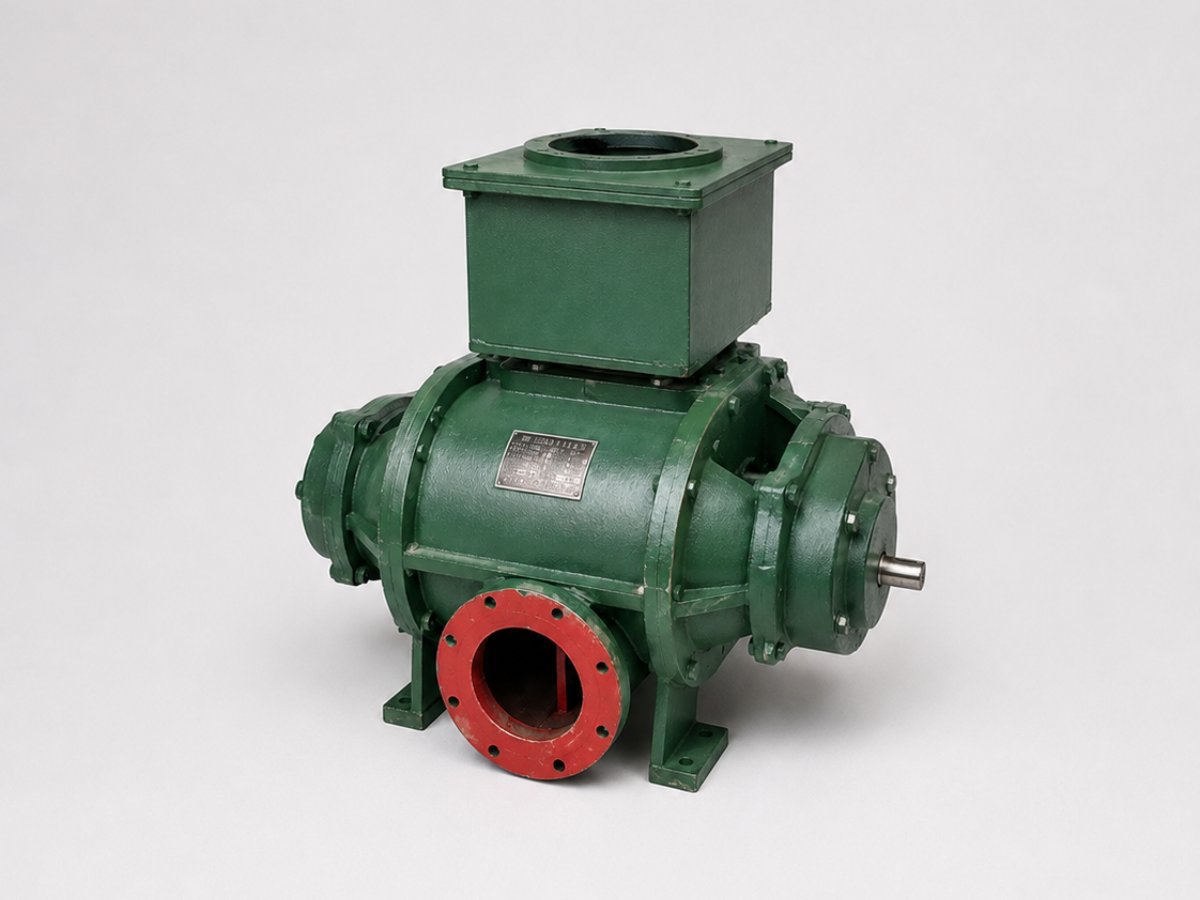
- Pump and separator go on the same spares list as the felt. Vacuum is lost not only through the pump: air leaking into the pipes, worn slats, a clogged water separator.
- A rise in vacuum is a signal about the felt. If the pump and the gate valves have not been touched and the vacuum creeps up, the felt is losing permeability. It is worth knowing this before rejects begin.
Where the vacuum is on the machine and what it does
| Place | What it does |
|---|---|
| Boxes under the felt after the mesh cylinders (toward the drum) | suck water out of the film through the felt |
| Box under the felt after washing (on the return run) | dries the felt itself so it can pick up the film from the screen again |
| Vacuum cups of transfer units and stackers | hold the raw sheet during transfer; this is a different circuit, covered in the articles on the corrugator and the stacker |
In the description of a domestic equipment complex for corrugated sheets, the format mill has two vacuum boxes: the lower one dries the felt after washing, the upper one sucks moisture out of the layer.
What happens if the vacuum is too low
- The film arrives at the drum wet. Water that the vacuum did not take is squeezed out between the drum and the backing roll, and the layers slide.
- The raw sheet, after the wrap is cut, slumps, runs at the edges and holds the wave poorly.
- The bond between layers is weak, and the sheet delaminates.
- Signs: the vacuum gauge reads lower than usual, more water runs from under the backing roll, the sheet is heavier than usual.
What happens if the vacuum is too high
- The film loses too much water. One fibre-cement patent directly discusses the case where delamination is explained by an over-dried raw sheet: layers short of moisture bond weakly.
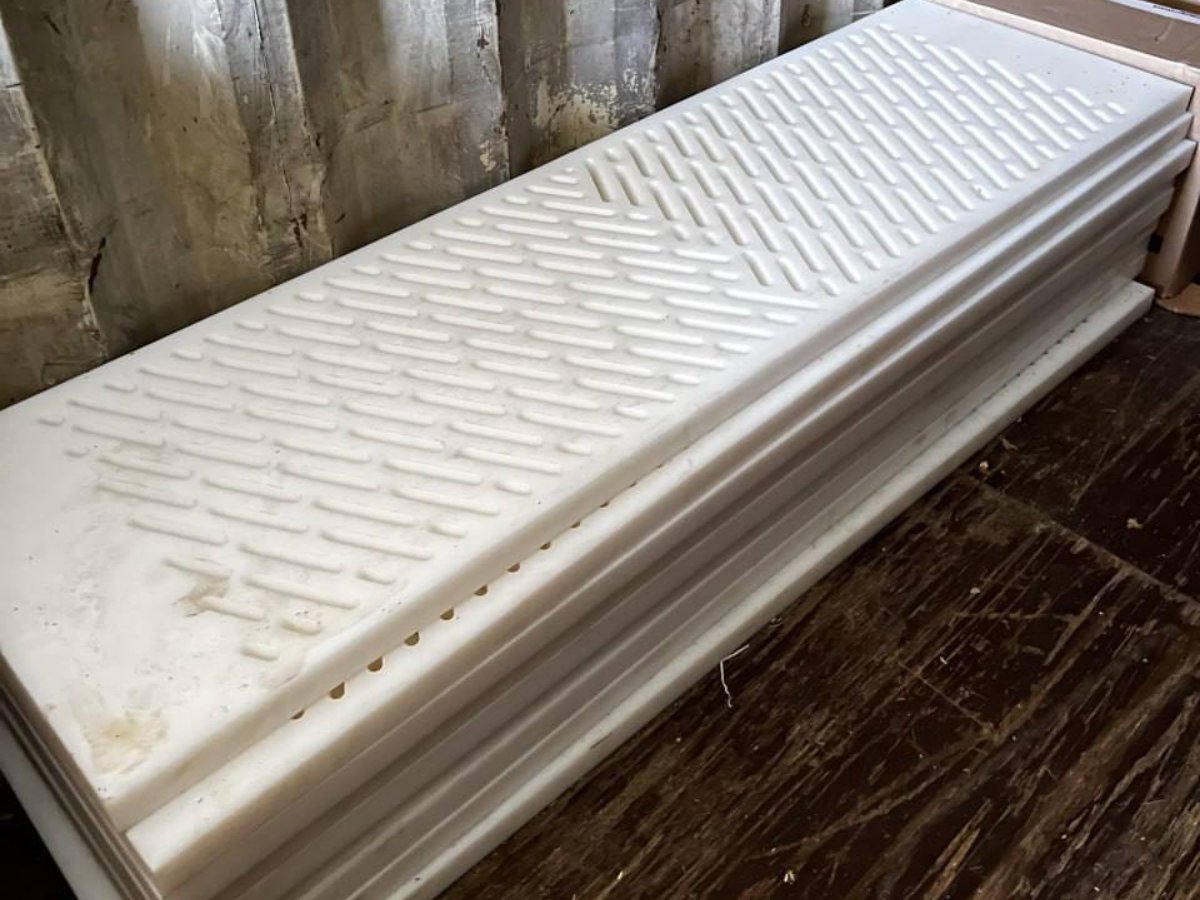
- The felt is pressed harder against the slats of the vacuum boxes: friction rises, the felt and the slat coating wear faster, fines are drawn deeper into the felt, and it clogs faster.
- The vacuum pulls through the felt not only water but fine cement from the surface layers. A building materials technology textbook names this as one cause of uneven sheet density, because of which the sheet later warps when it gets wet.
- Energy use by the pump rises, with no benefit for the sheet.
Why the vacuum changes by itself
As it runs, the felt clogs with cement and fines and passes water and air worse. With the same pump, the suction in the box rises and less water goes through the felt. In the paper industry this problem is solved with systems that change the time the felt spends over the slots so that the vacuum stays almost constant as the felt's permeability falls. On a slate machine the same is done more simply: by washing and conditioning the felt and replacing it in good time.
The opposite picture is the vacuum falling at the same setting. Causes: air leaking in (a crack in a pipe, a worn slat, a torn seal), an overfilled water separator, a worn pump, a torn or badly stretched felt.
What to check if delamination or a wet sheet has appeared
- The vacuum gauge readings for every box and the record for the last shifts.
- The pump: motor current, supply of sealing water if it is a liquid ring pump.
- The separator and drainage: whether water is leaving, whether there is overflow.
- The slats of the vacuum boxes: wear, chips, flatness of the surface.
- The condition of the felt: clogging, washing, tension.
- The slurry concentration: a thicker slurry gives a thicker and wetter film.
How we do it
- From a photo, dimensions and the passport of the felt or unit, we look for the item at the manufacturing plant. What we find, with the price, photos and specifications, we send before the order.
- We check the batch at the plant before shipment: article number, dimensions, batch, packaging.
What this article relies on
Below are the documents and materials we refer to, so that you can check what is said for yourself.
Reference materials
- Rybyev I. A. "Building Materials Science" (Строительное материаловедение), section "Fundamentals of asbestos-cement product manufacturing": vacuum box under the felt before the format drum, squeezing of layers, reducing sheet moisturestudme.org ↗
- "SM-1155 equipment complex for making corrugated asbestos-cement sheets" (stroy-technics.ru): the lower vacuum box dries the felt after washing, the upper one sucks moisture out of the layerstroy-technics.ru ↗
- "Technology of Production of Building Materials, Products and Structures" (Технология производства строительных материалов, изделий и конструкций), clause 5.4.2 "Production of sheet products" (bibliotekar.ru): vacuuming the layer being formed draws cement out of the surface layers and makes sheet density unevenbibliotekar.ru ↗
- Patent US 9415564 "Felt for forming fiber cement articles": vacuum boxes under the felt of a Hatschek machine remove moisture from the filmpatents.google.com ↗
- Patent EP 0168191: the vacuum box takes water from the film, then water is squeezed out between the rollspatents.google.com ↗
- Patent US 6346146 "Building products": delamination of the raw sheet, the version about an over-dried sheet and a weak wet bond between layerspatents.google.com ↗
- Patent US 4329201 "Constant vacuum felt dewatering system": as felt permeability falls, the vacuum in the suction pipe rises; the system holds the suction constantpatents.google.com ↗
The link "too much vacuum, wear of the felt and slats" is a conclusion from the design of the vacuum box, and is flagged as such. The suction level for your line is set by the process regulations.