Planned maintenance of a slate line: what to do at each stop
Planned maintenance of a slate line has three levels: an inspection every shift, a short planned stop and a major seasonal overhaul. Each level has its own list of work and its own list of spare parts. The major overhaul is set for the time when slate sales are lower, and the parts for it are ordered in advance.
In short
4minutes to read
7sections
4sources
4catalog items
In this article
Contents
Planned maintenance is work done on a schedule drawn up in advance, so that the line does not break down suddenly. On a slate line it is convenient to keep three levels: a short inspection every shift, a short planned stop and a major seasonal overhaul. The higher the level, the deeper the units are taken apart and the more parts must be on hand in advance. The major overhaul is set for the months when slate sells worse, and the parts for it are ordered so that they arrive before the stop, not during it.
What the owner and the buyer should decide
- When the major overhaul is. Usually in the low season for roofing sales. In the cold season the question of water and heat is added to this; see the article on winter at a slate plant.
- What to buy in advance. The list of parts for the seasonal overhaul is drawn up from the failure log and from the inspections over the year, not on the day of the stop.
- Who does it. Your own mechanics, a service company or a specialist of the manufacturing plant: this is decided before the stop, not after.
Where the scheme comes from
In domestic (Russian) practice this is called the planned preventive maintenance system (PPM, "ППР"). It includes maintenance (inspection, checking, washing, lubrication) and planned repairs: routine, medium and major. The point is to replace a worn part before it stops the line. Norms for the intervals exist in textbooks and industry regulations for their own industries; for a slate line they are set by the machine passport, the manufacturer's manual and your own failure log.
Every shift: inspection
Done by the shift mechanic and the operator, on the run or in a short pause.
- Felt: tension, running without drifting, edges, washing works across the whole width.
- Cylinder screens: no tears or clogged stripes.
- Vacuum by boxes: readings within the usual limits for your line.
- Bearing units: no knocking, no overheating to the touch, no lubricant leaks.
- Slurry and sludge pumps: no leak at the seal, pressure has not dropped.
- Cutting: condition of knives and discs, straightness of the edge.
- Press hydraulics: oil level, leaks, pressure holds.
- Anything noticed goes into the failure log, even if it did not stop the line.
A planned stop of several hours
Set by schedule; the interval is set by the machine passport and your failure log.
- Full washing of screens, felt, vacuum boxes, vats.
- Replacing the felt, if it has run its life by your experience or no longer releases water. How to install a new felt is covered in a separate article.
- Lubrication of bearing units by the lubrication chart. In cement dust the intervals are shorter than in a clean shop.
- Checking and replacing cutting knives and discs.
- Inspecting and tightening drive belts and chains, couplings.
- Checking interlocks and emergency stops.
Seasonal overhaul
The line is stopped for days or weeks.
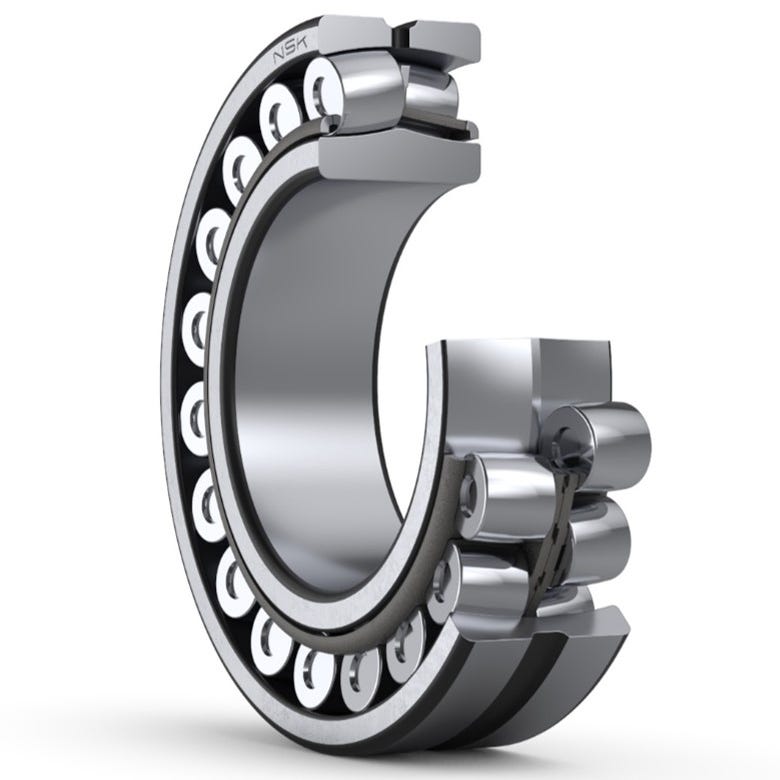
- Revision of the bearings of critical shafts of the forming machine, replacement of worn ones.
- Checking the format drum and pressure rolls: runout, surface wear.
- Vacuum box covers, seals, the vacuum pump.
- Hydraulic press: cylinder seals, pump, valves, hoses.
- Drives: gearboxes (oil, backlash), electric motors (insulation, bearings).
- Automation cabinets: cleaning of dust, tightening of terminals, sensors.
- Demolding, stacker, conveyors: chains, rollers, suction cups.
- Slurry preparation: fittings, lining, pumps.
- For the autoclave and the boiler: inspections under the rules of your country, if they coincide with the overhaul date.
How to tie the schedule to the stock of spare parts
- From last year's failure log, list the parts that were replaced at each level.
- Divide them: what is needed for a shift and a week is always kept in stock; what is needed for the seasonal overhaul is ordered for the date of the overhaul.
- After the overhaul, record what was actually replaced and what condition the removed parts were in. This is the basis of next year's list.
How we do it
- We look for spare part items at the manufacturing plant by number, drawing or photo of the unit. What we find, with the price and photos, we send before the order.
- Your "yes" on each line of what we found is the order command.
- We inspect the lot at the plant before shipment: part number, dimensions, lot, packaging.
What this article relies on
Below are the documents and materials we refer to, so that you can check what is said for yourself.
Reference materials
- Course "Enterprise Economics" (Экономика предприятия), topic "Enterprise infrastructure": the composition of the PPM system, maintenance and routine, medium and major repairstudfile.net ↗
- Razumov, EKRA materials on the PPM system: the planned and preventive character of repairssib.ekra.ru ↗
- Regulation of JSC Russian Railways on planned preventive maintenance of multiple-unit rolling stock (order No. 2585r of 19.12.2016; replaced from 01.02.2024 by order No. 60/r of 15.01.2024): types and frequency of maintenance and repair as an example of an industry regulationrulaws.ru ↗
- Rybyev I. A. "Building Materials Science" (Строительное материаловедение), section "Fundamentals of asbestos-cement product manufacturing": the units of the sheet forming machine (vats, cylinder screens, felt, vacuum box, format drum, washing device)studme.org ↗
The lists of work are drawn up from the design of the Hatschek line; the intervals and scope of the overhaul follow the machine passport and the process regulations of your plant.