Standalone machineXinhuibo
PLC-based line automation system
Operator panels2× сенсорные HD
- TAMINOTA part number
- TMN-XHB-09
- Operators per line
- 4
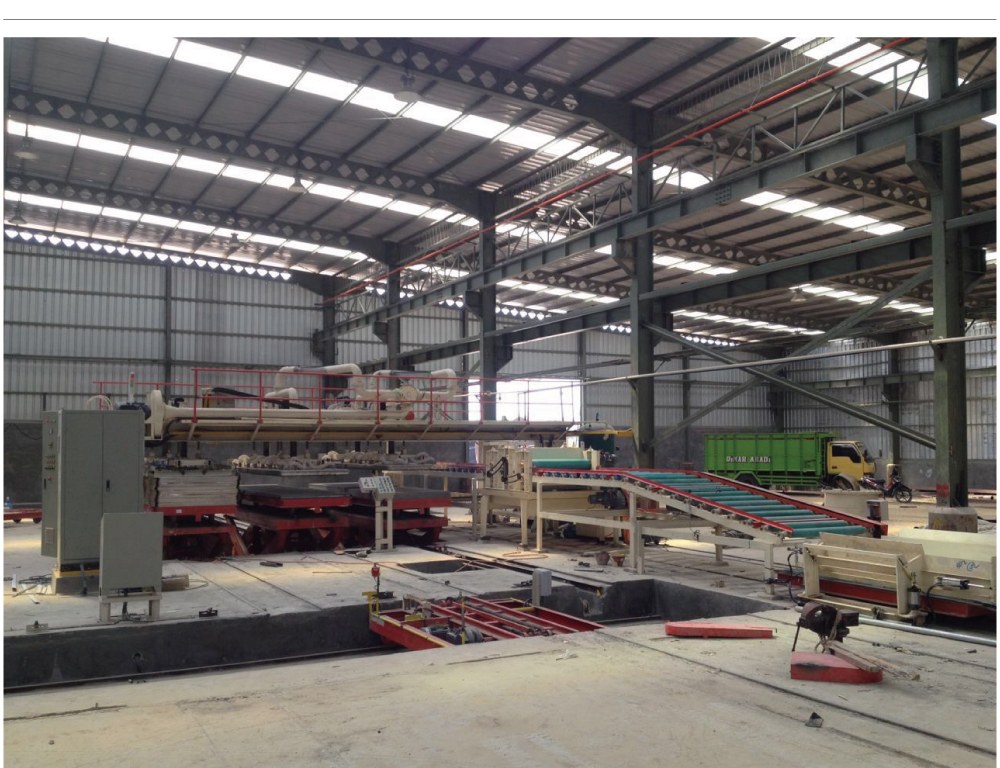
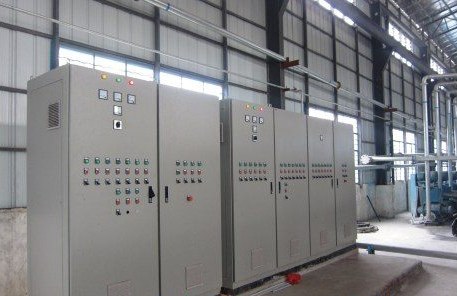
The control system is built around two high-resolution color touch panels and several PLCs. The operator enters the base data for the product: thickness, density, felt and belt speed. In operation the system adjusts the slurry-to-water ratio against the actual thickness of the blank; if the thickness leaves the range, the ratio is corrected automatically. Raw material dosing, the forming machine, the white water loop, stacking, material return and trolley changeover are automated. On a fault the system displays the failure with its location. The plant has supplied lines with a Russian-language operator interface.
- Brand
- Xinhuibo
- Category
- Standalone machine
- Industry
- Asbestos and fiber cement
- Availability
- Project supply
What to send for selection
- 01Part number or the number on the nameplate
- 02Photos of the unit and its nameplate
- 03Model of the machine the unit is fitted to
- 04Quantity
Specifications
TMN-XHB-09
- Equipment
- SIEMENS · SCHNEIDER · ABB · OMRON
- Localisation
- Русский интерфейс
How to get this item
- 01You send the part number or a nameplate photo
- 02You get the plant’s invoice and a lead time
- 03Inspection at the plant, delivery, documents
Related articles
- Supervised installation and commissioning: what to prepareIn supervised installation the plant's engineers do not assemble the line themselves: they direct your crew and answer for what is assembled to their drawings. Commissioning is the next step: adjustment and trial runs up to the working mode. By the time they arrive, the foundation, power, water, lifting equipment, people and raw material must be ready.
- Sheet thickness varies across or along: what has gone wrongThickness that varies across the width of the sheet almost always comes from an uneven layer building up on the screen or felt: a clogged screen, a skewed or worn felt, uneven vacuum across the width. Thickness that varies along the length and from sheet to sheet comes from slurry concentration and the number of turns on the format drum.
- Slate line automation: what to modernize firstStart not with a new operator panel but with metering and stability: accurate dosing of raw materials, an even slurry concentration, thickness control on the format drum and matched drive speeds. Replacing the whole PLC makes sense when it can no longer be bought or repaired, or when the old program does not allow these four things.
- An old line: repair, modernize or replaceThe decision starts not with a catalog of new lines but with a survey of the old one: what is worn and whether a unit can be replaced. If the frame, beds, shafts and format drum are alive and the problems are in the drive, automation, press or individual machines, it usually pays to modernize unit by unit. Replacing the whole line makes sense when the technology itself is out of date or the line cannot give the needed product and volume however much it is repaired.
- The Hatschek process in plain words: how a sheet is made from slurryIn the Hatschek process the sheet is built from many thin films. A mesh cylinder in a vat of liquid slurry filters out the water and leaves a film on the screen, the felt lifts it off and carries it over the vacuum to the format drum, and the drum winds it on layer after layer to the required thickness. Then the wrap is cut open, the sheet is corrugated or left flat, and sent to curing.
- Slurry concentration in the vat: why it sets thickness and strengthConcentration is how much solid (cement, fibre, filler) there is in the water of the vat. It decides what film lies on the screen in one turn: a thicker slurry gives a thicker, denser film, a thinner one a thinner film. If the concentration wanders, the sheets come out with different thickness and different strength. It is held constant: recycled water is added by measurement, and measurements are taken regularly.
- Process regulations of a slate plant: what they must containThe process regulations are the plant's main technical document: which raw materials, which recipe, which modes at each stage, what to check and how often, which tolerances and what to do on a deviation. The GOSTs for corrugated and flat sheets require them to be made according to regulations approved by the plant. The chief process engineer maintains them; they are revised when raw materials, equipment or products change.
- Batchers and scales: why mix accuracy decides defectsA slate sheet depends on the ratio of cement, fibre and water. If the cement or fibre scales lie, the slurry composition changes from batch to batch, and it shows on the sheet: sometimes brittle, sometimes loose, sometimes of uneven thickness. So the scales are checked with test weights, the load cells and indicator are kept in order, and the flow of water and pulp is checked against the regulations.
- Thickness sensor on the format drum: which one and whyOn a Hatschek machine the sheet thickness builds up from turns of film on the format drum. It is controlled in two ways: by counting turns or drum revolutions, and by directly measuring the thickness with a sensor, a contact roller or a non-contact sensor. On some modern lines the sensor sends a signal to the controller, which adjusts the slurry feed itself. What fails in a sensor is the mechanics, dirt and the cable.
- Output and defect records by shift: a simple system, no softwareOne sheet per shift is enough: how many sheets were formed, how many accepted, how many went to defects and by which type of defect, how long the line stood and why. From this the defect rate by shift is calculated, and the defect types are tied to the units of the line. After a month it is clear which unit causes the most losses.
- New slate line: what to decide before talking to a plantBefore you ask a manufacturing plant for a line quotation, decide seven things: which sheet you will make, from what raw materials, how many sheets per shift the market needs, how the sheet will cure, where the line will stand, where steam, water and electricity will come from, and who will run it. Without these answers, quotations from different plants cannot be compared.
- Slate line capacity: why sellers quote different figuresDifferent sellers state line capacity in different units: tonnes per hour, square metres, sheets per shift, conventional sheets. And they calculate it differently: at the machine's top speed, with no stoppages and no rejects. To compare quotations, ask each seller to convert output into your sheets and your shifts and to state what is built into the calculation.
- Chinese, European or used line: how to compareLines are compared not by country and not by the first figure in the quotation, but by five things: what is in the supply, which units wear fastest and where to get spare parts for them, who starts the line up and trains the staff, what documents come with it, and which risks stay with you. A table with these items for each option is the comparison.
- Technical specification for a slate line: what to write to the plantA technical specification is your requirements for the line on paper: which sheet and to which standard, from what raw materials, how much per shift, how it cures, what is in the supply, what automation, in what language the documents are, which spare parts and training, how you will accept it. It is attached to the contract, and the line is later accepted against it.
- Accepting a line at a plant in China: what to check at the trial runAt the manufacturing plant you can check completeness, assembly, no-load running of the machines, automation and documents. Output and sheet quality on your raw materials are checked only at your site after start-up. Whatever is found before shipment is corrected there and recorded in the protocol: after shipment it is harder to correct.
- Starting a new line: what goes wrong in the first weeksIn the first weeks a new line almost always gives less sheet and more rejects than promised: the slurry and felts are not yet matched to your raw materials and water, the shifts are learning, the units are running in, small installation flaws surface one after another. This is normal if every stoppage and every kind of reject is recorded: these records are needed both for tuning and for the warranty.
- Whom to train and in what when starting a slate lineWhen a line is started, five groups are trained: operators of the forming machine and adjacent stages, the technologist, the mechanic, the electrician and the laboratory technician. Each needs its own training, on the line and on paper. Training is written into the contract with the manufacturer: whom, in what, when, in what language, and how it is checked that people have learned.
- Documentation in Chinese: what to translate firstYou do not need to translate everything at once. First come the documents without which it is dangerous to operate and impossible to repair: safety instructions, electrical and hydraulic diagrams, the lubrication and maintenance chart, the spare parts list, the operator panel texts and the fault codes. A technical translator translates, and an engineer who knows the machine checks.
Request
Send a part number or a photo — we will find the factory
Items from the catalog · 1
- TMN-XHB-09 · PLC-based line automation system