New slate line: what to decide before talking to a plant
Before you ask a manufacturing plant for a line quotation, decide seven things: which sheet you will make, from what raw materials, how many sheets per shift the market needs, how the sheet will cure, where the line will stand, where steam, water and electricity will come from, and who will run it. Without these answers, quotations from different plants cannot be compared.
In short
5minutes to read
4sections
4sources
4catalog items
In this article
A manufacturing plant will assemble a line for any request, but it builds its quotation from your answers. If there are no answers, each seller will substitute its own, and you will end up with three quotations for three different lines. So before the first letter to the plant, decide: which sheet, from what raw materials, how many, how it cures, where it stands, what it runs on, and who works on it. Below are these seven questions and how the answer to each changes the make-up of the line.
Seven decisions before the request
1. Which sheet
Corrugated, flat, or both. Wave profile, length, width, thickness. Whether the sheet will be painted. For a corrugated sheet the interstate standard has its own profiles and sizes, for a flat one its own; which standard to work to is decided by the market the sheet will go to.
The set of machines after forming depends on the product: the corrugator, templates and pallets, the press, the painting line. Flat and corrugated sheet can be made on one line, but the plant must be told about this at once; more in the article on flat sheet on a corrugated line.
2. From what raw materials
The Hatschek method is used to make both asbestos-cement and asbestos-free (fiber cement) sheet. Their slurry differs: in the asbestos-free one the fiber is different, it usually contains cellulose, and for autoclave curing it contains ground quartz sand. The raw materials determine the slurry preparation section: whether you need a pulper and a refiner for cellulose, a ball mill for sand, and which felts to put on the machine. This is the plant owner's decision; the article does not suggest it, it only shows that it changes the make-up of the line.
3. How many sheets are needed
Calculate output from the market: how many sheets you will really sell per shift, per month, per season. Then, how many shifts the line will work. Sellers state capacity in different units, and their figures cannot be compared without conversion. How to read these figures is in the article on line capacity.
4. How the sheet will cure
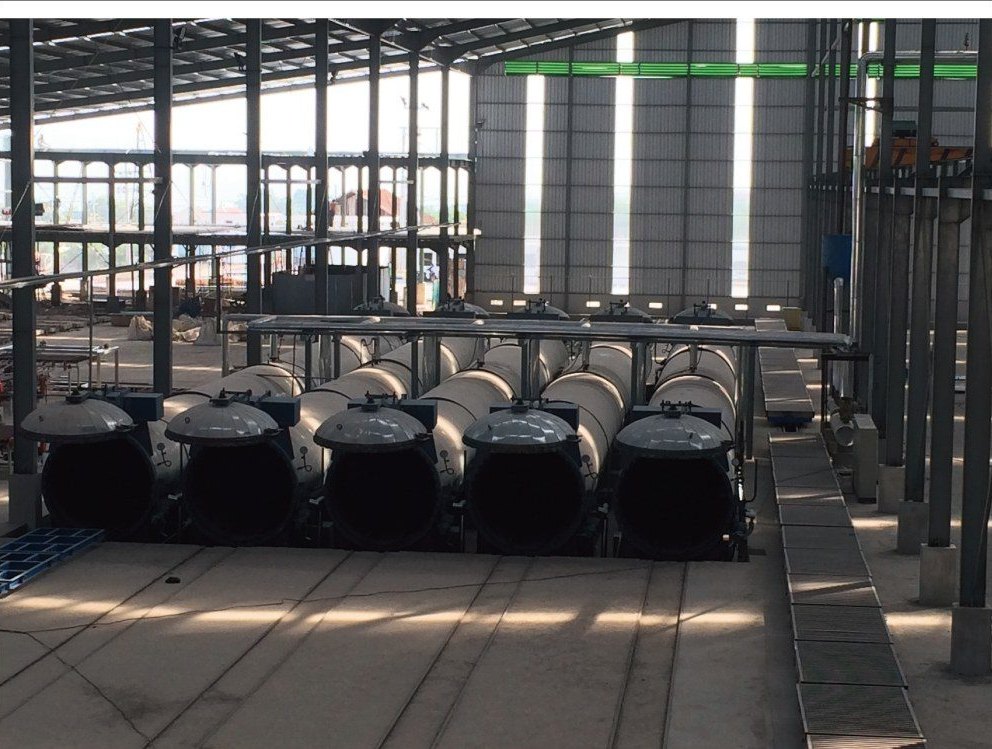
There are two ways. Air curing: after preliminary curing in chambers, the sheet matures in packs at the finished goods area. Autoclave curing: the sheet cures in saturated steam under pressure, and the slurry needs quartz sand. The second way requires an autoclave, a boiler and space for them, and an autoclave is a pressure vessel with its own rules of admission to operation. The difference is covered in the article on autoclave and air curing.
5. Where the line will stand
Length of the workshop, height to the overhead crane, area for raw materials, for curing and for finished packs. Whether a ready building exists or one will be built. Restrictions on siting hazardous production in cities are a separate question, settled under the country's documents before choosing the site.
6. What it runs on
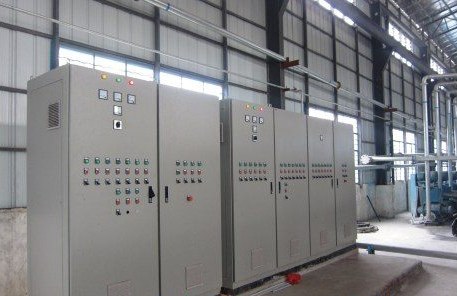
Electric power at the input, steam (if there is an autoclave or steam chambers), water for the slurry and for washing the felt, a recirculating water system, compressed air. The plant needs to know what your grid is like and what fuel is available for the boiler: gas, coal or something else.
7. Who will work on it
How many people per shift, whether there is a technologist who has already worked on slate, a mechanic and an electrician who know hydraulics and controllers. This determines which automation to take and how much training to write into the contract.
What to ask the plant for in reply
When the answers are ready, ask every plant for the same thing:
- scope of supply by process stage: which machines are included and which are not;
- output in your sheets and your shifts, not in its own units;
- demand for electricity, steam, water, compressed air;
- a workshop plan with dimensions and loads on the foundations;
- a list of consumables and spare parts for the first year;
- what is included in supervised installation, start-up and training;
- language of the documentation and operator panels.
An identical request is the only way to get comparable answers. How to compare the quotations themselves is in the article on the Chinese, European and used line.
Engineering layer: what the technologist looks at
- Slurry and felt. Each raw material needs its own choice of felts and screens. Ask the plant to name the felts for your slurry and for the machine width.
- Thickness. How the machine holds sheet thickness: on modern lines a thickness gauge on the format drum and automation adjust the slurry feed to the actual thickness of the blank.
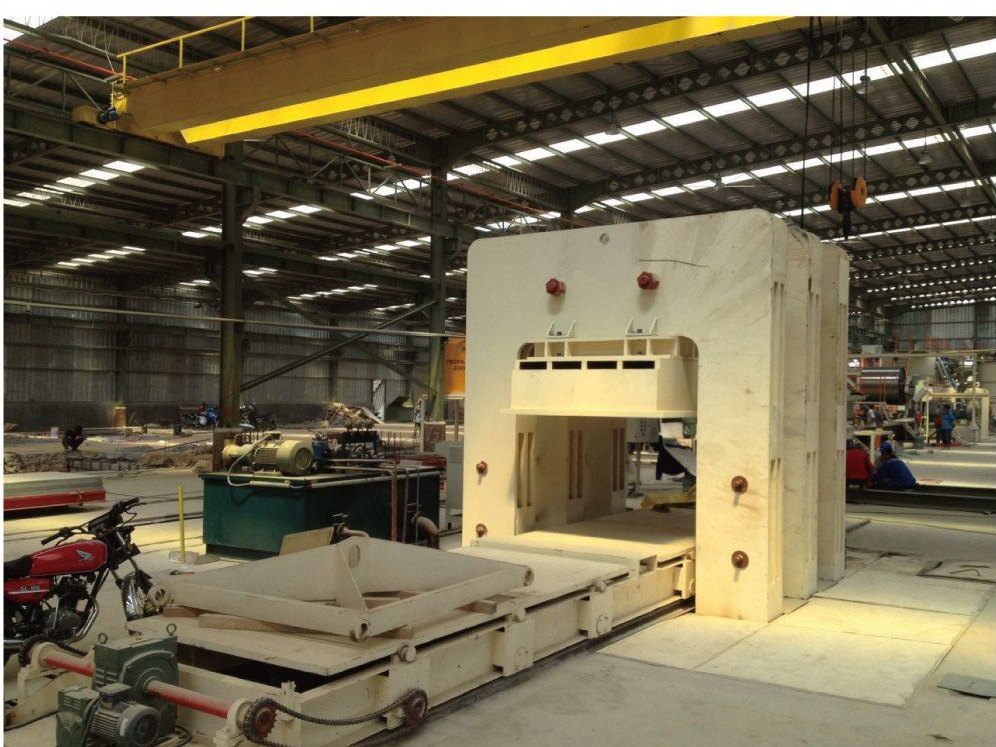
- Press. Whether you need one for your product: pressing raises the density and strength of the sheet, but it is a separate machine with a hydraulic power unit.
- Modes. Chamber temperatures, curing time and autoclave pressure follow the process regulations that the plant hands over with the line. Ask for the regulations to be part of the supply.
How we do it
- From your answers to these questions, we ask the manufacturing plant for the make-up of the line and pass on its words.
- What we find, with photos and specifications, we send before the order.
- Supervised installation and start-up are done by the manufacturing plant. We organize the trip of its engineers, translation and access to the site.
What this article relies on
Below are the documents and materials we refer to, so that you can check what is said for yourself.
Standards and documents
- GOST 30340-2012 "Corrugated chrysotile-cement sheets. Specifications": profiles 40/150 and 51/177, sheet sizes, acceptance by lotstext ↗
Reference materials
- Rybyev I. A. "Building Materials Science" (Строительное материаловедение), section "Fundamentals of asbestos-cement product manufacturing": production stages, sheet-forming machine, curingstudme.org ↗
- Patent US 12227456 "Fiber cement products and methods for the production thereof": the Hatschek method, air and autoclave curing, sand in the slurry for the autoclaveimage-ppubs.uspto.gov ↗
- Patent US 10144150 "Hatschek process for the production of fiber cement plates": design of the Hatschek machine, cylinder screens in slurry vatspatents.google.com ↗
The make-up of the line depends on the product and raw materials; the exact list of machines and energy demand is given by the manufacturing plant for your request.