Accepting a line at a plant in China: what to check at the trial run
At the manufacturing plant you can check completeness, assembly, no-load running of the machines, automation and documents. Output and sheet quality on your raw materials are checked only at your site after start-up. Whatever is found before shipment is corrected there and recorded in the protocol: after shipment it is harder to correct.
In short
4minutes to read
6sections
4sources
4catalog items
In this article
Contents
Acceptance of a line goes in two stages. The first is at the manufacturing plant before shipment: you check that everything is made, assembled and turns. The second is at your site after installation and start-up: you check that the line makes your sheet on your raw materials with the required output. They must not be confused. At a plant in China you will almost never get sheet on your slurry, and at your site it is already too late to discover that a unit is missing or a cabinet is not assembled to the diagram. The aim of the first stage is to find everything that can be corrected before shipment, and to correct it there.
What to prepare before the trip
- The technical specification and the contract with the supply list: acceptance is done against them.
- A test program agreed with the plant in advance: what is checked, how, who signs the protocol.
- A list of what must be assembled and running by the time of your arrival. If the machines are still in parts, there will be no acceptance.
- Who goes: a technologist, a mechanic, an electrician. One person will not see everything.
What can be checked at the manufacturing plant
Completeness
Go through the supply list: every machine, every cabinet, every pump, spare parts and consumables. Check serial numbers and plates. Note everything that is missing or replaced without agreement.
Assembly and workmanship
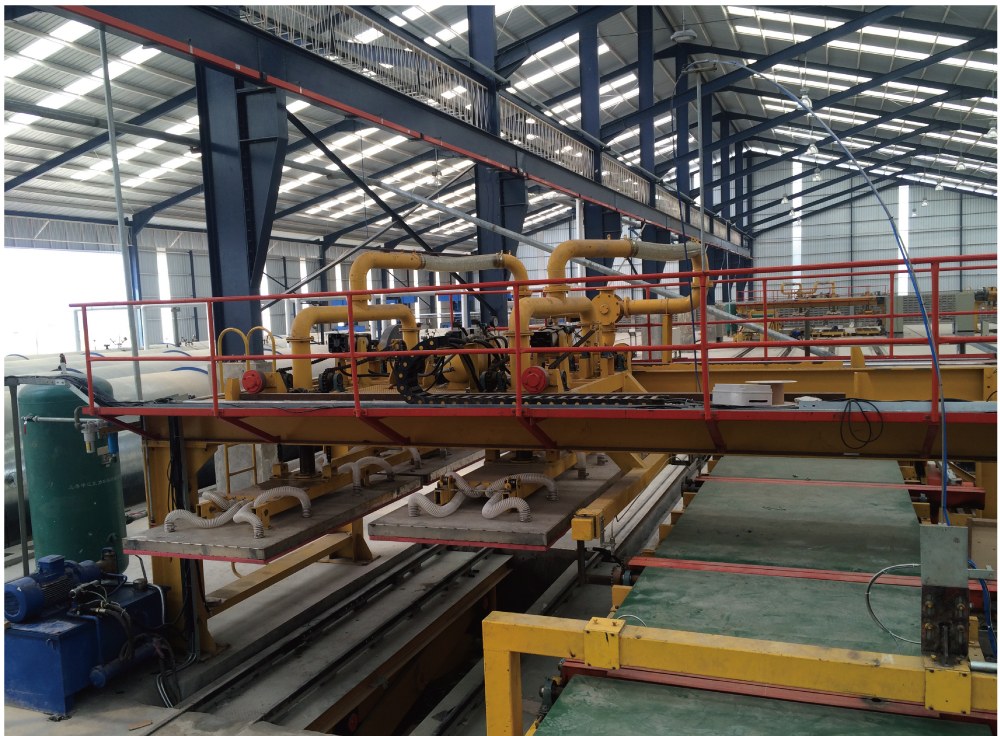
Dimensions against drawings, quality of welding and painting, fasteners, protection of bearings from water, guards on moving parts. The numbers of bearings, seals and motors are those in the specification.
No-load start
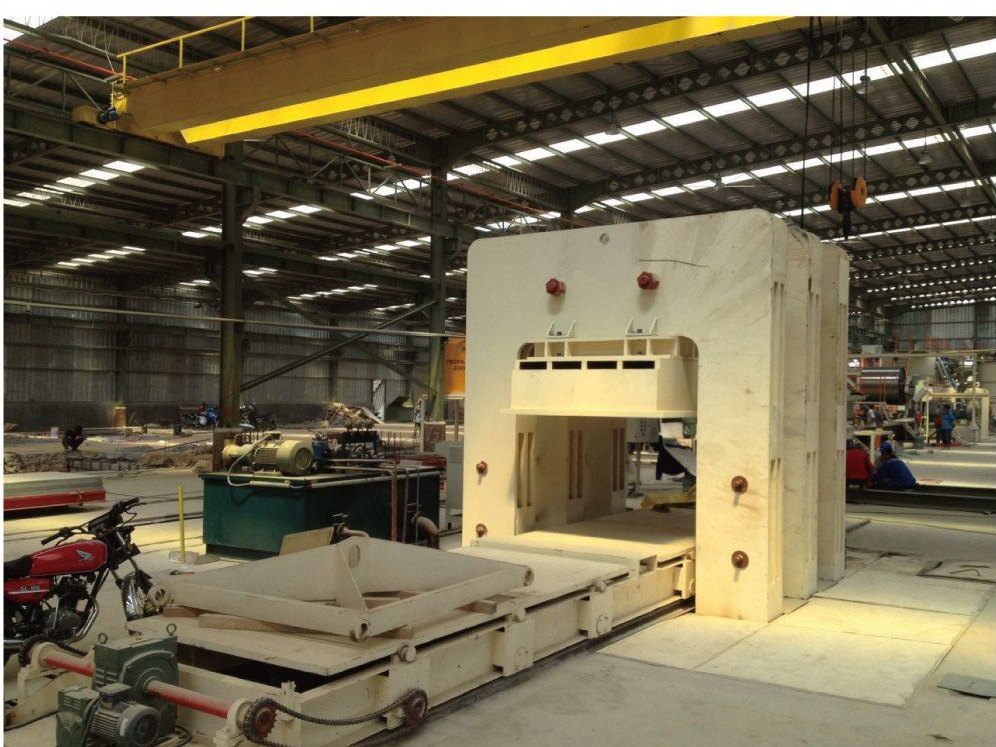
The machines are turned without slurry: felt drive, shafts, format drum, pumps, vacuum, press, cutting, stacker, demoulding. Listen for noise, watch heat and vibration, the operation of interlocks and emergency buttons. The press is raised to the pressure that the plant permits for the test bench, and you look for leaks.
Automation
Operator panels, language, modes, alarm messages. The link of the controllers with sensors and drives, on the bench or on the assembled machine. Controller programs: whether there is a copy for you.
Documents
Machine passports, electrical and hydraulic diagrams, a spare parts list with numbers, process regulations, pressure vessel documents. Check that the documents are in the right language and refer to your machines specifically.
Packing
How the units will be packed, how protected from moisture and impact, how the places are marked. Good marking of crates saves days at installation.
What can only be checked at your site
- Output of good sheets of your format per shift.
- Sheet quality on your raw materials: thickness, strength, edge, delamination.
- Operation with your water, steam and electrical grid.
- Operation of the whole line together, not of machines separately.
This is the second stage of acceptance, after installation and commissioning. Its conditions are also written into the contract: what output and quality, how long the line must run for confirmation, who signs the act.
The protocol
Every check is recorded: what was checked, how, the result, photos. Remarks are numbered and divided into two lists: what the plant corrects before shipment and what during installation at your site, with a deadline for correction in the agreement. The protocol is signed by both sides. It is better not to allow shipment with serious open remarks: after shipment the buyer has fewer levers.
Engineering layer: what is looked at on the bench
- Mechanic: runout of shafts and drum, felt tension and tracking, operation of doctor blades and washing devices, lubrication, access to bearings.
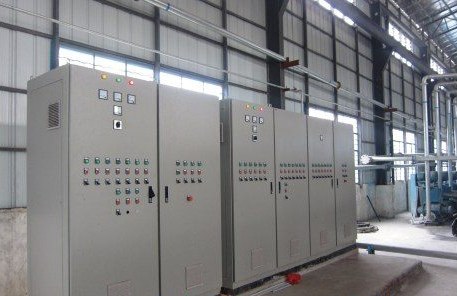
- Electrician: assembly of cabinets to the diagram, wire marking, earthing, motor protection, operation of emergency circuits.
- Technologist: the thickness gauge and its setting, dosing, how modes are set in the panel, what is written into the shift log.
- Separately record the initial measurements: vibration, pressure, motor currents. This is the baseline for comparison after start-up at your site.
How we do it
- If you want your specialist at the plant, we organize his presence.
- Supervised installation and start-up are done by the manufacturing plant. We organize the trip of its engineers, translation and access to the site.
What this article relies on
Below are the documents and materials we refer to, so that you can check what is said for yourself.
Reference materials
- SKYbrary, "Factory acceptance test (FAT)": factory tests at the manufacturer, the test program: aims, scope, methods, acceptance criteriaskybrary.aero ↗
- Vention, "Factory Acceptance Test (FAT) Checklist" and "Site Acceptance Test (SAT) Checklist": what is checked at the manufacturer and what at the site after transport and connection — andvention.io ↗vention.io ↗
- WhatIsPiping, "Factory acceptance test — what is FAT, and how does it work?": checking documentation, conformity to drawings, electrical connectionswhatispiping.com ↗
- AMREP Inspect, "Factory acceptance test (FAT) vs SAT": the difference between the stages, the test reportamrepinspect.com ↗
Agree the factory test program for your line with the manufacturer in writing before the trip; the pressure and modes of the bench tests are set by the manufacturer.