An old line: repair, modernize or replace
The decision starts not with a catalog of new lines but with a survey of the old one: what is worn and whether a unit can be replaced. If the frame, beds, shafts and format drum are alive and the problems are in the drive, automation, press or individual machines, it usually pays to modernize unit by unit. Replacing the whole line makes sense when the technology itself is out of date or the line cannot give the needed product and volume however much it is repaired.
In short
5minutes to read
7sections
5sources
4catalog items
In this article
- 01Three paths
- 02Step 1. Wear survey
- 03Step 2. Where money is lost
- 04Step 3. What modernization by units gives
- 05When to replace the whole line
Contents
The question "repair, modernize or replace the line" is answered by a wear survey, not by the age of the line. If the base of the machine (beds, frame, shafts, format drum) is in order and the problems are concentrated in the drive, automation, press, demolding or individual stock preparation machines, it usually pays to change these sections one at a time. The line keeps working between stops, and the money goes where the most is lost. Replacing the whole line makes sense in two cases. The first is that everything is worn at once and unit-by-unit repair turns into building a new line on the old site. The second is that the line in principle cannot give the needed product or volume: a different format, flat sheet, a switch to another fibre. Below is how to gather the facts for such a decision.
Three paths
| Path | What it is | When it fits |
|---|---|---|
| Repair | return a unit to its rated condition: bearings, rubber covering, seals, felts, knives | failures are rare, the cause is clear, spares can be obtained |
| Modernization by units | replace a section with a modern one: drive, automation, press, stacker, demolding | the base of the machine is alive and rejects and downtime come from specific sections |
| New line | a whole new production line | wear is general, or a different product, volume or technology is needed |
Equipment engineers describe this choice in the same way across different industries. They look at how critical the unit is for the process, how much longer it can work compared with the period the plant plans for, and what the plant wants to achieve. A separate sign: if failures repeat across the whole line rather than in one place, the problem is systemic and unit repair will not solve it. If the line does not reach the needed output whichever parts are changed, it is a matter of the line's design, not of maintenance.
Step 1. Wear survey
Walk the line stage by stage and answer three questions for each section: what condition the base is in, what condition the replaceable parts are in, and whether spares can be obtained.
- Frame and beds. Cracks, corrosion, traces of welding, foundation settlement. This is what costs the most to restore.
- Shafts and format drum. Runout, wear of the journals, the condition of the surface and the rubber covering.
- Drive. Motors, gearboxes, variators, belts; whether there is speed control.
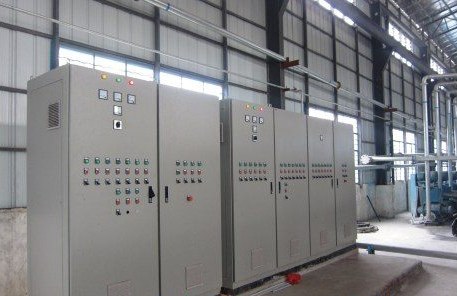
- Electrics and automation. The age of the controllers, whether there is a copy of the program, whether modules are available.
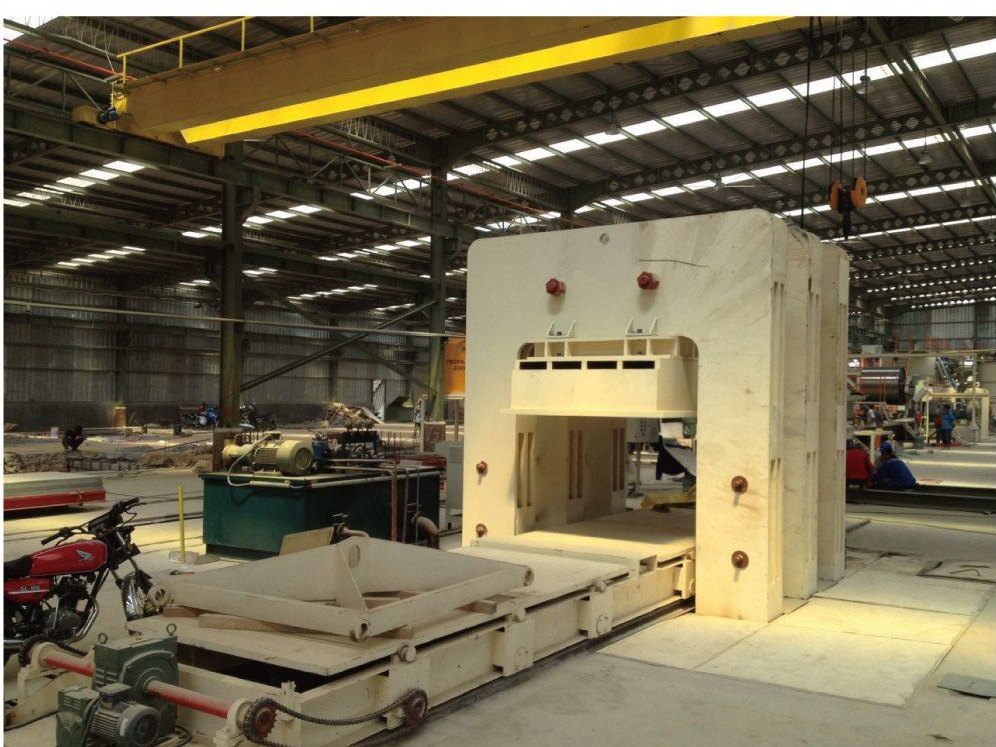
- Press hydraulics. Whether it holds pressure, the condition of cylinders and pumps.
- Stock preparation machines. Edge runners, Hollander beater, hydropulper, refiner, mill, pumps.
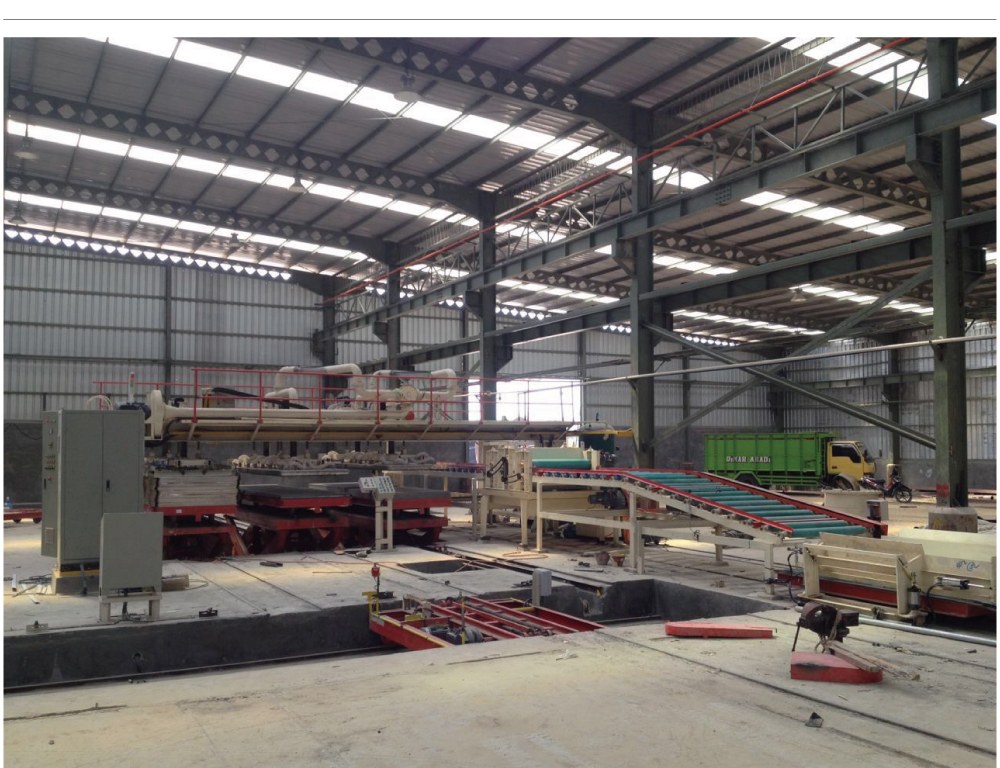
- Curing and finishing. Templates and pallets, chambers, autoclave, demolding, stacker, cutting.
The result is a table of sections marked: alive, needs repair, needs unit replacement.
Step 2. Where money is lost
Wear in itself is not a reason to spend. The reason is downtime and rejects. So alongside the survey you need the plant's figures:
- a failure log: where and how often the line stops, how long the downtime lasts;
- reject records: which rejects and at which section they arise;
- consumption of raw materials and felts compared with the norm;
- the cost of an hour of downtime on your line, which the plant itself calculates from its output.
If there is no failure log, it is worth starting one before the decision: a few months of records will say more than any inspection.
Step 3. What modernization by units gives
Modernization usually concerns specific units: drives, control, individual machines, parts of the frame. It improves operation and reliability or helps to fit within the existing floor area. Typical candidates for a slate line:
- automation: dosing, slurry concentration, thickness control, common start and stop;
- the forming machine drive on frequency control;
- the hydraulic press or its hydraulics;
- demolding and stacking, where there is much manual labor and sheet breakage;
- stock preparation machines, if the raw material has changed.
It is convenient to split modernization into stages and tie it to planned stops, so as not to stop output for long.
When to replace the whole line
- the base of the machine is worn and the repair touches almost all sections at once;
- spares for key units cannot be obtained, and there is nobody to copy them from a drawing;
- a product is needed that the line cannot give: a different format, a different sheet, a different fibre;
- a volume is needed that the machine width, speed or shop area cannot support;
- requirements for the shop, safety or sanitation cannot be met on the old line.
Even then part of the old equipment (the boiler house, mills, pumps, the raw material store) may stay in service. This is worth taking into account in the technical brief for the new line.
What to prepare before talking to a supplier
- The survey table by section.
- The failure log and reject records for the last months.
- Machine passports, diagrams, photos of the nameplates of the main units.
- What you want to get: product, dimensions, output, number of people on the line.
- The shop plan with dimensions and the layout of utilities.
With this you can request from manufacturing plants both the units for modernization and an offer for a new line, and compare them on the same input data.
How we do it
- From the photo, dimensions and the passport of the unit, we look for the item at the manufacturing plant. What we find, with the price, photos and specifications, we send before the order.
- Where the answer has to come from the plant (the composition of the line, the scope of modernization, commissioning), we ask them and pass on their word.
What this article relies on
Below are the documents and materials we refer to, so that you can check what is said for yourself.
Reference materials
- Control Engineering, "The three Rs: repair, replace or retrofit": the choice depends on the enterprise's goals, the criticality of the unit and its remaining life compared with the project periodcontroleng.com ↗
- Dorner, "Conveyor Retrofit vs. Replacement: How to Decide When an Aging Line Needs More Than a Fix": a single or a systemic failure, limitations of the line's design, what is included in modernizationcaps.dornerconveyors.com ↗
- EU Automation, guide "Repair or replace": full accounting of the costs of repair and of downtime timeassets.euautomation.com ↗
- BSTU, "Justification of the need to develop a general methodology for modernizing metal-cutting machine tools" (Обоснование необходимости разработки общей методики модернизации металлорежущих станков): replacement, repair and modernization as ways of renewing equipment and their combinationoldv.belstu.by ↗
- Rybyev I. A. "Building Materials Science" (Строительное материаловедение), section "Fundamentals of asbestos-cement product manufacturing": stages of the asbestos-cement linestudme.org ↗
The article deliberately contains no payback calculation: it depends on the prices, output and market of a specific plant.