Where cracks in slate sheets come from: demolding, stack, roof
First tie the crack to a time: did it appear right after demolding, in the stack in the finished goods warehouse, or already on the roof. That decides where to look for the cause: forming and curing, drying of the stack, or installation and frost.
In short
5minutes to read
6sections
6sources
4catalog items
In this article
Contents
A crack in a slate sheet is a consequence, and it has several possible causes. The first question is "when did it appear". A crack right after demolding or cutting points to the machine and to the early removal of a weak sheet. A crack that starts from the edge weeks later in the stack points to uneven drying of the stack. A crack on the roof points to installation, impact or frost. Below is how to tell these cases apart and what to check in each.
What counts as a defect
GOST 30340-2012 for corrugated sheets does not allow through cracks, chipped-off pieces and holes. The standard classes minor surface breaks of limited length and width as insignificant defects, and the number of such defects per sheet is also limited. Take the exact tolerances from the current edition of the standard. Flat sheets under GOST 18124-2012 are checked in a similar way.
For the plant something else matters: a through crack is a lost sheet, and a crack that repeats in the same place is a hint as to which unit has gone out of adjustment.
Cracks right after demolding and cutting
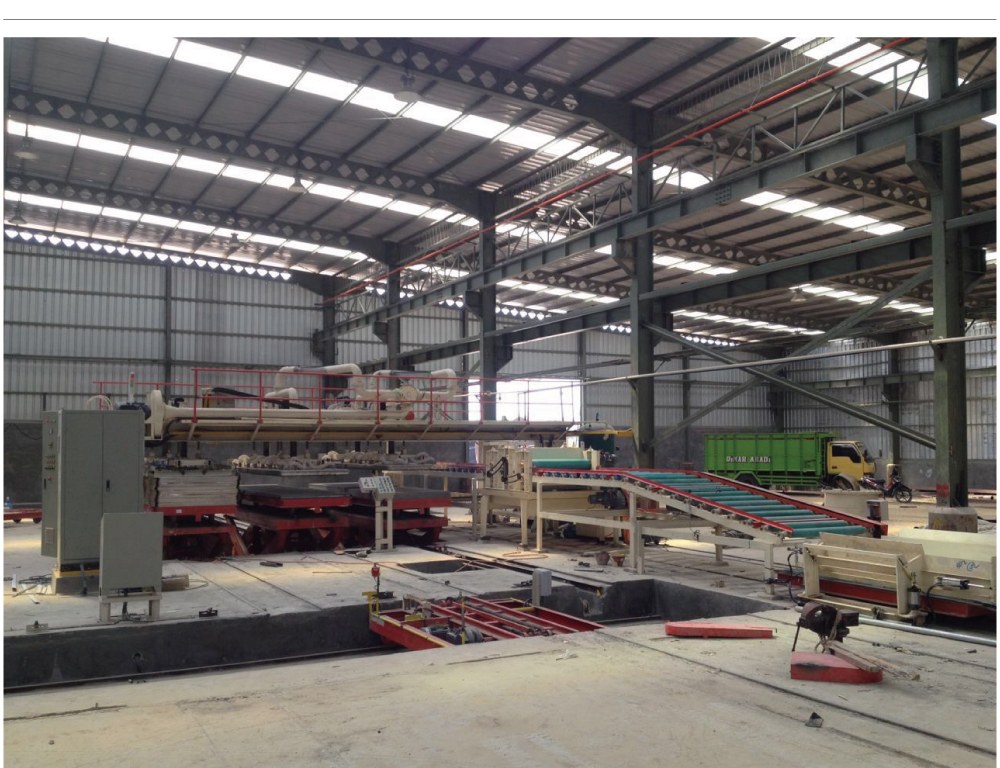
At this moment the sheet is still gaining strength. Precuring takes several hours in the chamber, and only then is the sheet separated from the pallet. The duration and temperature are set by the line's regulations.
What causes cracks at this stage:
- Early demolding. The sheet was taken off before it gained the strength to be lifted. A typical sign is cracks in the same place, where the suction cup or the pallet puts load on the sheet.
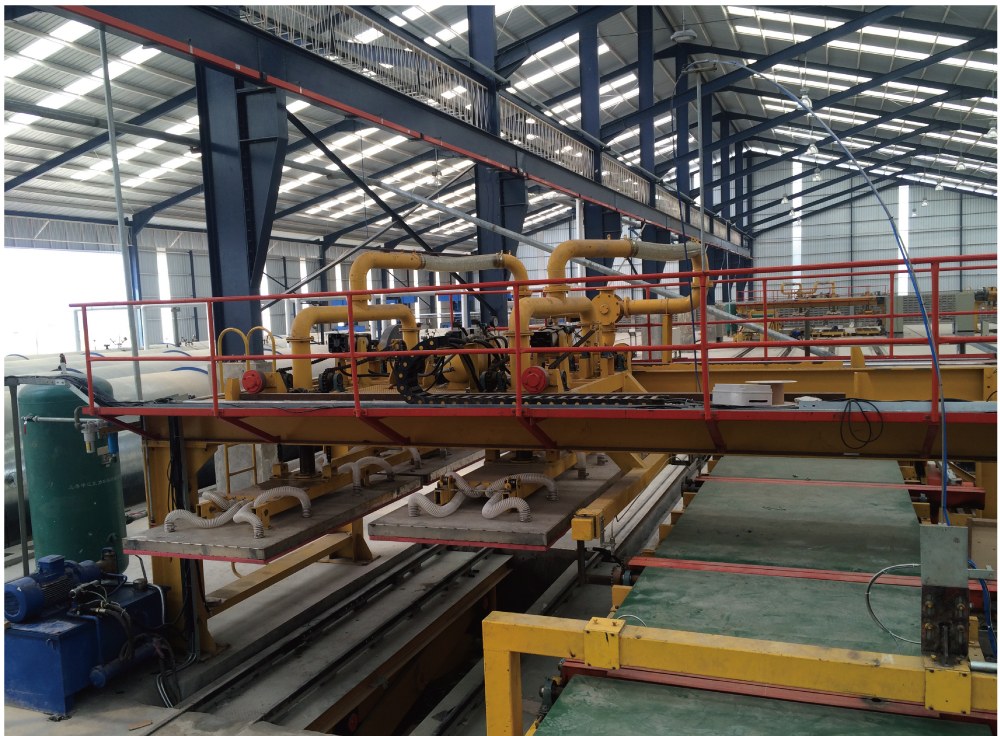
- Sticking to the pallet. A poorly lubricated or dirty pallet holds the sheet, and it breaks when pulled off. That is why in the demolding machine the pallets are washed and lubricated before they go back to the stacker.
- Failure of the vacuum or pneumatics of the suction cups, jerks during transfer.
- Impact and skew when laying the sheet on the pallet in the stacker.
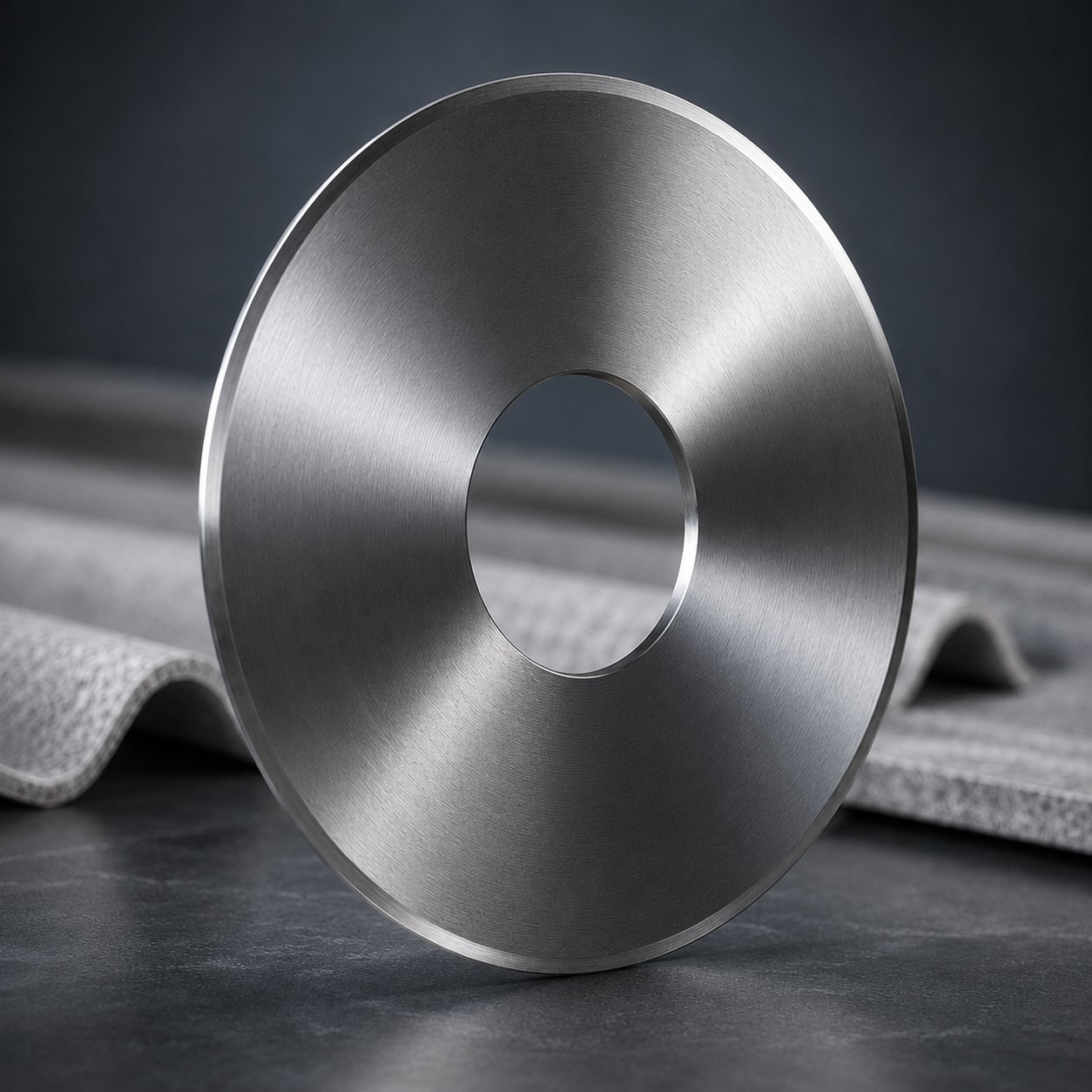
- Cutting. A dull edge-trimming knife or a knocked-off setting gives chips and short cracks from the edge.
A US patent on fibre-cement products names, among the measures against damage to the green sheet, a longer precuring and gentle removal. This matches the general logic: the weaker the sheet at the moment of loading, the more easily it cracks.
Cracks in the stack in the finished goods warehouse
Here the main mechanism is shrinkage on drying. A sheet in a stack dries unevenly. The edges of the stack give up water faster than the middle. The edge shrinks, the middle holds it back, and tensile stresses arise in the edge. This is how edge cracks appear.
This is clearly seen in a study of Brazilian air-cured corrugated sheets. Stacks covered with film stood in the open air for two years. Cracks appeared more often on the side of the stack facing the sun; the authors link this to heat (average temperature above 25 °C), which speeds up water loss. The authors link this to the difference in moisture between the edge and the middle of the stack. The slurry composition also had an effect: sheets with PVA fibre, with and without silica fume, showed fewer edge cracks on the sunny side than the other mixes.
What to do at this stage:
- do not leave fresh stacks in the sun and wind without cover;
- make sure the stack dries evenly, not only from one side;
- compare the share of cracks for different slurry compositions, if the plant changes them;
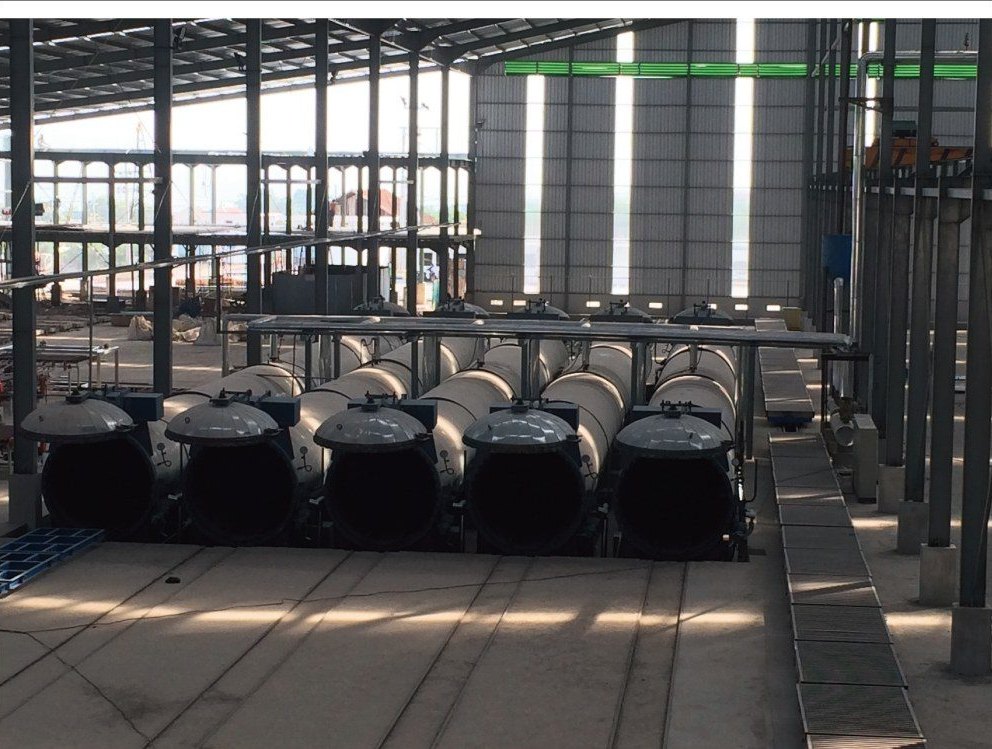
- on an autoclave line, check the autoclave mode, especially the speed of pressure rise and release.
Cracks on the roof
If the sheet was intact at the plant and the crack appeared at the buyer's, there are usually three causes.
Installation. Installation instructions from manufacturers of profiled fibre-cement sheets contain common requirements: the hole for the fastener is made larger than the shank, the fastener is not overtightened, and where four sheets meet, two corners are trimmed. Without trimming, the corners lie on top of each other in four layers and crack when tightened. The codes of practice for roofs describe fixing corrugated sheets to the battens with nails, screws and staples, and the order of the overlap. The specific hole sizes and overlaps follow the instructions for your profile.
Impact and load. You must not walk on a corrugated sheet without roof ladders. It must not be dropped during unloading. The GOST directly forbids impacts and dropping of sheets during loading and unloading.
Frost and water. If the sheet takes up a lot of water, then on freezing the water in the pores destroys it from inside. First comes flaking and delamination, then cracks. This is a separate topic: frost resistance.
How to handle a buyer's complaint
- Find out the date of manufacture and the lot number from the marking on the sheet.
- Ask for photos: where the crack is, whether it runs from the edge or from a hole, whether there is delamination.
- Pull the results of the acceptance and periodic tests of this lot.
- If the cracks run from holes and corners, it is installation. If from the edge across the whole stack, it is drying of the stack. If flaking after winter, check the frost resistance.
How we do it
- From the photo, dimensions and the passport of the unit, we look for the item at the manufacturing plant. What we find, with the price, photos and specifications, we send before the order.
- We inspect the lot at the plant before shipment: part number, dimensions, lot, packaging.
What this article relies on
Below are the documents and materials we refer to, so that you can check what is said for yourself.
Standards and documents
- GOST 30340-2012 "Chrysotile-cement corrugated sheets. Specifications": unacceptable and insignificant defects, ban on impacts and dropping, storage at the consumertext ↗
- GOST 18124-2012 "Chrysotile-cement flat sheets. Specifications"text ↗
- SP 31-101-97 "Design and construction of roofs", section on roofs made of asbestos-cement corrugated sheets: fixing, overlaps, abutmentstext ↗
Reference materials
- Fiorelli J. et al. "Durability of fibre-cement roofing corrugated sheets", XIII CIB Conference on Durability of Building Materials (CIB DC33112): edge cracks in stacks, difference in moisture between the edge and the middle of the stackirbnet.de ↗
- Patent US 6346146 "Building products": damage to the green sheet on removal, precuringpatents.google.com ↗
- Cladco, "Installation Guide: Fibre Cement Sheets": hole larger than the fastener shank, tightening, trimming cornerscladco.co.uk ↗
The time and temperature of precuring on your line follow the process regulations.