Pre-curing: when a sheet can be taken off its template
After forming, a raw sheet is soft, like wet cardboard. While it lies on its template or pallet in the chamber, the cement sets and the sheet gains demolding strength: enough to be taken off, turned over, trimmed and stacked without cracks. Time and temperature are not guessed: they are set by the regulations, and readiness is checked on a control sheet. A sheet taken off too early cracks and breaks later, in the warehouse and on the roof.
In short
4minutes to read
7sections
6sources
3catalog items
In this article
- 01What the process engineer and the owner need to decide
- 02What happens to the sheet in the chamber
- 03What decides when the sheet is ready
- 04How early demolding shows
- 05How over-holding or over-drying shows
Contents
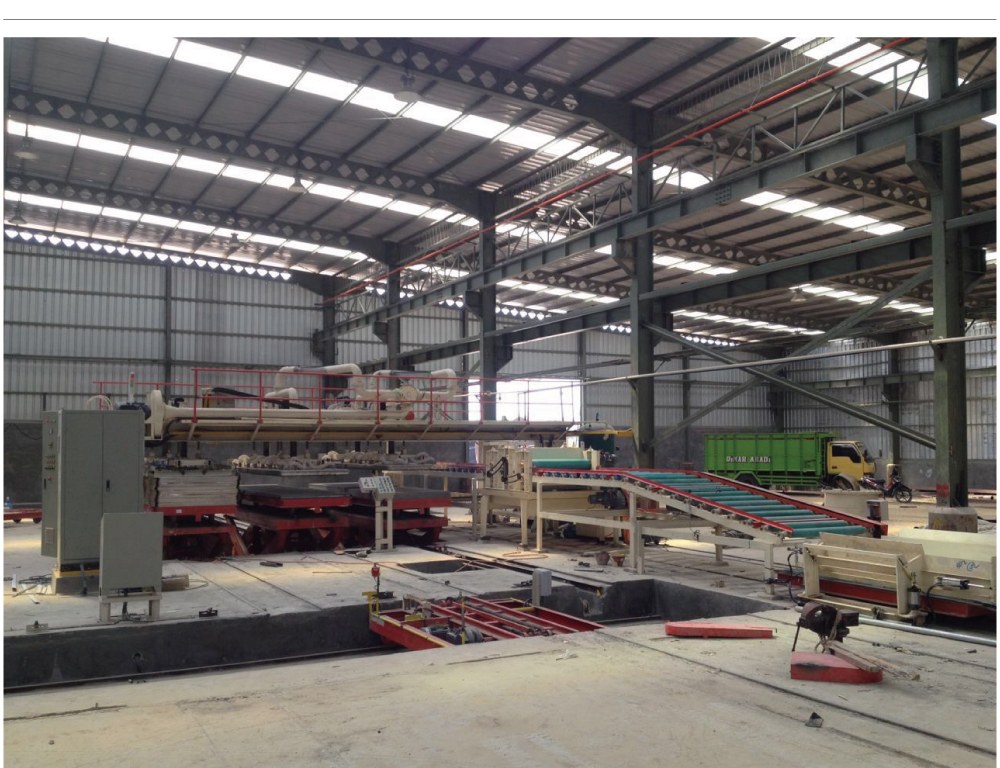
Pre-curing is the first stage of the sheet gaining strength. A raw sheet after the format drum, corrugating or the press is still soft: the patent description of the Hatschek process compares it to wet cardboard. It is laid on corrugated templates (spacers) or flat pallets and kept in a chamber until the cement has set. The task of the stage is to gain demolding strength: the sheet must withstand being taken off the template, transferred, edge-trimmed and stacked without cracks or chips. After that the sheet cures to full strength in the warehouse, in a warm-water pool or in an autoclave, depending on the technology. How long to keep it and at what temperature is decided by the process regulations, and readiness for demolding is checked, not guessed.
What the process engineer and the owner need to decide
- The demolding criterion is strength, not hours. The time in the regulations is an expectation that the strength has been gained. When the cement, the season or the line speed changes, this expectation may not hold. It helps to have a control sheet or sample that is checked before demolding.
- The chamber is not only heat. Temperature, humidity and evenness across the chamber volume matter equally. Curing chambers have their own article.
- The bottleneck of the line. If the chamber is too short for the required speed, sheets start to be taken off earlier, and the rejects move to the warehouse. Line speed and chamber length are planned together.
What happens to the sheet in the chamber
The cement reacts with water, and the sheet begins to set. The reaction gives off heat: a patent on air-cured fibre cement notes that a sheet in a pack heats itself through this reaction. The warmer and more humid the environment (within the regulations), the faster strength is gained. A humid environment keeps the sheet from drying out: if water evaporates from the surface before the cement has bound it, the surface weakens and gets a network of fine cracks.
What decides when the sheet is ready
| Factor | How it affects |
|---|---|
| Cement | grade, freshness, fineness and composition change the setting speed; a new batch of cement is a reason to re-check demolding |
| Chamber temperature | higher means faster setting, but a sharp rise heats the sheet unevenly |
| Chamber humidity | a dry environment dries the surface and edges, and the sheet cracks |
| Sheet thickness | a thick sheet takes longer to warm through |
| Water in the sheet | a wetter sheet gains strength more slowly |
| Season | in winter cold templates and carts take heat from the sheet |
| Slurry composition | synthetic fibres, fillers and additives change how the sheet behaves |
How early demolding shows
- Cracks across the wave when the sheet is taken off the template, or along the crest.
- Edge cracks after trimming: the soft edge crumbles under the knife.
- The sheet "sits down" in the stack: the wave sags and the profile comes out uneven.
- Template marks are pressed in, and the sheet sticks to the spacer.
- Hidden damage: the sheet looks whole but breaks in transport or on the roof. See the articles on cracks and brittleness of slate.
How over-holding or over-drying shows
- The sheet is strong but has a fine network of cracks on the surface: a too-dry environment.
- The sheet is hard to take off the template: it has bonded too strongly to a poorly oiled spacer.
- The chamber is occupied longer than needed, and output is lost.
How readiness for demolding is checked
- On a control sheet. A sheet is taken from the batch and checked for whether it withstands being taken off and trimmed without damage.
- On samples. The laboratory tests samples from the same wrap for bending at the moment of demolding and keeps a log.
- From the chamber log. A record of temperature and humidity by chamber zone makes it possible to link rejects to a specific shift.
How we do it
- From a number, drawing or photo of the unit, we look for the item at the manufacturing plant. What we find, with the price, photos and specifications, we send before the order.
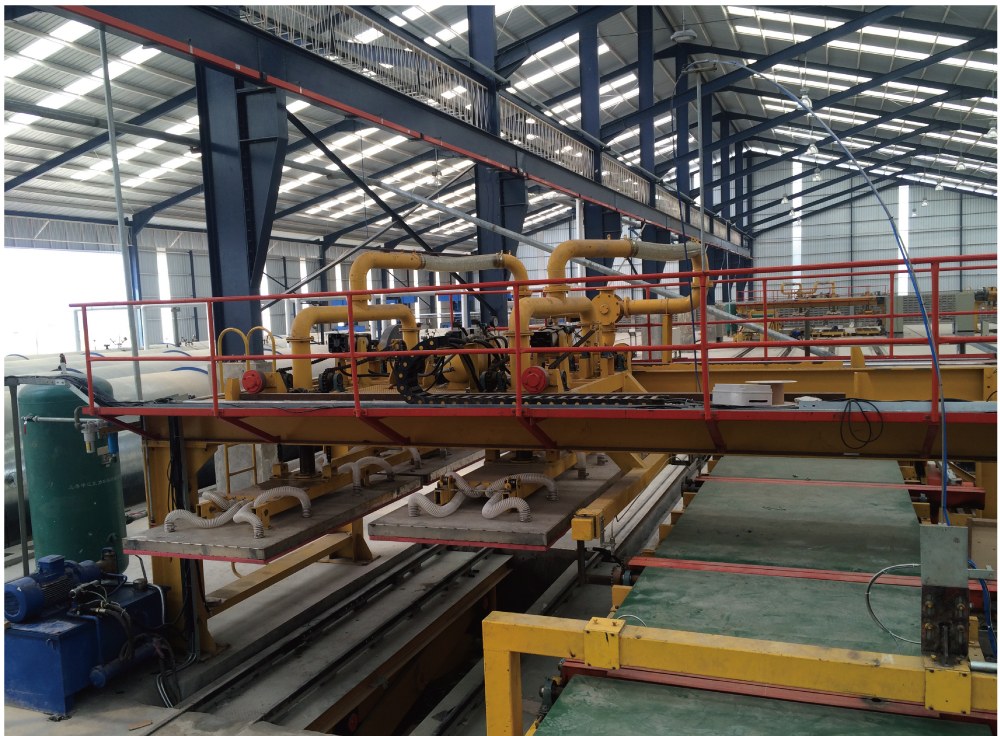
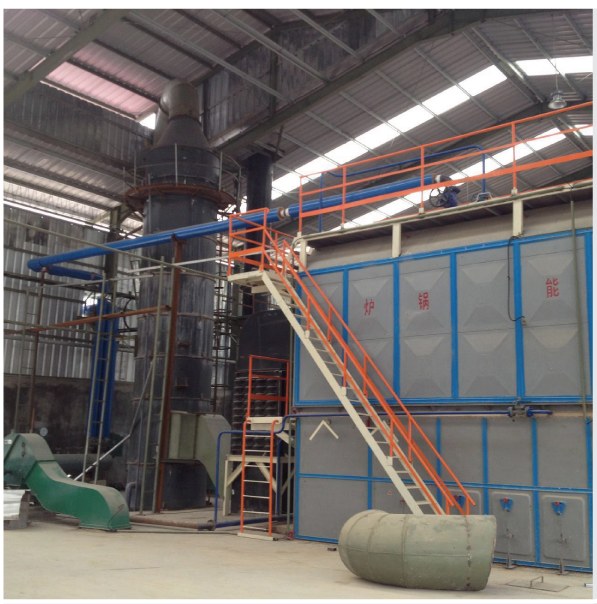
- The demolding machine, the stacker and the steam boiler are in the catalog; a unit can be requested separately or as part of a line.
- We check the batch at the plant before shipment: article number, dimensions, batch, packaging.
What this article relies on
Below are the documents and materials we refer to, so that you can check what is said for yourself.
Reference materials
- "Building Materials and Products" (Строительные материалы и изделия), § 8.14 "Production of asbestos-cement products" (bibliotekar.ru): two stages of curing, the preliminary one in steaming chambers, after which sheets are taken off the spacers and the edges are processed; pre-curing chambers on the flat-screen linebibliotekar.ru ↗
- Rybyev I. A. "Building Materials Science" (Строительное материаловедение), section "Fundamentals of asbestos-cement product manufacturing": curing in steaming chambers and then in the warehousestudme.org ↗
- "SM-1155 equipment complex" (stroy-technics.ru): curing conveyor in a chamber with a steam-air environment, stack remover, separatorstroy-technics.ru ↗
- Patent US 11773023 "Methods for producing air-cured fiber cement products": pre-curing under controlled conditions, heating of the sheet through the exothermic reaction of the cement, removal of metal separators after pre-curingpatents.google.com ↗
- Patent US 6824715: the raw sheet after the format drum resembles wet cardboard in consistencypatents.google.com ↗
- taminota.com catalog: demolding machine, manufacturing plant description (separating the sheet from the pallet after pre-curing).
The signs of early demolding and over-drying are a conclusion from the sources named and the design of the section. Time and temperature of pre-curing for your line are set by the process regulations.