Demolding machine: what wears and why it breaks sheets
In a demolding machine the suction cups, the vacuum part (valves, hoses, seals, pump or ejector), the pneumatic cylinders, the position sensors and the travel drive wear. Sheets are most often broken for three reasons: the sheet was demolded before it gained strength; it stuck to a dirty or poorly lubricated pallet; the vacuum or the synchronization failed.
In short
5minutes to read
6sections
6sources
3catalog items
In this article
- 01What the machine does
- 02What wears
- 03Why the machine breaks sheets
- 04What to keep in stock
- 05What to record for an order
Contents
In a demolding machine the suction cups and their rubber wear, as do the vacuum part (valves, hoses, seals, vacuum pump or ejector), the pneumatic cylinders, the position sensors and the travel drive, which is a servo motor with a gearbox or a chain or belt transmission. It breaks sheets most often not because of the spare parts themselves, but for three reasons: the sheet was demolded before it gained strength; the sheet stuck to a dirty or poorly lubricated pallet; the vacuum or the synchronization of movements failed. So before replacing units, check the curing and the pallets.
What the machine does
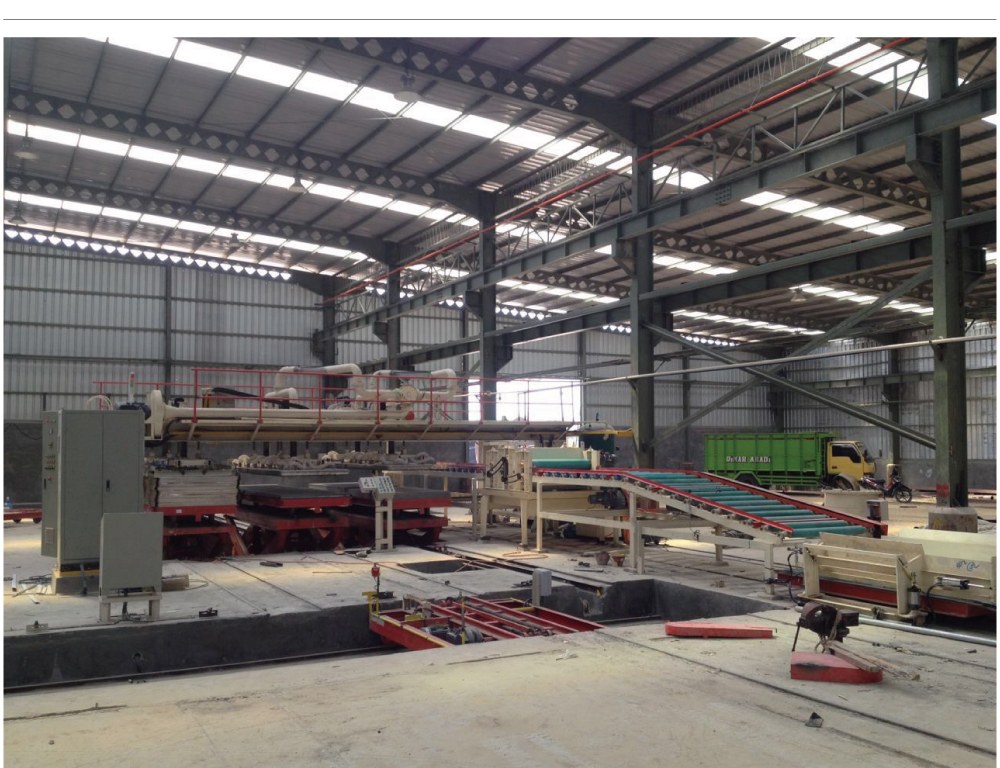
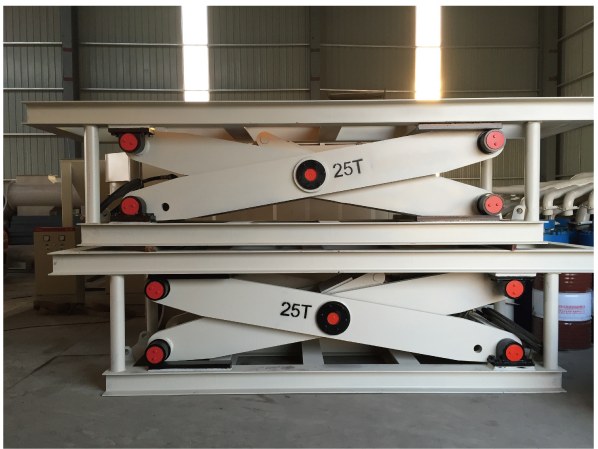
After pre-curing, a cart with a "sheet, pallet, sheet, pallet" stack is rolled under the demolding machine. The machine takes off a sheet and a pallet in turn and sends them into different flows. The sheet goes to the next step: the autoclave, maturing or finishing. The suction cup moves the pallet to a roller conveyor, where it is washed and lubricated; then the pallets are stacked and returned to the stacker. On many lines the stack is brought to the needed height by a lifting table to shorten the stroke of the suction cups.
The demolding machine is the mirror of the stacker. The stacker builds the stack, the demolding machine takes it apart, and both work from the same circulation of pallets.
What wears
| Unit | What happens | Sign |
|---|---|---|
| Suction cups | Rubber hardens, cracks at the edge, clogs with cement dust and slurry | Sheet drops off, skews when lifted, falls |
| Vacuum valves, hoses, seals | Cracks, dust clogging | Vacuum builds slowly, does not release at once |
| Vacuum pump or ejector | Wear, dirty filters | Weak suction on all cups at once |
| Pneumatic cylinders | Seal wear, air leaks | Stroke slow, incomplete, jerky |
| Position sensors | Dust, displacement, broken wire | Machine lowers the cup to the wrong place, cycle fault |
| Travel drive | Gearbox wear, backlash, servo drive fault | Impact at the end of the stroke, jerks, position shift |
| Pallet lubrication unit | Clogged nozzles, worn brushes and rollers | Pallets come through with buildup or without lubrication |
The rubber of the suction cups is worn quickly by work in cement dust and the heat of the chambers. A crack or a tear along the edge is a permanent air leak: the cup holds worse even if the vacuum pump is fine. It is more convenient not to wait for a failure but to learn how long the suction cups last on your line and replace them on a schedule.
Why the machine breaks sheets
1. The sheet has not yet gained strength. The raw sheet after forming is weak. Pre-curing gives it just enough strength to withstand demolding and handling. If the chamber is underheated, the cycle was shortened, a slower-setting cement arrived or winter has cooled the carts, the sheet at the output is weaker than usual and breaks under the suction cup. The curing regime is set by the regulations of your line; what matters here is to see the link: breakage has grown, so check the chambers and the time first.
2. The sheet stuck to the pallet. A dirty pallet with cement buildup, too little lubricant, a skipped lubrication, and the sheet tears from the pallet with force, a crack or a chip. If breakage repeats on the same pallets, the pallet is to blame.
3. Vacuum failure. Weak vacuum: the sheet comes off not as a whole, skews and breaks. Non-simultaneous release of the vacuum: the sheet is laid down with an impact or an offset.
4. Synchronization and position failure. The cup comes down to the wrong height, the head sets down crooked, the drive reaches the stop with an impact. Here look at the sensors, the servo drive settings, the backlash in the mechanics.
5. The sheet itself. Varying thickness across the width, delamination, cracks after forming. Such a sheet breaks on any machine; this is a matter of forming.
It is useful to keep a breakage log: how many sheets, on which carts and pallets, in which shift, after what time in the chamber. From it the cause is usually visible within a few days.
What to keep in stock
- Suction cups of the needed type and size, a set per machine.
- Hoses and seals of the vacuum part.
- Seals or repair kits for the pneumatic cylinders, directional valves.
- Position sensors of the same model.
- Consumables of the pallet lubrication unit.
What to record for an order
- The machine nameplate: manufacturer, model, sheet format.
- Suction cups: diameter, shape, mounting, material, photo; the number on the head.
- The vacuum part: the nameplate of the pump or ejector, hose diameters, valves.
- Pneumatic cylinders: the nameplate or the diameter of piston, rod and stroke.
- Sensors: the marking on the body, type (inductive, optical), connector.
- The drive: nameplates of the servo motor, servo amplifier and gearbox.
How we do it
- From the number, drawing or photo of the unit, we look for the item at the manufacturing plant. What we find, with the price, photos and specifications, we send before the order.
- A demolding machine with a pallet lubrication unit and a lifting platform are in the catalog; so are a servo motor with a servo amplifier.
- We inspect the lot at the plant before shipment: part number, dimensions, lot, packaging.
What this article relies on
Below are the documents and materials we refer to, so that you can check what is said for yourself.
Reference materials
- taminota.com catalog, four-position demolding machine: the demolding sequence, the suction cup, the roller conveyor of the lubrication unit, and the return of pallets as described by the manufacturing plant; a lifting platform serving the stacker and the demolding machine.
- European application EP2687346, background: raw sheets in a stack with metal sheets between them, transition to the next step after partial settingdata.epo.org ↗
- "Stroitelnye materialy i izdeliya" (Building Materials and Products, in Russian), section on asbestos-cement production (bibliotekar.ru): pre-curing of sheets in chambers before further processingbibliotekar.ru ↗
- Patent application US 2018/0036908 "Process and apparatus for making a fiber cement sheet": defects built in during forming: excessive under-pressure causes cracks, bubbles and wrinkles in the green sheetpatents.google.com ↗
- Frain Group, "Vacuum suction cups": wear and hardening of the rubber, replacing suction cups on a schedulefraingroup.com ↗
- EngineerFix, "What to do when suction cups won't stick": edge tears and contamination as permanent leaksengineerfix.com ↗