How to check a plant in China before your first order
A plant is checked in three layers: papers, register, shop floor. Ask for the business license, check it against China's official register, and see the workshop live, by video or in person. No single check proves anything on its own. Together they tell a plant from a trading company and from a fly-by-night firm.
Updated
Contents
Checking a plant before the first order takes three steps. First: the company's business license and its fields. Second: checking the license against China's official register. Third: the workshop live, by video call or in person. Each step on its own is easy to get around. Together they show who is in front of you: a plant, a trading company or a firm that did not exist yesterday. A trading company is not necessarily bad. What is bad is not knowing that it is one.
Step 1. The business license
Every company in China operates under a business license (营业执照). Under the market entity registration rules, it states the name, the unified social credit code, the legal representative, the registered capital and other details. Ask the supplier for a scan. If they refuse, that is already an answer.
What to look at:
| Field | What it is called | What to pay attention to |
|---|---|---|
| Unified social credit code | 统一社会信用代码 | 18 characters; the company is looked up in the register by it |
| Name | 名称 | the legal name is Chinese; the English name in advertising is not the legal one |
| Legal representative | 法定代表人 | the person who signs on behalf of the company |
| Registered capital | 注册资本 | the sum the participants committed to contribute; says little by itself |
| Business scope | 经营范围 | whether it includes manufacturing (生产, 制造) of the product you need or only trading (销售, 贸易) |
| Date of establishment | 成立日期 | whether it matches the "twenty years of experience" in the presentation |
| Address | 住所 | an industrial zone or an office center |
The business scope is a strong hint: a plant should have manufacturing in it. But a conclusion is not drawn from one paper. Capital and address are weak signs: a small plant may have less capital than a large trader, and a rented workshop can move without changing the address on the license. So the license is checked further.
Step 2. The official register
Company information is published by the National Enterprise Credit Information Publicity System (gsxt.gov.cn). It is run by the State Administration for Market Regulation of China. Companies also file their annual reports there, and changes of capital, suspension and liquidation are published there.
What to check:
- Code and name match the license.
- Status. The company is active, liquidated, or has had its license revoked.
- Annual reports have been filed.
- Shareholders and the legal representative are the same as on the license.
Access to the register is free. The site is mostly in Chinese, search is by the Chinese name or code, with an "I am not a robot" check. We have not tested its availability from Uzbekistan. If you cannot open it yourself, ask someone who reads Chinese to do it.
Step 3. Payment details
The most common trap is not in the workshop but in the bank.
- The name in the contract, in the invoice and on the payee's account must match the name on the license.
- A payment to a personal account or to the account of a "friendly" company is a reason to stop.
- If the supplier asks you to pay a different company, ask why, and get it in writing. It may be the plant's export agent. But then you must know who your contract is with and who is responsible for defects.
Step 4. The workshop live
Anyone can send documents. Showing a workshop is harder.
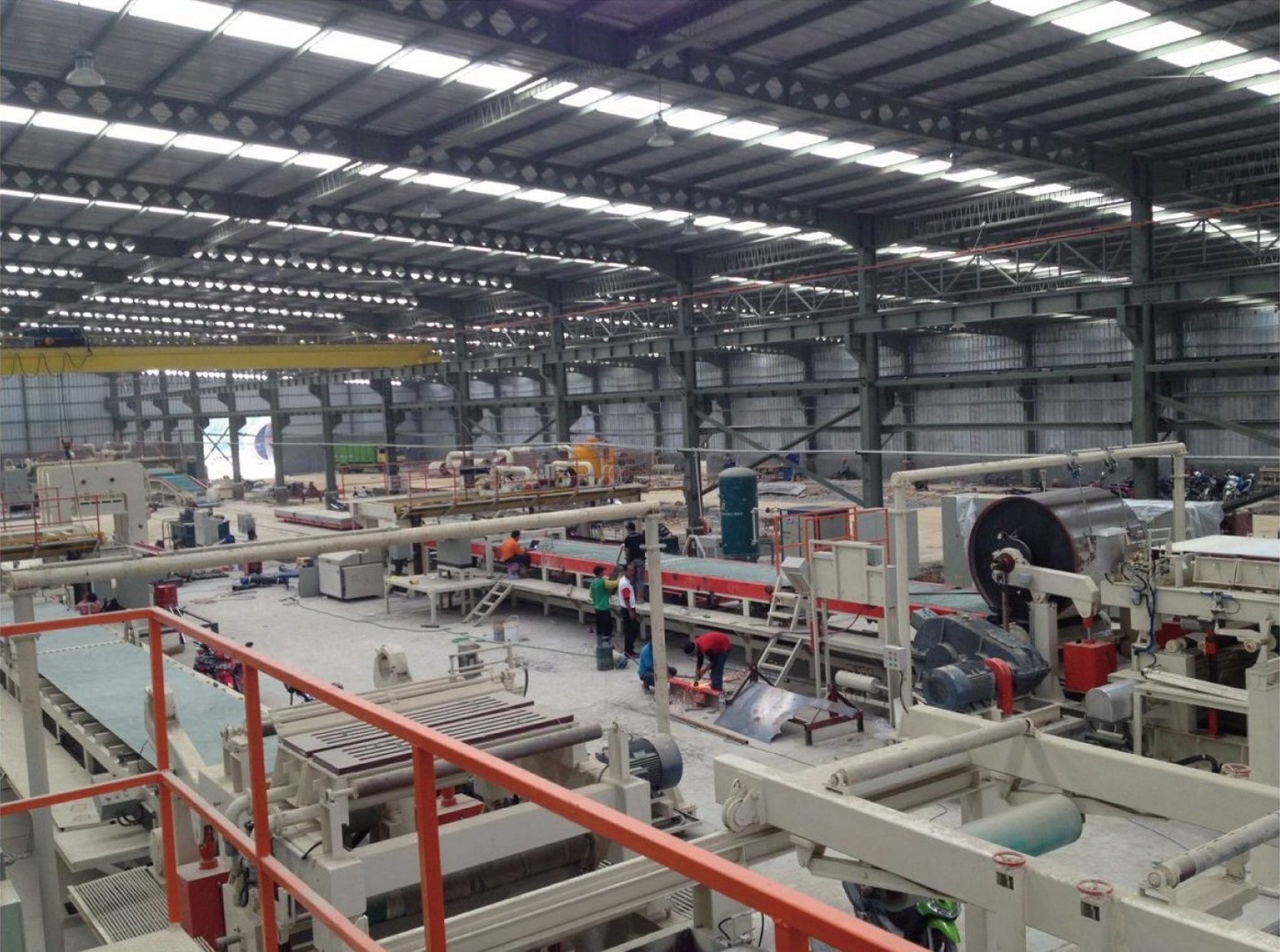
Video call. Ask for a walk through the workshop right now, not on a scheduled day. Look for: machines running, people present, blanks and parts of your type, not just finished products in a warehouse. Ask to be shown what is being made for you: the blank, the tooling, the inspection area. A trading company usually shows a warehouse or postpones the call.
Questions only a plant can answer. How many lines are there for this product. What equipment is used for the key operation. How size or material is checked. Who signs the test report. The answer "we will ask production" is a sign of an intermediary.
Export history. Ask for examples of shipments to Central Asia or CIS countries, product certificates and test reports. The plant may not disclose client names, and that is normal. But the plant must have the documents for its products.
A plant visit. The most reliable check is to be in the workshop. Your specialist can do this, or an independent inspection company. A plant that makes what it sells usually does not mind. Evasion, or an offer to "visit our partner instead", is a reason to look into it.
Warning signs
- The company was registered recently but talks about many years of experience.
- The business scope has no manufacturing of your product.
- The payment details do not match the license.
- The video from the workshop is always "later".
- Any technical question gets an answer a day later and in general terms.
- The price is noticeably lower than everyone else's, with no explanation why.
No single sign is a verdict. But two or three together are a reason not to pay until you have sorted it out.
How we do it
- We find the manufacturing plant and sign the contract with it, not with an intermediary. The plant is named in the contract.
- Before the order we send what we have found: photographs, specifications and the plant's answers to your questions.
- If you want your specialist to visit the plant, we arrange their presence.
What this article relies on
Below are the documents and materials we refer to, so that you can check what is said for yourself.
Standards and documents
Reference materials
- China Justice Observer. What is a Chinese business licensechinajusticeobserver.com ↗
- Topograph. Business registers in Chinatopograph.co ↗
- Jingsourcing. How to verify suppliers are factories, not trading companiesjingsourcing.com ↗