Slate line machines and which parts wear out first
A fibre-cement sheet line is a chain of stages: raw material preparation, milling, fibre opening, the forming machine, press, curing, demolding, autoclave, cutting. What wears out first is whatever rubs against the slurry and the sheet: forming felts, screens, knives, shaft bearings and slurry pumps.
Updated
Contents
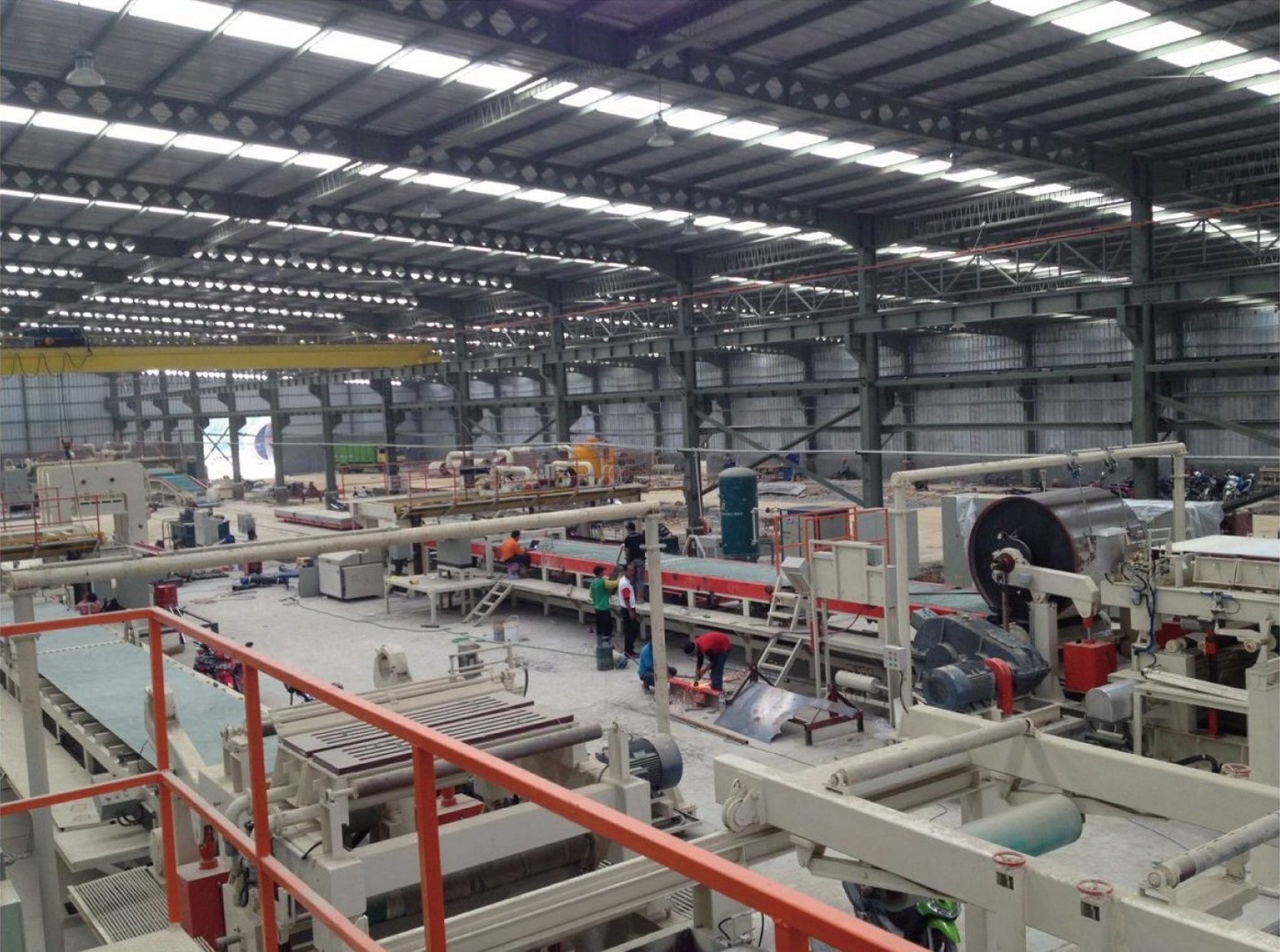
A fibre-cement sheet line consists of several stages, and each has its own wear. The raw material is prepared and milled, the fibre is opened into slurry, the forming machine builds up the sheet, the press compacts it, and then come curing, demolding, the autoclave and cutting. The first to go are the parts that work in contact with the wet abrasive slurry or with the sheet itself: forming felts, cylinder screens, knives, shaft bearings, slurry pumps. Below is the path of the sheet in order and what to look at in each section.
How the line is built
Most asbestos-cement and fibre-cement sheet lines work by the Hatschek process. It was invented for asbestos cement, and today it is also used to make asbestos-free sheets. The principle is that the sheet is not cast whole but built up from thin layers.
Wire-mesh cylinders rotate in vats of liquid slurry. Water passes through the mesh, and a thin film of fibre and cement stays on its surface. An endless felt runs over the cylinders and lifts this film off, vat after vat. Then the felt carries the layer over vacuum boxes, which draw out the water. On the format drum the layers are wound onto each other until the required thickness is reached. The blank is then cut off the drum and sent on.
This is how both manufacturers and the patents on its units describe the machine. Details differ from plant to plant: the number of vats, the way the felt is driven, the water extraction layout.
Stage by stage: what wears out where
| Stage | What stands here | What fails most often |
|---|---|---|
| Raw material preparation and milling | conveyors, ball mill, screw conveyors | grinding media and mill lining, bearings, conveyor belts |
| Fibre opening | hydrapulper, disc mill (refiner), vortex cleaners | refiner knives and plates, shaft seals, cleaner cones |
| Slurry mixing and feed | agitators, pumps, pipelines | slurry pump impellers and casings, seals, gate valves |
| Forming machine | vats, wire-mesh cylinders, felt, vacuum boxes, format drum | forming felt, cylinder screens, vacuum box covers, shaft bearings, scrapers |
| Cutting the blank | longitudinal and cross-cutting knives or waterjet cutting | disc knives, high-pressure nozzles and seals |
| Press | hydraulic press, hydraulic power unit | cylinder seals, filters, hoses |
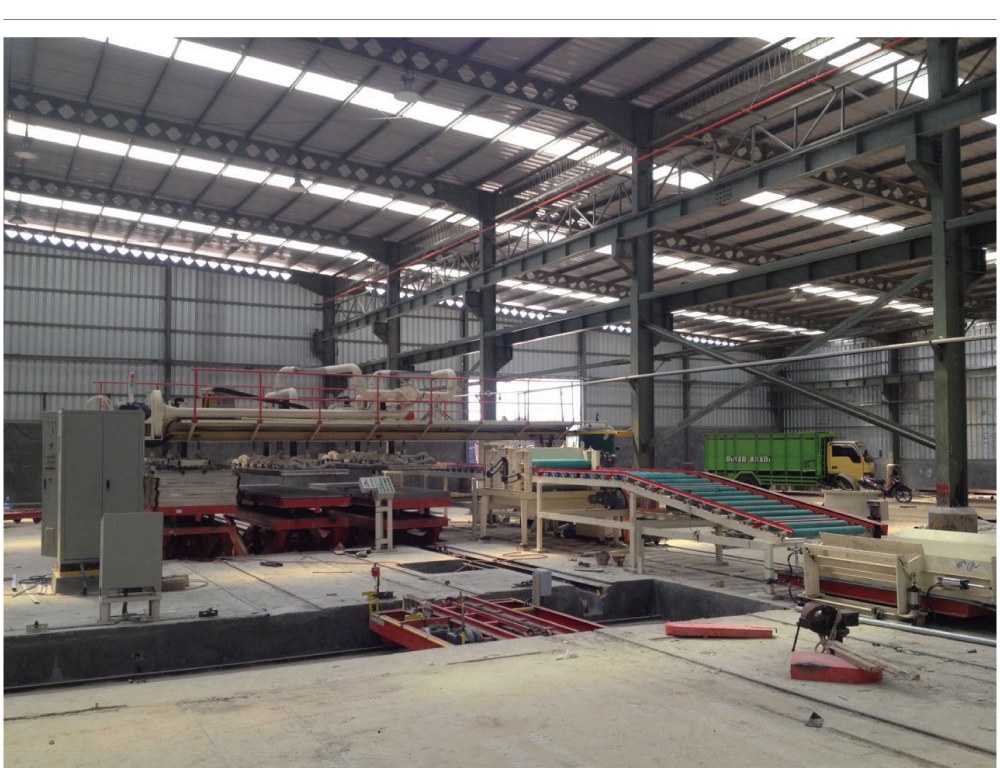
| Curing and demolding | curing chambers, stacker, demolding machine, pallets | suction cups, vacuum hoses, pallets, pallet lubricant |
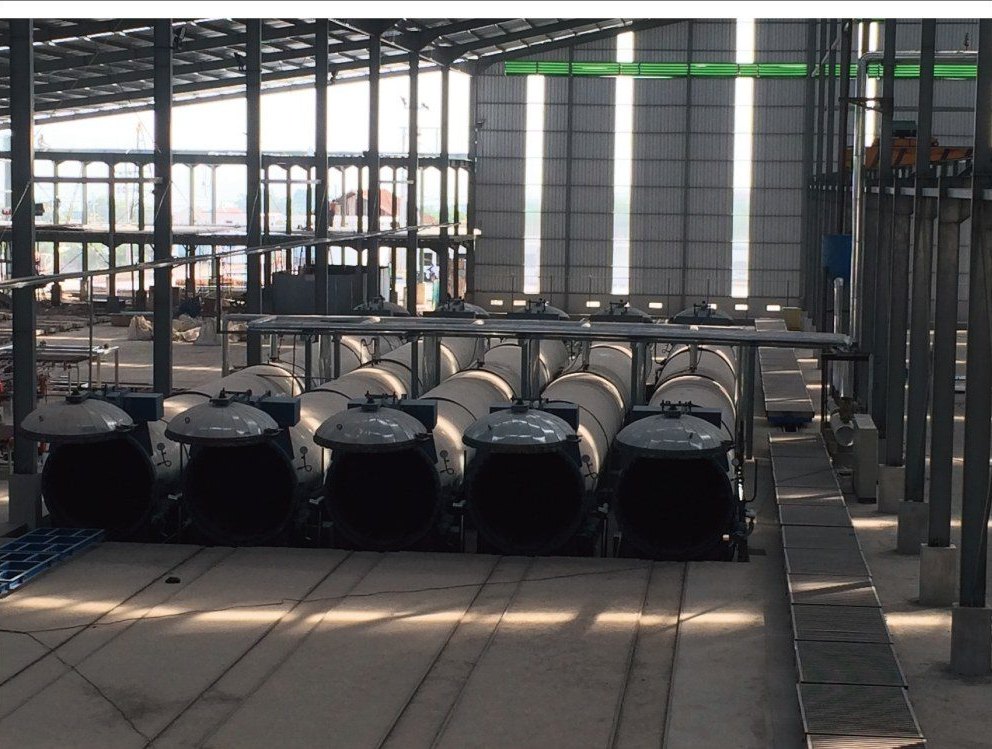
| Autoclave | autoclave, carriages, winch | lid seal, fittings, carriage wheels |
| Steam | boiler, water treatment | per the boiler passport: fittings, feed water pumps |
The table is a general principle, not a list for a specific line. The set of machines depends on the product: corrugated sheet, flat sheet, pipes. The exact list of units and their consumables comes from the plant that built your line.
What wears out first and why
Forming felt. This is the main consumable of the Hatschek machine. The felt works wet, and it is constantly squeezed by rolls and cleaned. Over time it clogs with cement particles, passes water worse and begins to leave a mark on the sheet. The felt is changed more often than anything else. How to choose it and by what signs to change it is covered in a separate article.
Cylinder screens. The mesh is in abrasive slurry all the time. If it tears or clogs, the layer on the cylinder lies unevenly and the sheet comes out with varying thickness.
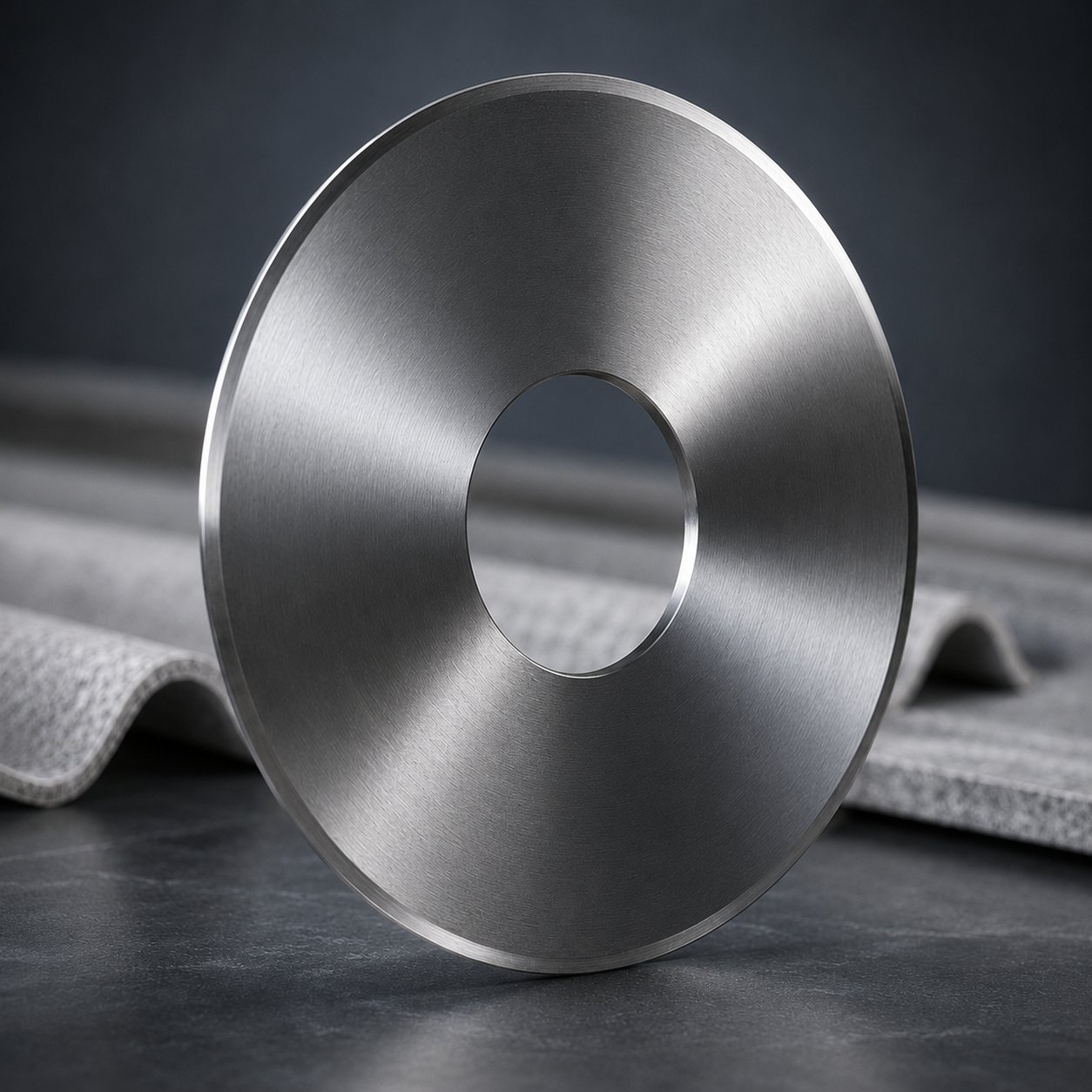
Knives. The edge of the wet sheet is trimmed with disc knives. Hard alloy lasts longer than ordinary steel, but it also blunts and chips. A blunt knife tears the edge instead of making a clean cut.
Shaft bearings. The forming machine has many shafts, and all of them work in moisture. If a bearing is poorly protected from water, its life drops sharply. Copy the bearing number from the ring in full, with all the letters.
Slurry pumps. Slurry with sand and cement wears down pump impellers and casings. The shaft seals begin to leak.
What is measured at the output
The finished sheet is checked against product standards. In Europe this is EN 494 for profiled fibre-cement sheets. The international standard ISO 9933 for long corrugated sheets was withdrawn in 2011, and ISO 10904 is given in its place. These standards set the technical requirements for the sheet, test methods, marking and acceptance conditions. ISO 9933, judging by its record, did not apply to asbestos-cement sheet. Which standard applies to your sheet, check against the rules of the country where the sheet is sold. The standards themselves are paid; their purpose is described in the open records.
For the mechanic the benefit is practical. If the sheet starts to drift in thickness or strength, the cause is often not the recipe but the machine: a clogged felt, a torn screen, a sagging shaft.
How to keep a stock
Start a log: date, stage, unit, cause of stoppage, what was installed. After a few months it shows which items fail more often. Felts and screens are made to the width of your machine, knives to your mounting dimension. These items are worth keeping in stock: they cannot be bought in town in a day. How to build such a stock is covered in the article on line spare parts.
How we do it
- Fibre-cement and asbestos-cement sheet lines, their units and forming felts are made by the Xinhuibo plant, and its items are in the catalog. A unit to replace a worn one can be requested from it the same way as a whole line.
- By number, drawing or photo of the unit, we look for the item at the manufacturing plant. What we find, with the price, photos and specifications, we send before the order.
- We inspect the lot at the plant before shipment: part number, dimensions, lot, packaging.
- Supervised installation and start-up are led by the manufacturing plant. We arrange the visit of its engineers, interpreting and site access.
What this article relies on
Below are the documents and materials we refer to, so that you can check what is said for yourself.
Standards and documents
- EN 494 "Fibre-cement profiled sheets and fittings — Product specification and test methods", standard record with its scopetext ↗
- ISO 9933:1995 "Products in fibre-reinforced cement — Long corrugated or asymmetrical section sheets and fittings for roofing and cladding", record with the status "withdrawn 26.07.2011, replaced by ISO 10904:2011"text ↗
Reference materials
- Patent US 9415564 "Felt for forming fiber cement articles and related methods" — description of the Hatschek machine and the role of the felt in the background sectionpatents.google.com ↗
- taminota.com catalog: the line, autoclave, demolding machine and disc knife.
The description of the stages is compiled from several patent descriptions and the catalog; details differ from plant to plant. The EN and ISO standards are paid; only their records were used.