Fibre cement facade boards: can a slate plant make them
A facade board can be formed on the same Hatschek machine as slate. But a facade board is a different product: it needs a press, curing to the board's own recipe, precise cutting, often sanding, primer and a coating on the face, and to be sold under European requirements it needs EN 12467 tests for strength and resistance to water, frost and temperature swings. It is not "slate without the wave" but a separate process stage and a separate market.
In short
5minutes to read
6sections
7sources
4catalog items
In this article
- 01What the owner needs to decide
- 02What is needed on top of a slate line
- 03What requirements are set for the board
- 04Where a facade board has more rejects
- 05Engineering layer: what the process engineer looks at
Contents
A fibre cement facade board is formed the same way as slate: the Hatschek machine builds up a roll from thin layers on the format drum. There the similarity ends. A facade board needs a dense, even structure, so it is usually pressed. It cures to its own recipe, often in an autoclave. Then it is cut precisely to size, often sanded, primed and coated. The requirements for the board are also different: in Europe it is made to EN 12467, with separate tests for resistance to water, frost and swings between heat and rain. A slate plant can move into this product, but it is a separate process stage, not a readjustment of the corrugating machine.
What the owner needs to decide
- Who to sell to. Boards are bought by facade and finishing contractors, developers of commercial buildings and design offices. These are different buyers from those for slate, and they look harder at documents and appearance. Talk to them first: what format, thickness, colour and documents they expect.
- Which board. A grey board to be painted on site, a board with a factory coating, a board coloured through the mass, a board with a texture. Each option adds its own section to the line.
- How to confirm quality. For your own market, to GOST 18124-2012 on flat sheets. For projects where EN 12467 is in the specification, with tests to that standard in an accredited laboratory.
- Whether there is enough floor space. A press, an autoclave, a sanding section and a coating line with drying take up room and need steam, compressed air and ventilation.
What is needed on top of a slate line
| Process stage | Slate | Facade board |
|---|---|---|
| Forming | Hatschek machine | the same; width and format set for the board size |
| Stacking | on corrugated templates | on flat pallets or in a pack with steel interlayers |
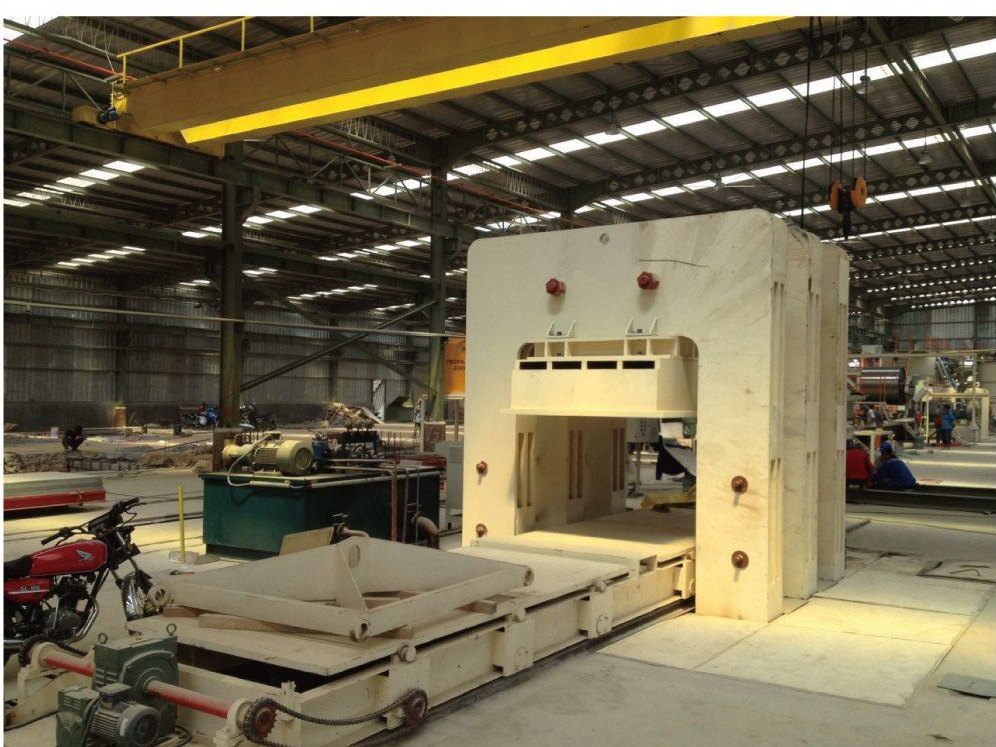
| Pressing | usually none | as a rule yes: density and an even face |
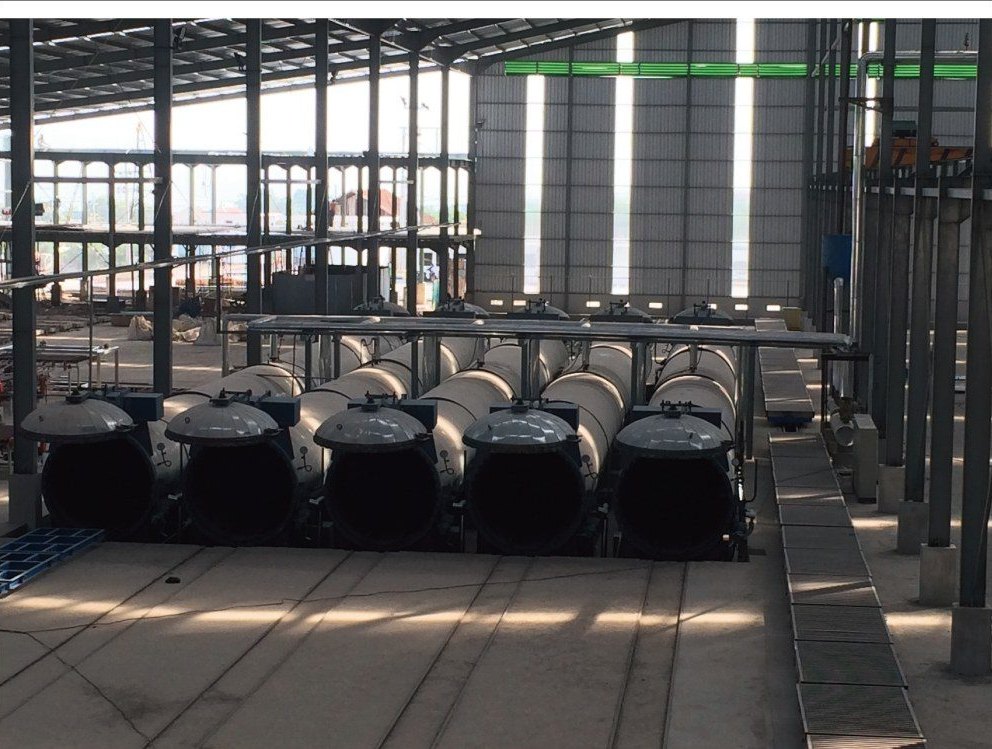
| Curing | in air or in an autoclave | to the board's recipe; for a mass with ground sand, an autoclave |
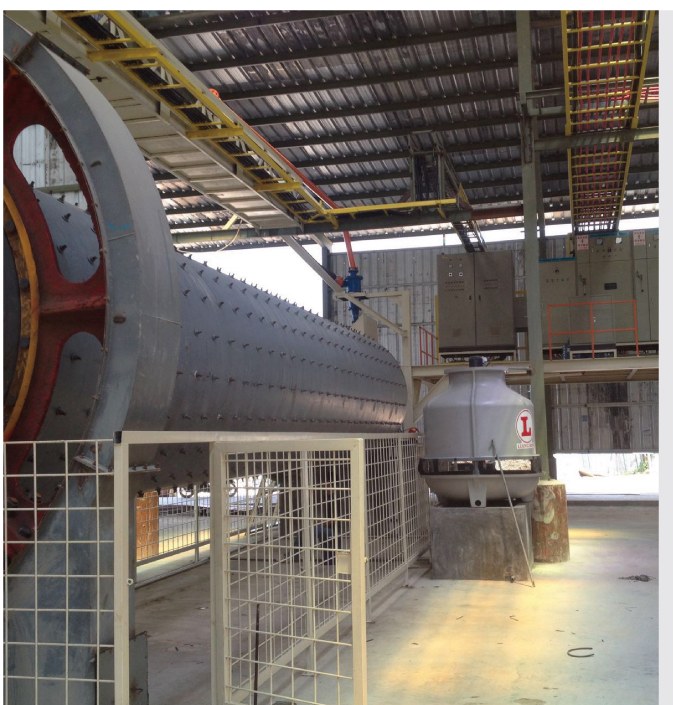
| Raw materials | cement and fibre | plus cellulose preparation and grinding of quartz sand, if the board is autoclaved |
| Cutting | cross and longitudinal cut of the green blank | precise cutting of the hard board to format, sometimes by waterjet |
| Surface | as it came off the pallet | calibrating or sanding the face, chamfer |
| Finishing | grey or coloured sheet | primer, coating, sometimes a clear protective layer, edge treatment |
| Control | dimensions, strength, frost, water | the same plus flatness, colour, durability of the coating |
What requirements are set for the board
EN 12467
The European standard for flat fibre cement sheets, planks and tiles for interior and exterior cladding of walls and ceilings. It divides products into categories by use: category A is for exterior walls, where the board stands under sun, rain and frost. Within a category there are bending strength classes. Declarations for facade boards usually state category A and one of the upper strength classes.
For exterior use the board is tested for durability: soaking in warm water, cycles of wetting and drying, freezing and thawing, and alternating heat and rain. After the tests the strength is compared with the original. The fire reaction class is declared separately. The standard does not cover facade design, fixing or wind loads; that is a matter for the facade system.
GOST 18124-2012
The interstate standard for flat sheets names cladding and ventilated facades among its areas of use. It divides sheets into pressed and unpressed, and sets flatness, bending strength, density, impact strength and frost resistance. There must be no felt marks on the face. For a facade a pressed sheet is usually needed.
Where a facade board has more rejects
- Warping. Uneven density and moisture through the thickness bends the board. On a facade with a straight joint this shows at once.
- Face. A mark of the felt or interlayer, pits, patches under the coating. Sanding removes some of this, but not all.
- Coating. Peeling, colour difference between lots, coated boards sticking together in a warm stack.
- Edge. Chips from cutting and drilling, an uneven corner.
Engineering layer: what the process engineer looks at
- Recipe and curing. An autoclaved board is made with cement, ground quartz sand and cellulose. An air-cured board uses synthetic fibre. The choice of recipe decides whether you need an autoclave, a sand mill and cellulose pulping.
- Pressing. Pressure and time are set by the process regulations; the press determines density, water absorption and the evenness of the face.
- Moisture before coating. The coating goes onto a board with a certain moisture and surface temperature; they are set by the paint supplier and the process regulations.
- Curing, pressing and drying modes follow the process regulations of your line.
How we do it
- From the number, drawing or photo of the unit, we look for the item at the manufacturing plant. What we find, with the price, photos and specifications, we send before the order.
- A press, an autoclave and waterjet cutting are in the catalogue; a unit can be asked about separately or as part of a line.
- We inspect the lot at the plant before shipment: part number, dimensions, lot, packaging.
What this article relies on
Below are the documents and materials we refer to, so that you can check what is said for yourself.
Standards and documents
- GOST 18124-2012 "Chrysotile-cement flat sheets. Specifications": areas of use, pressed and unpressed sheets, flatness, face surfacetext ↗
- EN 12467:2012+A2:2018 "Fibre-cement flat sheets. Product specification and test methods", abstract: interior and exterior cladding of walls and ceilings, what the standard does not covertext ↗
- SIST EN 12467:2013+A2:2018, standard recordtext ↗
Reference materials
- Declaration of performance of a fibre cement facade board to EN 12467:2012+A2:2018 (swisspearl.com): category A, strength class, tests with warm water, wetting-drying, freezing-thawing, heat-rain, fire reaction classswisspearl.com ↗
- Declaration of performance of a fibre cement cladding board (cembrit, specifiedby.com): category A, strength class, the same durability testsspecifiedby.com ↗
- "Technology of production of building materials, products and structures" (Технология производства строительных материалов, изделий и конструкций), clause 5.4.2 (bibliotekar.ru): pressed boards in stacks with metal interlayers, warping as the main defect of flat productsbibliotekar.ru ↗
- taminota.com catalogue: fibre cement sheet line, press, autoclave, sand mill, hydropulper, waterjet cutting — descriptions from the manufacturing plant.
EN 12467 was not opened in full; this is a retelling from abstracts and manufacturers' declarations. Class and performance values follow the text of the standard.