Slate sheet sizes under GOST: length, width, thickness, tolerances
GOST 30340-2012 sets for a corrugated sheet the length, the width by wave count, several thicknesses, the wave height and the edge width, each with a tolerance. The most common sheet, 40/150, is 1750 mm long and 980 mm wide with seven waves or 1130 mm with eight. Sizes are checked on every lot, and on the line they are held by the templates, the cutting and the format drum.
In short
4minutes to read
5sections
4sources
4catalog items
In this article
The size of a corrugated sheet is set by GOST 30340-2012. For each of the two profiles, 40/150 and 51/177, it gives the length, the width depending on the number of waves, the permitted thicknesses, the height of the ordinary and the end waves, the edge width, and the tolerance on each value. The most common sheet is 40/150, 1750 mm long: the seven-wave one is 980 mm wide, the eight-wave one 1130 mm. The standard allows sheets of another length and width to be made by agreement with the customer, but the tolerances stay the same.
What the owner and the buyer need to decide
- Which thicknesses to produce. Within a profile the standard gives several thicknesses. A thinner sheet weighs less per sheet, but it also has less strength in reserve. Agree the choice with the process engineer and the market, not only on raw-material consumption.
- Whether you need non-standard lengths. A longer or shorter sheet to order means readjusting the cross cut and possibly different pallets. Decide in advance whether you take such orders.
- What to measure with. Sizes are checked on every lot. A tape measure, a caliper or thickness gauge, a square and a ruler must be at the QC station and calibrated.
What the standard sets
Length and width
The length is set for each profile: 40/150 has one main length, 51/177 has several. The width depends on the number of waves: 40/150 sheets are seven- and eight-wave, 51/177 sheets are five- and six-wave. The width tolerance is asymmetric: more on the plus side than on the minus side.
Thickness
For 40/150 the standard gives three thicknesses, for 51/177 two. For the thickest 40/150 sheet the plus tolerance is clearly larger than the minus tolerance: a sheet thicker than nominal is not rejected within wide limits, a thinner one almost never passes.
Wave height and edges
The standard sets the height of the ordinary wave, and for 40/150 also the height of the overlapping and the overlapped end waves. The edge width and the wave pitch are given for reference and are not a rejection criterion.
Sheet shape
The permitted deviation from squareness and from straightness of the longitudinal edges is set separately. A skewed cut or a "sabre" along the edge is a nonconformity even if all dimensions are within the norm.
The exact values and tolerances are in Table 1 and section 4 of the standard. Before ordering tooling and knives, check against the text of the standard, not against retellings and price lists.
How sizes are checked
Linear dimensions and shape are part of the acceptance tests of every lot. A lot is the shift output of one line. The number of sheets to check depends on the size of the lot.
- Length: with a tape measure along the face side, along the outer crests.
- Width: with a tape measure at both ends, not far from the edge.
- Thickness: with a caliper or thickness gauge at the middle of each of the four sides; the average is taken as the sheet thickness.
- Wave height: with a depth gauge across a straightedge laid on two neighbouring crests, at each end.
- Squareness and edges: with a square and a ruler, by the largest gap.
Engineering layer: what holds the size on the line
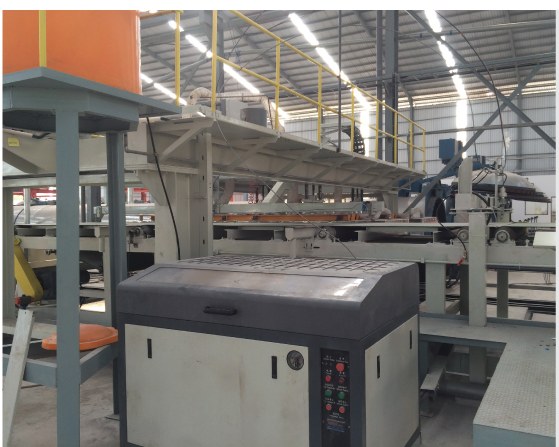
- Thickness builds up on the format drum from layers of slurry: it is set by the number of drum revolutions and by the amount of slurry the screen carries onto the felt. Thickness variation across the width is most often down to the felt, the screen or the vacuum, not the cutting.
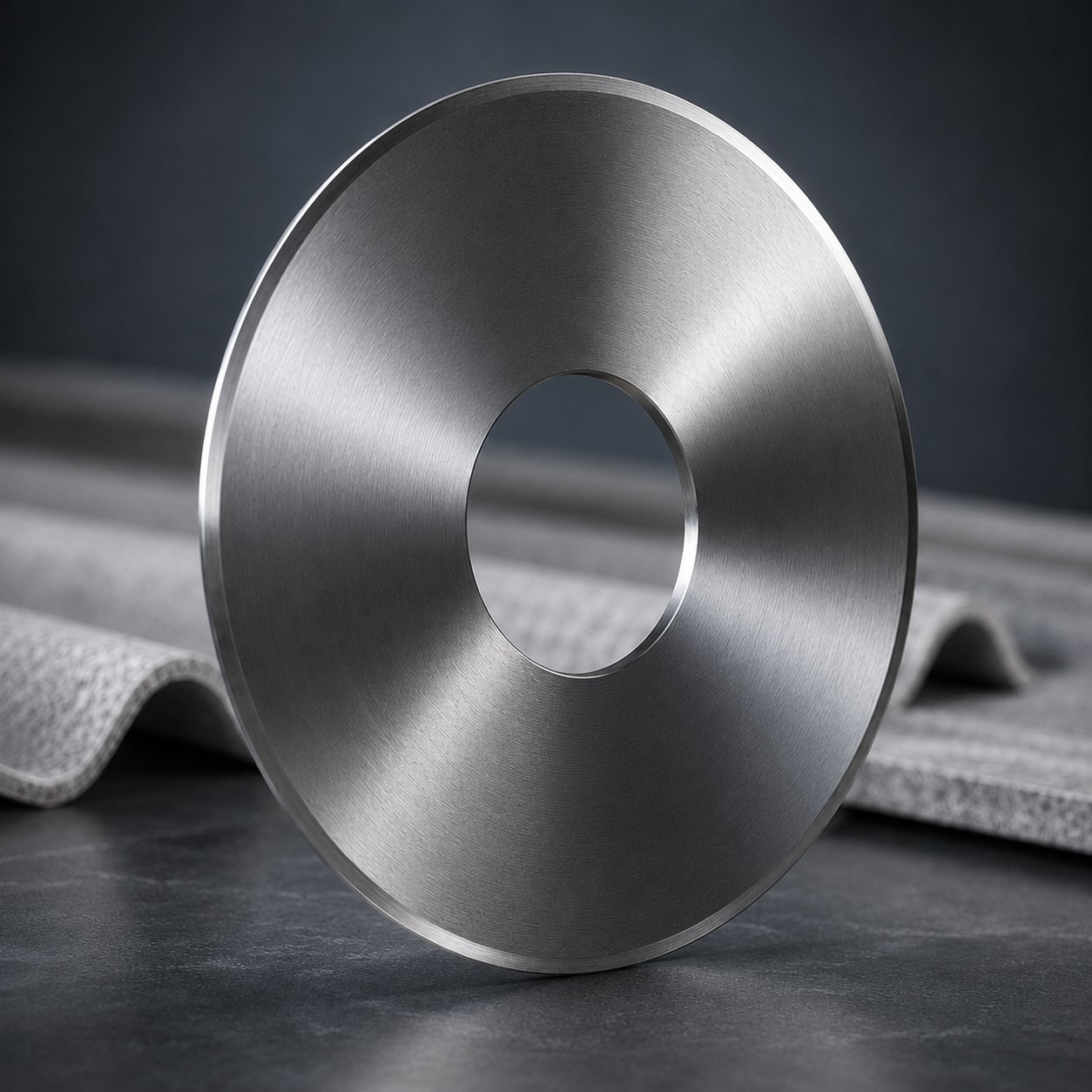
- Length and width are set by cutting the green blank: the cross cut sets the length, the longitudinal cut the width and edges. A worn or badly set knife gives a ragged edge and drift in size.
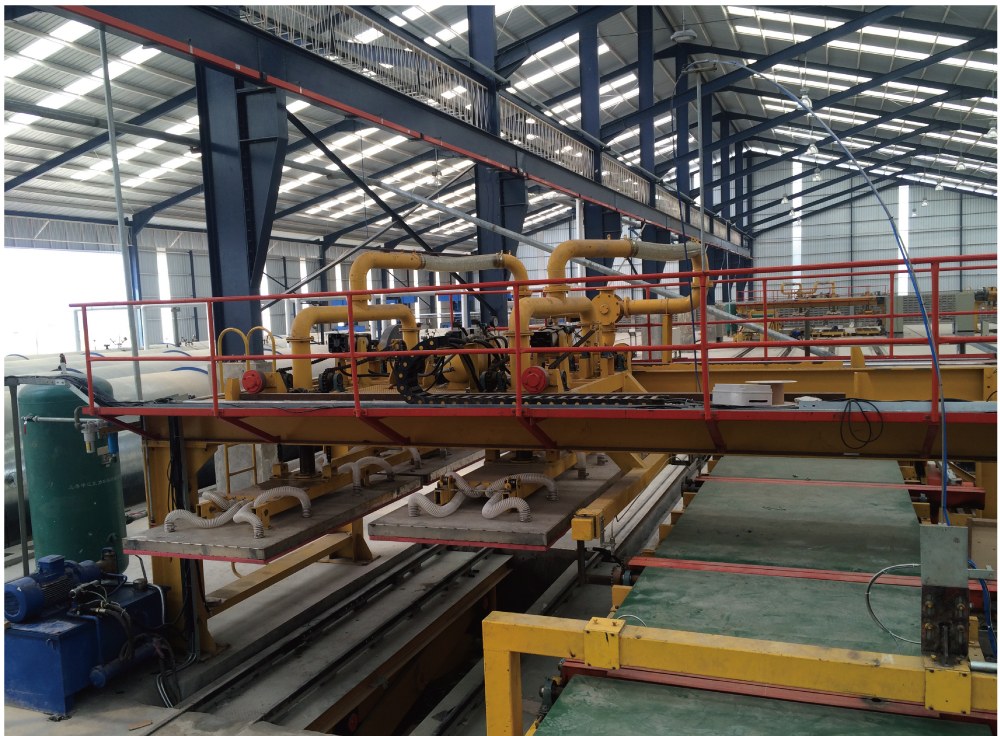
- Wave height and squareness depend on the template on which the sheet takes its wave and on how the sheet lies in the stack while it hardens. A warped template or pallet passes its shape on to every sheet.
How we do it
- From the photo, dimensions and the passport of the unit, we look for the item at the manufacturing plant. What we find, with the price, photos and specifications, we send before the order.
- We inspect the lot at the plant before shipment: part number, dimensions, lot, packaging.
What this article relies on
Below are the documents and materials we refer to, so that you can check what is said for yourself.
Standards and documents
- GOST 30340-2012 "Chrysotile-cement corrugated sheets. Specifications": section 4 (dimensions, tolerances, designation), section 7 (acceptance), clause 8.3 (measuring dimensions)text ↗
- GOST 30340-95 "Asbestos-cement corrugated sheets. Specifications" (no longer in force): dimensions of the 40/150 sheet, the same length and width as in the current standardtext ↗
- GOST 24986-81 "Asbestos-cement corrugated sheets of high profile 51/177": earlier dimensions of the 51/177 profiletext ↗
Reference materials
- Rybyev I. A. "Building Materials Science" (Строительное материаловедение), section "Fundamentals of asbestos-cement product manufacturing": forming the sheet on the format drum in layers, cutting the green blank, corrugatingstudme.org ↗
Dimension and tolerance values follow Table 1 of GOST 30340-2012; the article gives only the main dimensions of the 40/150 sheet.