Crooked wave and uneven edge: which deviations are allowed
For a corrugated sheet the GOST measures length, width, thickness, wave height, deviation from squareness and straightness of the edges. The wave pitch is given for reference and is not a rejection criterion. A crooked wave usually comes from the templates and the corrugating machine, a skewed sheet and a ragged edge come from cutting.
In short
5minutes to read
6sections
5sources
4catalog items
In this article
Contents
GOST 30340-2012 checks a corrugated sheet for length, width, thickness, wave height and the shape of the sheet: how far it departs from a rectangle and how straight the longitudinal edges are. The wave pitch is given in the standard for reference and is not a rejection criterion. If the waves come out of different heights or with a skew, the cause is sought in the corrugating machine and in the templates (pallets) on which the sheet cures. If the sheet is skewed or the edge is ragged, look at the cutting: the knives, their setting, the feed of the blank. Below is what to measure and which unit is responsible for what.
What is measured and what is allowed
The standard sets nominal dimensions for each profile and limit deviations. Only the gist is given here. Take the figures for your profile from the current edition of the GOST.
- Length and width: deviations of the order of a centimetre; the width tolerance is asymmetric.
- Thickness: fractions of a millimetre, depending on the profile and thickness.
- Wave height: a few millimetres. Profiles with overlapping and overlapped end waves have separate tolerances for them.
- Wave pitch: the nominal value of the profile, a reference figure.
- Deviation from squareness: how far the corner of the sheet departs from a right angle. Limited to a centimetre or a little more.
- Deviation from straightness of the longitudinal edges: about a centimetre.
Flat sheets under GOST 18124-2012 have their own set: squareness, straightness of the edges and also flatness, that is, warping.
In Europe profiled sheets are checked to EN 494. In their declarations manufacturers state tolerances for width and wave height, thickness, length, width and squareness. The logic is the same, the figures differ from the GOST.
How to measure
Measurements are made on sheets from different stacks, without picking the "best" and the "worst". The GOST also requires this when taking samples.
- Length and width: with a tape or a ruler in several places.
- Wave height: from trough to crest, for the ordinary and the end waves separately, at both ends of the sheet. The difference between the ends shows a skew.
- Squareness: with a square or by the difference of the diagonals.
- Straightness of the edge: with a stretched string or a long ruler along the edge, by the largest gap.
The difference in wave height between the two ends of the sheet and the difference of the diagonals show at once where to look.
Crooked wave: what to check
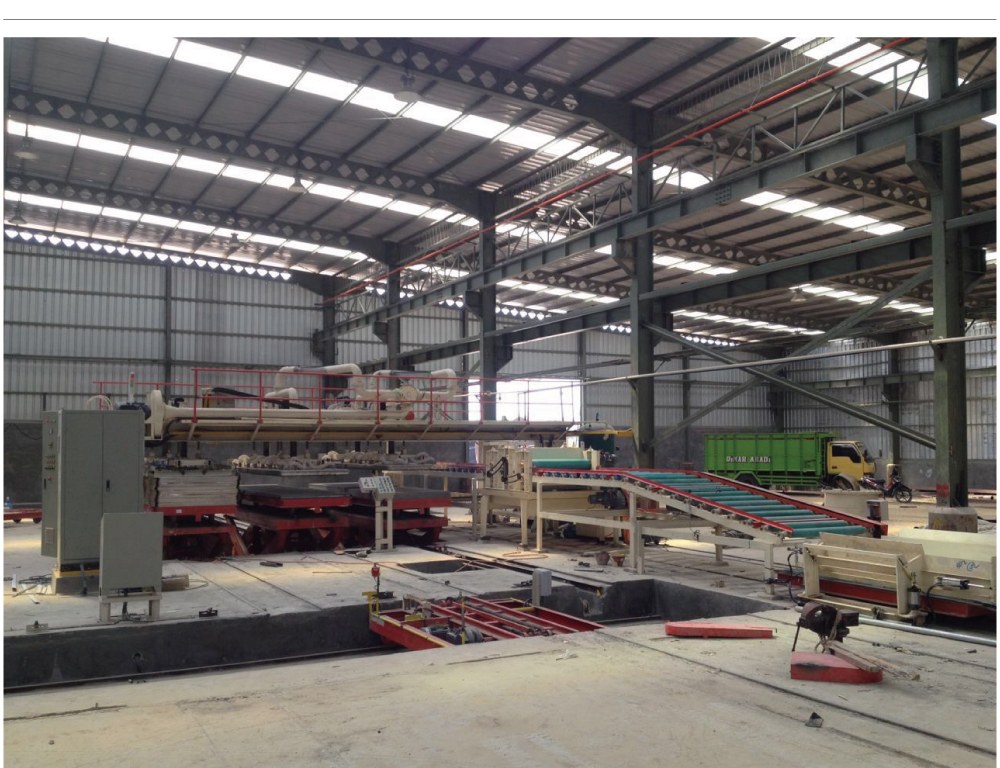
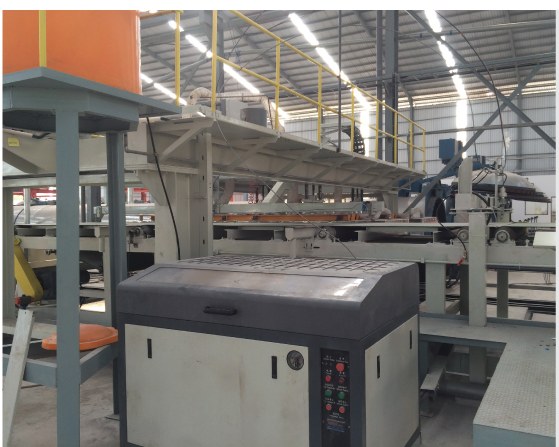
The green sheet is flat after the format drum. The wave is given to it before curing: it is laid on corrugating templates or formed by a vacuum transfer former. Textbooks on asbestos cement describe corrugating machines of batch and continuous action. While the sheet cures, it holds the shape of the template.
Hence the causes:
- Deformed templates. A dented, bent or corroded template passes its shape to every sheet. If the defect comes every certain number of sheets, look for the particular template.
- Slurry sticking to the template. The stuck layer changes the profile and interferes with demolding.
- Laying failure. The sheet lies on the template with an offset, one side shifted by half a wave.
- Wear of the corrugating machine. Suction cups, drive, synchronization with the feed. The sign is an uneven wave on all sheets, not on individual ones.
- Sheet too wet or too dry. A wet one spreads, a dry one takes the shape poorly and cracks along the crests.
- Impacts during demolding. The sheet is taken off the template early or with a skew.
Skewed sheet and uneven edge: what to check
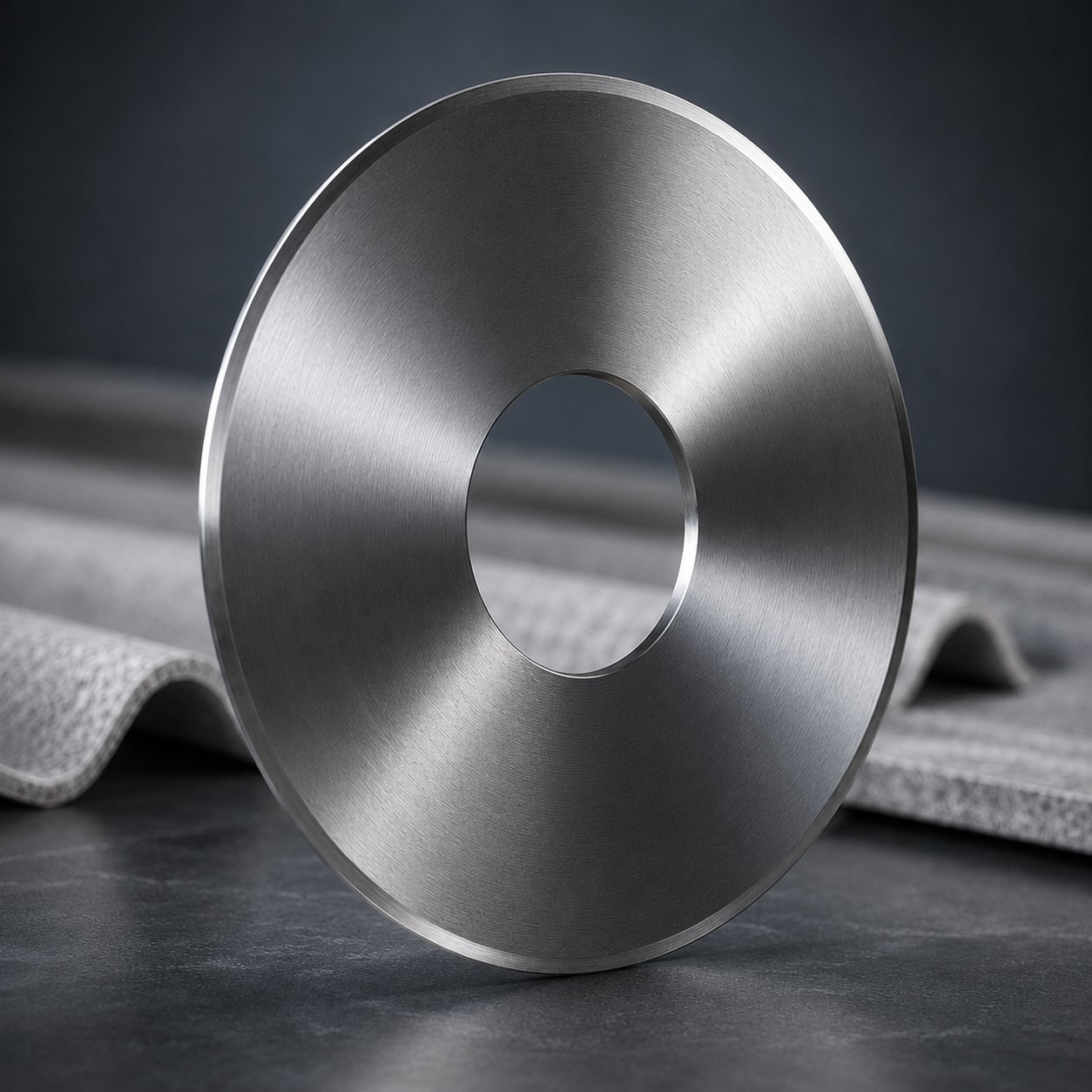
After forming, the blank is cut lengthwise and crosswise. The side edges are trimmed with disc knives or a water jet.
- A dull or chipped knife tears the edge instead of making a clean cut and gives chips.
- Knocked-off knife setting: the edges are not parallel and the sheet comes out as a trapezoid.
- Skew of the blank on the conveyor before the cross cut: the corner departs from a right angle.
- Wear of the feed units: belts, rollers, position sensors.
- Water-jet cutting: nozzle wear, loss of pressure, dirty water in the filter.
What to order after the diagnosis
- templates and pallets, by size, steel thickness and wave profile;
- edge-trimming knives, by diameter, bore and thickness;
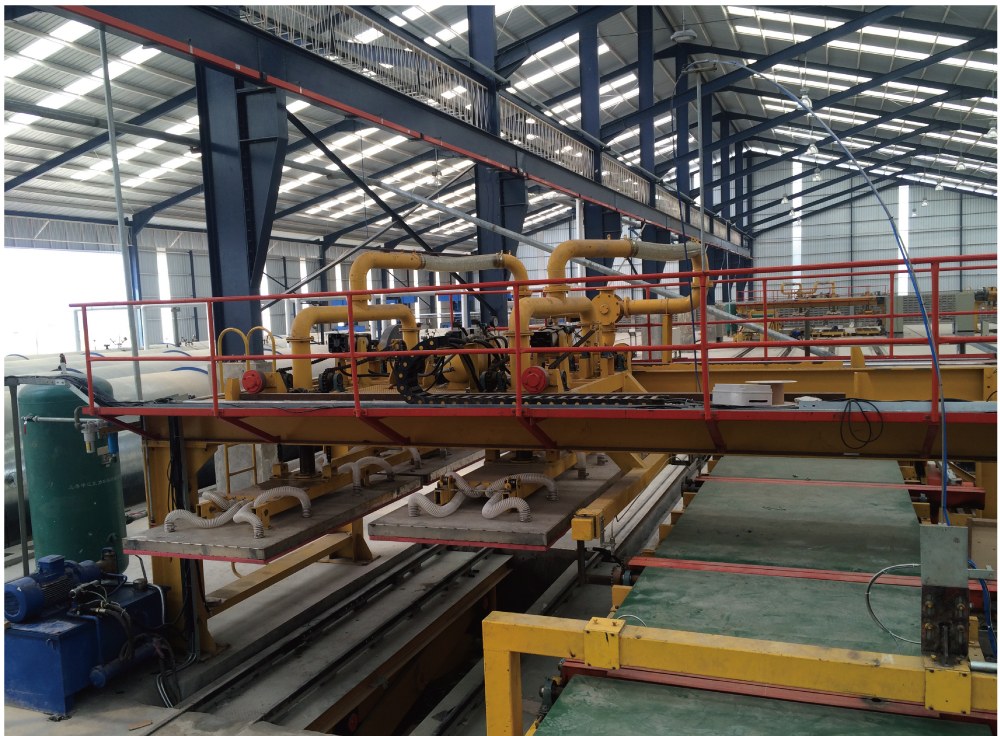
- suction cups, vacuum and pneumatic parts of the demolding machine and the stacker;
- for water-jet cutting, nozzles and filters according to the passport of the installation.
For templates it helps to send a drawing of the profile or a reference sheet with the wave measured.
How we do it
- From the number, drawing or photo of the unit, we look for the item at the manufacturing plant. What we find, with the price, photos and specifications, we send before the order.
- We inspect the lot at the plant before shipment: part number, dimensions, lot, packaging.
What this article relies on
Below are the documents and materials we refer to, so that you can check what is said for yourself.
Standards and documents
- GOST 30340-2012 "Chrysotile-cement corrugated sheets. Specifications": dimensions, limit deviations, wave pitch as a reference value, samplingtext ↗
- GOST 18124-2012 "Chrysotile-cement flat sheets. Specifications": squareness, straightness of the edges, flatnesstext ↗
- Declaration and technical data of profiled sheets to EN 494 (Eternit Baltic): tolerances for wave, thickness, dimensions and squarenesstext ↗
Reference materials
- Rybyev I. A. "Building Materials Science" (Строительное материаловедение), section "Fundamentals of asbestos-cement product manufacturing": corrugating on batch and continuous machinesstudme.org ↗
- taminota.com catalog: TMN-XHB-05 (stacker with lengthwise and crosswise cutting), TMN-XHB-06 (demolding and pallet lubrication), TMN-XHB-04 (water-jet cutting), TMN-280-1303 (edge-trimming disc knife).
The link between units and kinds of deviation is described from the design of the line, without a separate external source.