Corrugated sheet types: profiles, wave count, use
A corrugated sheet is told apart by its profile, meaning wave height and pitch, and by its number of waves. The current interstate standard GOST 30340-2012 knows two profiles: 40/150 with symmetric edges and 51/177 with asymmetric edges. The old designations (54/200, the "unified" and the "reinforced" profile) come from withdrawn standards, but they still turn up in orders and designs.
In short
4minutes to read
6sections
5sources
4catalog items
In this article
Contents
A corrugated sheet differs from another corrugated sheet first of all by its profile: the height of the wave and its pitch in millimetres. The profile is written as a fraction: 40/150 means a wave 40 mm high with a pitch of 150 mm. The current interstate standard GOST 30340-2012 knows two profiles, 40/150 and 51/177. Within a profile, sheets differ in the number of waves, length and thickness. Everything else that turns up in orders and price lists is an old designation from withdrawn standards, or a profile under foreign norms.
What the owner and the buyer need to decide
- Which profile your market asks for. A buyer of a private house and a buyer for a warehouse or workshop take different sheets. Find out what dealers and builders ask for before you change or order tooling.
- How many profiles the line carries. Each profile means its own set of wave templates, its own pallets and its own setup of the corrugating machine. A second profile on the same line is possible, but it is separate tooling and time for changeover.
- Which standard to cite in documents. If a buyer or a design uses an old designation, agree which sheet under the current standard it corresponds to.
Two profiles under GOST 30340-2012
40/150: symmetric edges
Under the earlier standard this profile went to attic roofs and to the walls of residential, public and agricultural buildings. The wave is lower and the pitch is smaller. The edges are symmetric. It is made in seven-wave and eight-wave versions: at the same length the eight-wave sheet is wider and heavier, the seven-wave sheet is narrower and lighter.
51/177: asymmetric edges
The wave is higher and wider. The edges differ: the overlapping edge is wider than the overlapped one, so the sheet is laid in one direction only. This profile used to have its own standard for "high-profile" sheets for the roofs and walls of industrial and unheated buildings. GOST 30340-2012 took it in together with 40/150, with its own dimensions and wave count.
The exact widths, thicknesses and lengths for each profile and wave count are in Table 1 of the standard. Dimensions and tolerances are covered in detail in a separate article.
How the designation reads
A sheet designation is made up of the profile, the number of waves, length, width, thickness and the standard number. For example, an entry like "40/150-8-1750×1130×5.8 GOST 30340-2012" reads as follows: profile 40/150, eight waves, then length, width and thickness in millimetres. Ridge pieces, angles and troughs have their own abbreviations in the standard.
Old designations that still turn up
- 54/200. A profile from GOST 30340-95: a six-wave sheet with a high wave, in two thicknesses, for attic and attic-free roofs of industrial buildings. GOST 30340-95 is no longer in force, and this profile is not in the current standard.
- "Unified profile" (UV). The same 54/200 profile under GOST 16233-77; from 1 September 1996 it was replaced by GOST 30340-95. Today the name lives only in old designs and in everyday speech.
- "High profile 51/177". Formerly GOST 24986-81; this profile is now described in GOST 30340-2012.
If a buyer names an old profile, ask for the dimensions of the sheet and the purpose of the roof. Most often one of the two current profiles suits them.
Foreign profiles
The European standard EN 494 divides profiled fibre-cement sheets by wave height and by mechanical properties, not by rigidly fixed dimensions. So a "European" sheet may match neither 40/150 nor 51/177. For selling into countries that work to GOST this matters: a foreign profile needs its own tooling. More in the article on EN 494 and ISO.
Engineering layer: what the profile changes on the line
- Templates and pallets. The wave is set by the template on which the green sheet takes its shape. Profile 51/177 needs different templates and pallets than 40/150, and a different way of stacking.
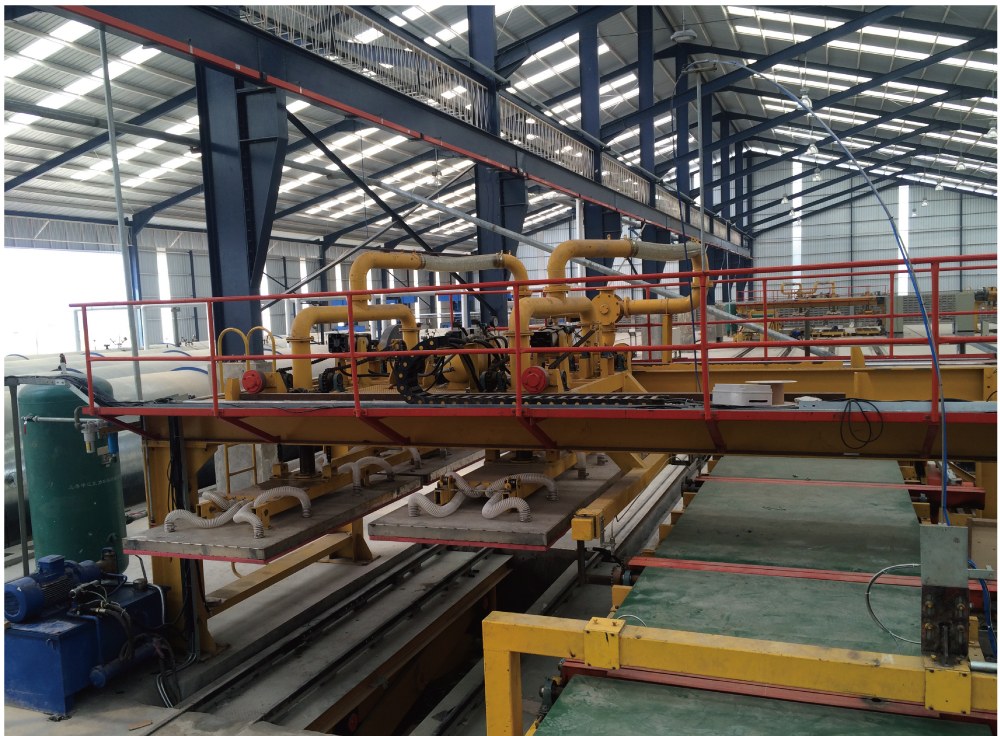
- Corrugating machine and demoulding. Suction cups and grippers are set to the wave pitch. A profile change means readjustment, and sometimes new grippers.
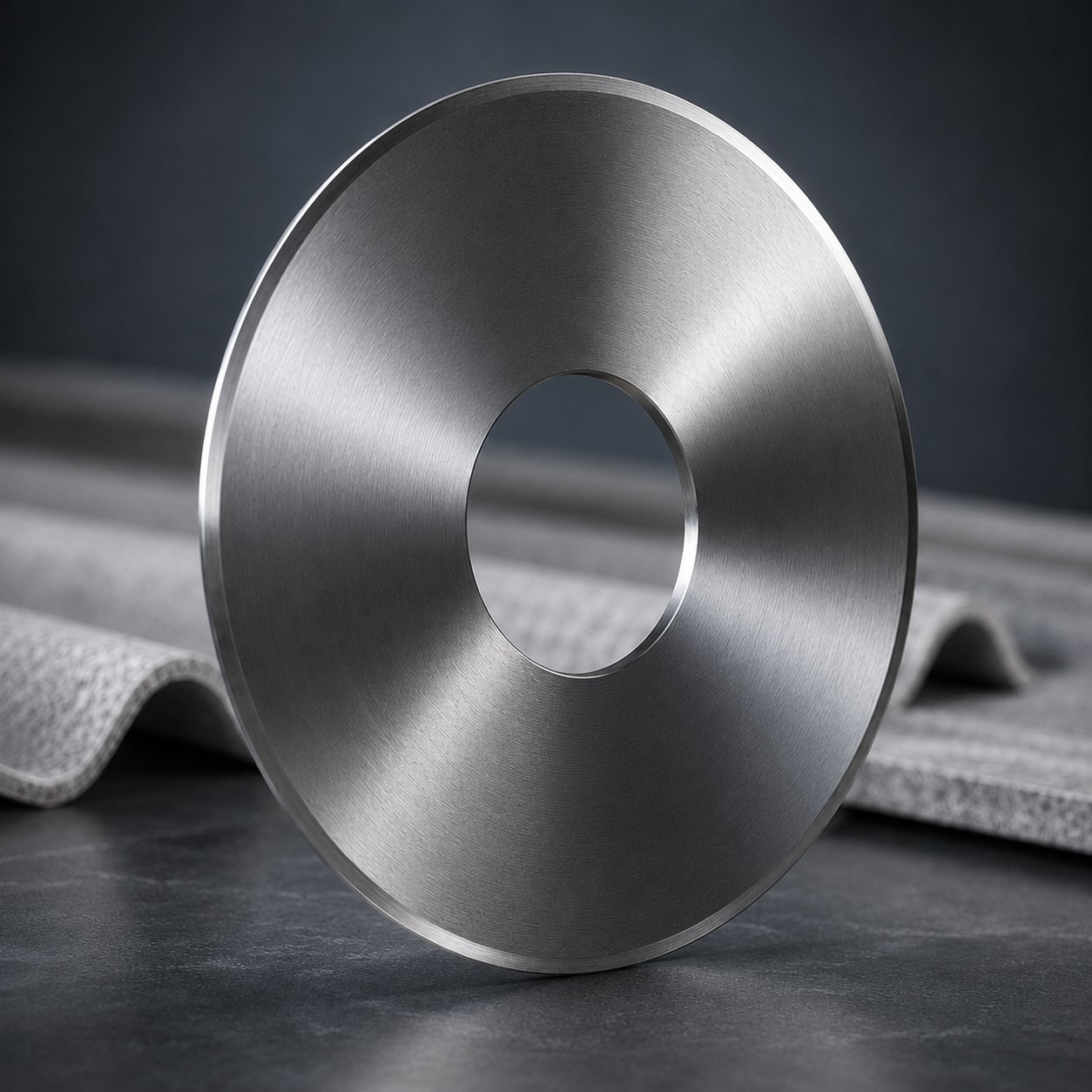
- Cutting. The sheet length is set by the cross cut of the green blank, the width and edges by the longitudinal cut. For the asymmetric profile the edge width is controlled separately, and the knives must be set more precisely.
- Thickness. Within one profile the standard allows several thicknesses. Thickness is set by the number of revolutions of the format drum and by the slurry feed, not by the tooling.
How we do it
- From the photo, dimensions and the passport of the unit, we look for the item at the manufacturing plant. What we find, with the price, photos and specifications, we send before the order.
- We inspect the lot at the plant before shipment: part number, dimensions, lot, packaging.
What this article relies on
Below are the documents and materials we refer to, so that you can check what is said for yourself.
Standards and documents
- GOST 30340-2012 "Chrysotile-cement corrugated sheets. Specifications": profiles 40/150 and 51/177, sheet designation, table of dimensionstext ↗
- GOST 30340-95 "Asbestos-cement corrugated sheets. Specifications" (no longer in force): profiles 40/150 and 54/200, sheet purpose, replacement of GOST 16233-77 and GOST 20430-84text ↗
- GOST 30340-95: marked "no longer in force", replaced by GOST 30340-2012 (prg.kz)text ↗
- GOST 24986-81 "Asbestos-cement corrugated sheets of high profile 51/177. Specifications": purpose of the profiletext ↗
- EN 494:2012+A1:2015 "Fibre-cement profiled sheets and fittings", abstract: classification by wave height and mechanical propertiestext ↗
Dimensions and wave counts for each profile follow Table 1 of GOST 30340-2012; this is a retelling without the table.