How to load and haul slate so it arrives in one piece
Slate arrives whole if it has already gained strength, is packed in strapped packs on pallets, the packs stand tight and are secured against shifting, and they are loaded with textile slings and a spreader or a lifting beam, with no impacts or dropping. GOST 30340-2012 allows any mode of transport but leaves placing and securing to the rules of that mode: for railcars the technical conditions for placing and securing cargo, for containers the rules for packing cargo units.
In short
5minutes to read
6sections
5sources
2catalog items
In this article
- 01What the owner and the sales department need to decide
- 02What GOST 30340-2012 requires
- 03Truck, railcar, container
- 04Lot documents
- 05Where breakage in transit comes from
Contents
Slate breaks on the road for the same reasons as in the yard: it is hauled before it has gained strength, the pack stands unevenly and shifts, the sheets are hit with a gripper or a sling. GOST 30340-2012 allows sheet to be transported by any mode of transport. It requires the plant to protect the sheets from mechanical damage, and to place and secure them under the loading and securing rules that apply to that mode of transport. So responsibility for arriving whole begins in the yard: the right pack, the right slings, the right stowing in the truck bed or railcar.
What the owner and the sales department need to decide
- Who loads and who secures. The plant loads, the carrier secures, the buyer accepts; each has its own share of breakage. Write in the supply contract who is responsible for what and how breakage is recorded at acceptance.
- What to ship in. A strapped pack on a pallet or on bearers is the main option. GOST allows unstrapped stacks on pallets only in a covered railcar, a container or a truck, and only secured against shifting.
- Which sheet can be loaded. Air-cured sheet only after the holding time set by the process regulations. A fresh sheet cracks from shaking on the road.
- Which documents travel with the lot. A quality document, a waybill, and for export an international waybill plus documents of conformity and origin.
What GOST 30340-2012 requires
- Transport by any mode, under the rules for carrying cargo by that mode.
- Sheets are protected from mechanical damage; they are placed and secured under the regulations for loading and securing cargo.
- Means of packing: slatted crates, packs on pallets or bearers with strapping, specialised cassettes, others by agreement with the consumer.
- The maximum pack size and mass are set by the standard; the pack carries transport marking under GOST 14192.
- The number of sheets in a stack when loading into railcars is set by the manufacturing plant's documentation.
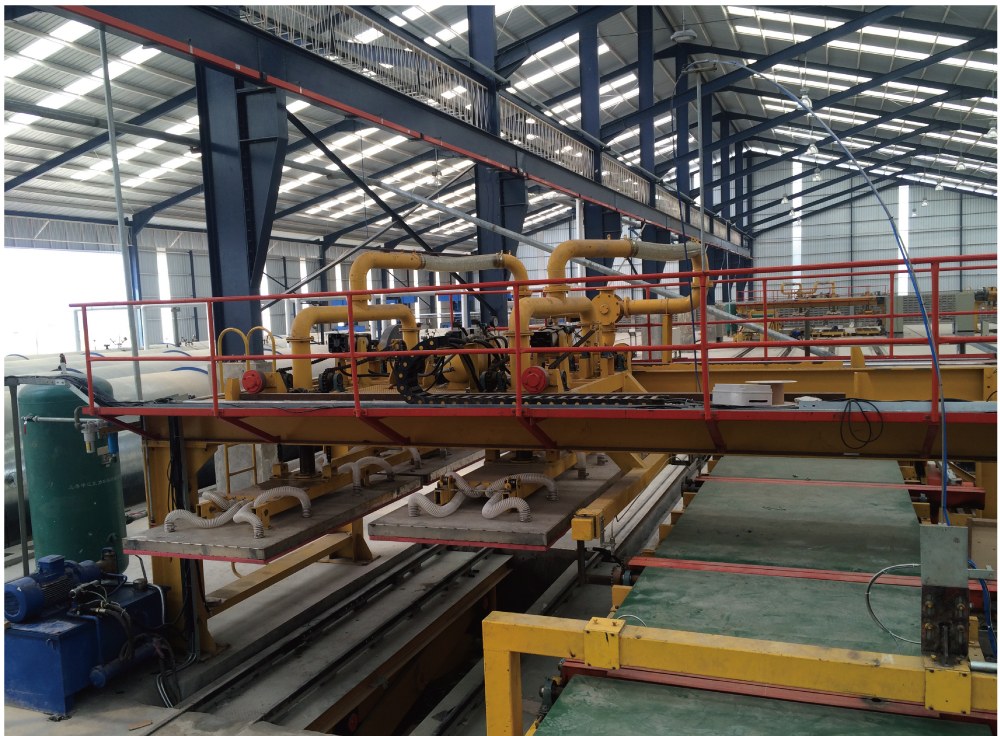
- Loading and unloading is done with cranes or other machinery using two looped textile slings with spread branches or a special lifting beam. Grippers must have protection so as not to damage the sheets.
- Impacts on the sheets and dropping from any height are not allowed.
Truck, railcar, container
Truck
- Packs are placed tight, with no gaps along or across the bed. Voids are filled with spacers or bearers, otherwise the pack shifts when braking.
- Straps are pulled over the pack, and corner protectors go under the strap on the edges: a strap without a protector breaks the top sheets.
- Packs are not stacked higher than GOST allows for storage, and no other cargo is put on top of them.
- The carrier must know the mass of the packs to spread them over the axles.
Railcar
For carriage on the 1520 mm gauge between Central Asian countries, the placing and securing of cargo in railcars is governed by Annex 3 to the Agreement on International Railway Freight Communications (SMGS). If there is no ready scheme in it for your cargo, one is developed and agreed separately. For a covered railcar this is a scheme of how packs, spacers and stops are laid; the plant keeps it and passes it to the loading station.
Container
Packing cargo into a container is described by the international code of practice for packing cargo transport units (CTU Code). Its main idea is the same: the cargo must not move inside the container, voids are filled, heavy items go at the bottom, and the load is spread over the floor.
Lot documents
- Quality document: with every delivery, with the lot's test results. This is a requirement of the standard.
- Waybill: for domestic carriage; for international carriage, a CMR consignment note for road or an SMGS consignment note for rail.
- For export: documents of conformity in the buyer's country and, if needed, a certificate of origin. These are covered in the article on selling slate to neighbouring countries.
- Photos of loading. Pictures of the packs in the bed or railcar before closing are the main argument if the buyer sends a claim for breakage.
Where breakage in transit comes from
| Sign | Likely cause |
|---|---|
| The top sheets of the pack are broken | a strap without protectors, cargo put on the pack |
| Sheets broken along one side of the pack | the pack shifted and hit the side or a neighbouring pack |
| Cracks across the whole pack | the sheet had not gained strength, an uneven pallet, shaking |
| Split edges and corners | impacts from a gripper or forks during loading and unloading |
How we do it
- From the photo, dimensions and the passport of the unit, we look for the item at the manufacturing plant. What we find, with the price, photos and specifications, we send before the order.
- We inspect the lot at the plant before shipment: part number, dimensions, lot, packaging.
What this article relies on
Below are the documents and materials we refer to, so that you can check what is said for yourself.
Standards and documents
- GOST 30340-2012 "Chrysotile-cement corrugated sheets. Specifications", clause 9.1: modes of transport, means of packing, pack size and mass, pack marking, stacks on pallets in covered railcars and containers, loading with slings with a spreader or a beam, ban on impacts and dropping; quality document with the deliverytext ↗
- Annex 3 to SMGS "Technical conditions for placing and securing cargo", volume I, edition of 01.07.2022text ↗
- IMO/ILO/UNECE Code of Practice for Packing of Cargo Transport Units (CTU Code), IMO pagetext ↗
Reference materials
- Occupational safety rules for loading and unloading and placing cargo (Правила по охране труда при погрузочно-разгрузочных работах и размещении грузов), section VI (consultant.ru): cargo is stacked and secured so that it does not shift or fall in motion; palletising of piece cargoconsultant.ru ↗
- Rules for acceptance, transport and storage of roofing sheets from one manufacturer (metallprofil.ru): packs are secured against moving and damage, the buyer must have strapsmap.metallprofil.ru ↗
Securing schemes in a railcar and a container are chosen for your pack and your railcar; check the current edition of the rules with the loading station and the carrier.