Lubricating a line in water and cement dust: what, where and how often
On a slate line, shaft bearings work in water and cement dust, so they are lubricated with a water-resistant grease and more often than in a dry shop. But not more than the norm: excess grease heats the bearing and pushes out the seals. Order is kept by a lubrication chart (a list of points, lubricants, quantities and intervals) and, where there are many points, by a centralized system.
In short
5minutes to read
8sections
6sources
4catalog items
In this article
- 01What the chief mechanic and the buyer need to decide
- 02Which lubricant goes where
- 03Why over-greasing is also harmful
- 04Why lubricate more often but in small amounts
- 05The lubrication chart
Contents
The units of a slate line work in two harmful environments at once: in water with slurry and in cement dust. Water washes out the grease and causes corrosion, and dust acts as an abrasive. So the bearings of the forming machine shafts, pumps and conveyors are lubricated with a water-resistant grease and topped up more often than in a dry shop. Fresh grease also pushes dirt out of the seal. But the quantity each time must follow the norm: excess grease is churned in the bearing, heats it and pushes out the seals. Gearboxes and the press hydraulics run on oil, and for them the main things are oil cleanliness and timely changes. So that all this does not live in the head of one fitter, a lubrication chart is drawn up for the line.
What the chief mechanic and the buyer need to decide
- Reduce the number of lubricants. At many plants there are five or six similar greases in the store, and the fitter takes the nearest. Better two or three, chosen for the conditions, each with clear marking.
- Draw up a lubrication chart. Without it, lubrication is skipped, mixed up or overdone.
- Decide where centralized lubrication is needed. Where there are many points and they are hard to reach while the machine is running.
- Keep the grease closed. An open bucket in cement dust is already an abrasive paste.
Which lubricant goes where
| Unit | What lubricates it | What to look at |
|---|---|---|
| Bearings of forming machine shafts, couch rolls, tension rolls | water-resistant grease | water and slurry at the seal, heating, noise |
| Bearings of slurry and stock pumps | grease according to the pump passport | water from the gland must not get into the bearing |
| Housed bearings of conveyors | grease | dust, outdoor installation |
| Gearboxes | gear oil according to the passport | level, color, water in the oil, breather |
| Press hydraulic system | hydraulic oil according to the passport | cleanliness, filters, temperature |
| Chains and open gears | according to the unit passport | dust sticks to sticky grease |
The brand and grade of the lubricant are taken from the unit passport or the bearing manufacturer's catalog. If there is no passport, it is chosen by the conditions: speed, load, temperature, water, dust.
Why over-greasing is also harmful
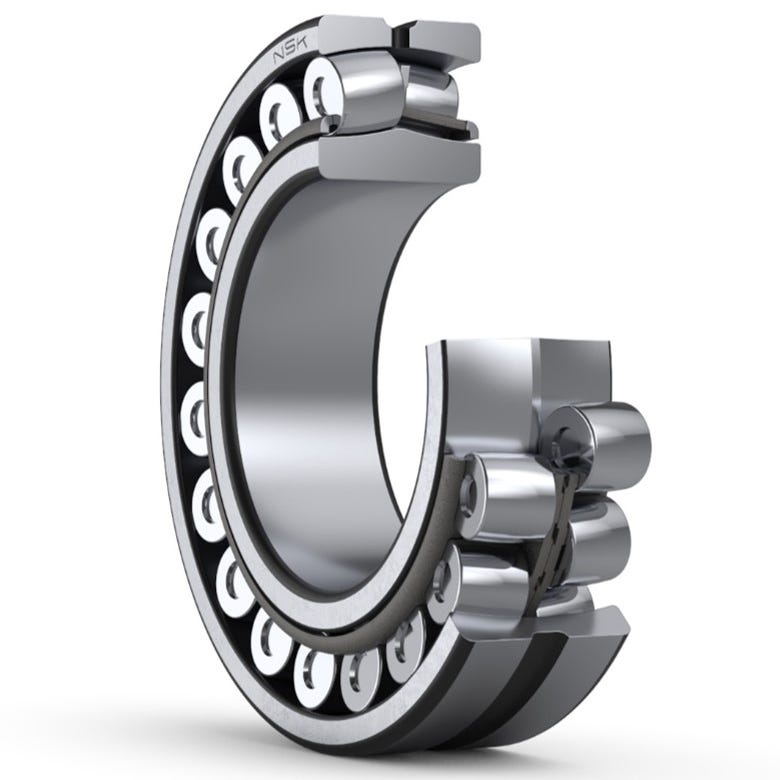
Grease in a bearing works in a small quantity. If the bearing and housing are packed full, the excess grease is churned by the rolling elements. Friction and temperature rise, the grease ages faster and may lose its lubricating ability. Pressure during packing pushes out or turns inside out the lip seal, and then water and dust get freely into the bearing.
Signs of over-greasing: the bearing temperature after greasing rises and takes a long time to return to normal, grease creeps out of the seal in a ring, the lip seal is pushed out.
Why lubricate more often but in small amounts
In a wet and dusty environment, water and dirt get into the grease faster than the grease ages on its own. So the replenishment interval is shortened while the portion stays as calculated. Fresh grease fed through the seal pushes the dirty grease out. Labyrinth seals with grease feed are built on this: the grease fills the labyrinth and keeps the dust outside. The grease for the labyrinth must be the same as in the bearing or compatible with it.
Bearing manufacturers note something else: in especially wet places, for example under pressure washdowns, water is forced past the seals, washes out the grease, and bearings have a short life. There, bearings with seals and lifetime grease fill, or special designs, are installed; this is worth deciding together with the bearing supplier.
The lubrication chart
A lubrication chart is a table for each machine. For every point it has:
- the number and location of the point on the machine diagram;
- the unit and the bearing;
- the brand of grease or oil;
- the quantity each time;
- the interval;
- the method: grease gun, manual filling, centralized system;
- who is responsible and where the completion mark is.
The chart is hung by the machine, and the points on the machine are marked with the color of the lubricant. Lubrication marks and the faults found during it are conveniently kept in the same log as failures.
Centralized lubrication
A centralized system delivers grease from one pump through metering valves to every point. Each metering valve is set to its own portion, and the pump runs on a timer or on a signal from the control system. The advantages: points are lubricated while the machine runs, without stopping and without climbing to the shafts; the portion is the same; grease from a closed tank does not pick up dust. The drawback is that the system also has to be maintained: check the tank, the lines, the operation of the metering valves. A broken tube in such a system means a dry bearing that nobody knows about.
What to attach to a request for lubricant or a system
- A list of lubrication points by machine or a ready chart.
- Photos of the nameplates of bearing units, gearboxes, pumps.
- Which greases and oils are used now and what the passport prescribes.
- Conditions: water, dust, outdoor installation, winter temperature.
How we do it
- From the photo, dimensions and the passport of the unit, we look for the item at the manufacturing plant. What we find, with the price, photos and specifications, we send before the order.
- We inspect the lot at the plant before shipment: part number, dimensions, lot, packaging.
What this article relies on
Below are the documents and materials we refer to, so that you can check what is said for yourself.
Reference materials
- SKF, brochure "SKF Solid Oil": water in a bearing degrades the lubricant and causes wear and corrosion; high-pressure washdowns open seals and wash out grease, bearings in wet environments have a short service lifemichaud-chailly.fr ↗
- Reliability Solutions, "Why too much grease causes heat, seal damage and premature failure": churning of excess grease, temperature rise, seal damagereliabilitysolutions.net ↗
- Machinery Lubrication, "How to Protect Bearings from the Elements": humidity and water ingress as the basis for choosing the replenishment intervalmachinerylubrication.com ↗
- NSK Europe, Technical Insight P_TI-0108: seals with grease-filled grooves against dust; the labyrinth is for a comparatively clean environmentnsk.com ↗
- SKF, brochure on Taconite labyrinth seals: purging the labyrinth with grease, compatibility of the grease with the bearing greasecdn.skfmediahub.skf.com ↗
- Albeco / SKF, "SKF centralized lubrication systems": a metering valve for each point, an exact portion, lubrication without stopping the machinealbeco.com.pl ↗
Lubrication intervals and quantities are not stated in the article: they are set by the unit passport and the bearing manufacturer's catalog.