How to replace a servo motor: why the motor and drive come as a pair
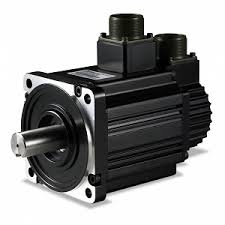
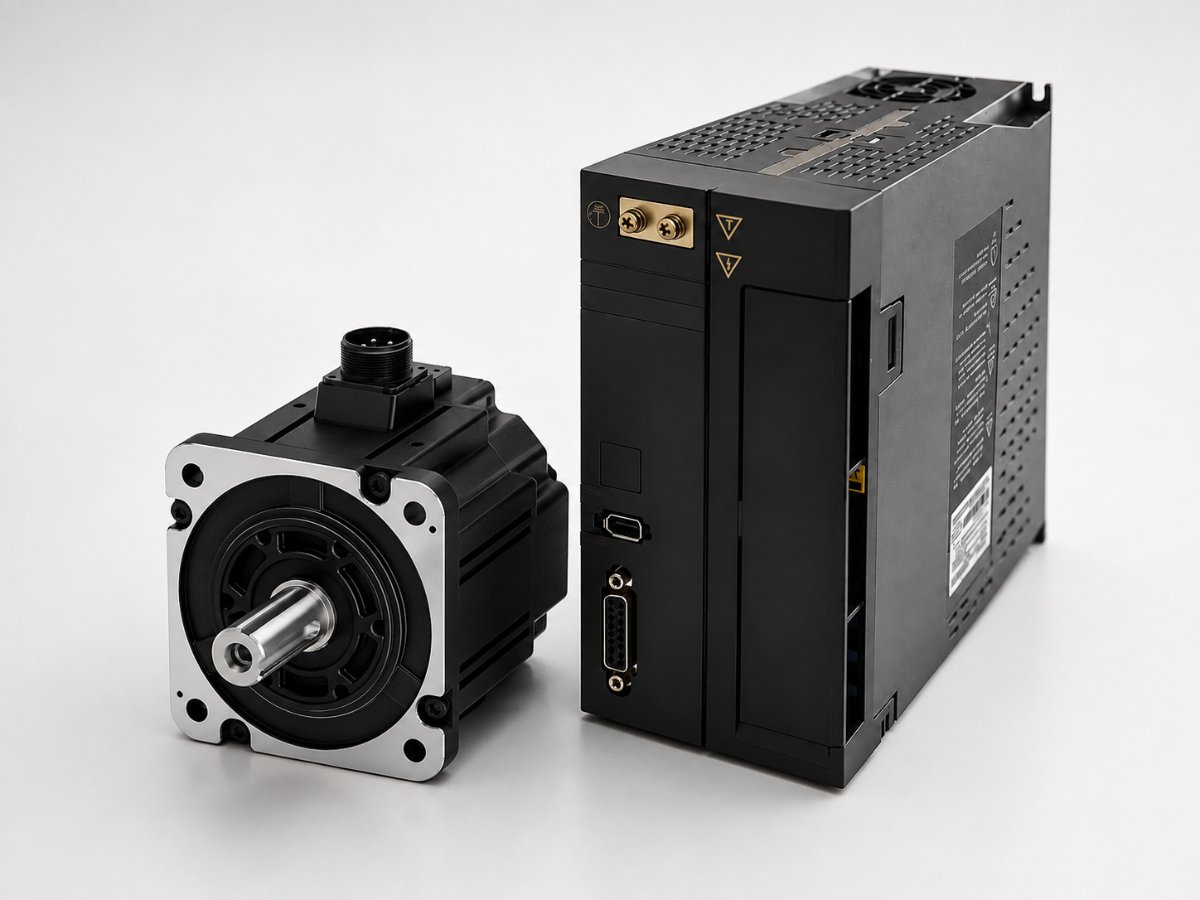
A servo motor works only with its own drive: the drive reads the motor's encoder and knows its parameters. So a replacement is sought by the full motor model and the drive model together. A motor of another brand that is the same in kilowatts will not work without changing the drive and retuning.
Updated
Contents
A servo motor is not an ordinary motor. It works only together with a drive (servo amplifier), and the drive must "know" this exact motor: its power, speed and encoder type. Manufacturers make motors and drives in series and publish tables showing which motor works with which drive. So a replacement is sought by two models at once, the motor and the drive. If you fit a motor of the same series and power, it is usually enough to check the settings. If it is a motor of another brand, the drive is almost always changed too, and then the drive system is set up again.
Why the motor and drive come as a pair
A servo motor has an encoder on its shaft, a position sensor. The drive reads the encoder at every moment and feeds current to the windings so that the shaft ends up exactly where the controller commanded. So the drive must understand the signal of this encoder and know the electrical parameters of the windings.
You can see this in the manufacturers' documentation:
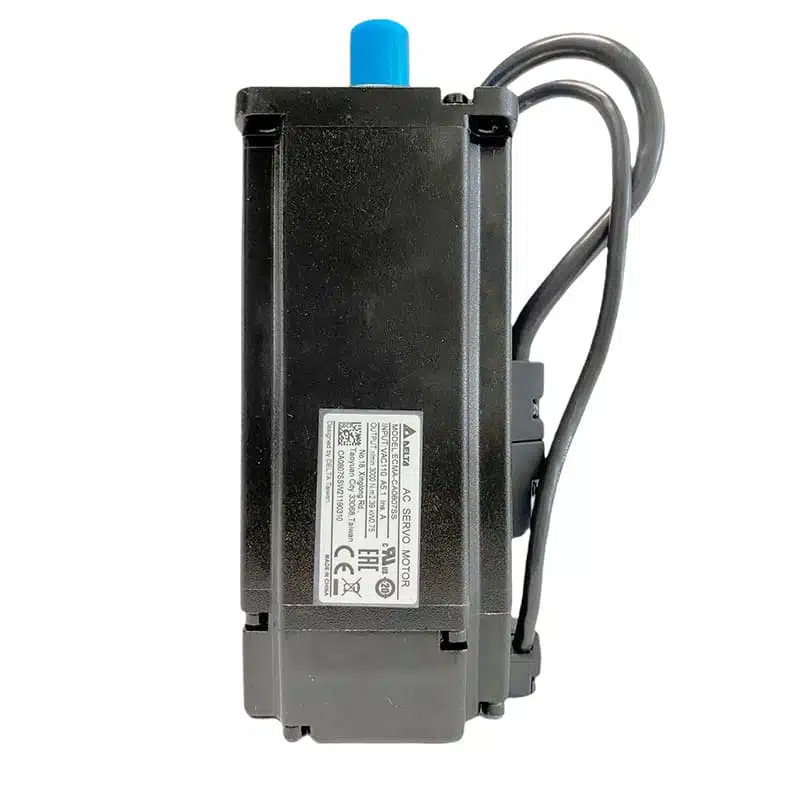
- XINJE states directly in the manual for DS5 drives: one drive can work with several motors of similar power, and they are told apart by the motor code on the nameplate. On receipt, the manufacturer advises checking the motor code against the code stored in the drive parameters.
- Delta, in the ASDA-A2 catalog, gives tables of combinations: which ASD-A2 drive works with which ECMA motor and which power cable and encoder cable that pair needs. For a motor with a brake the cable is different.
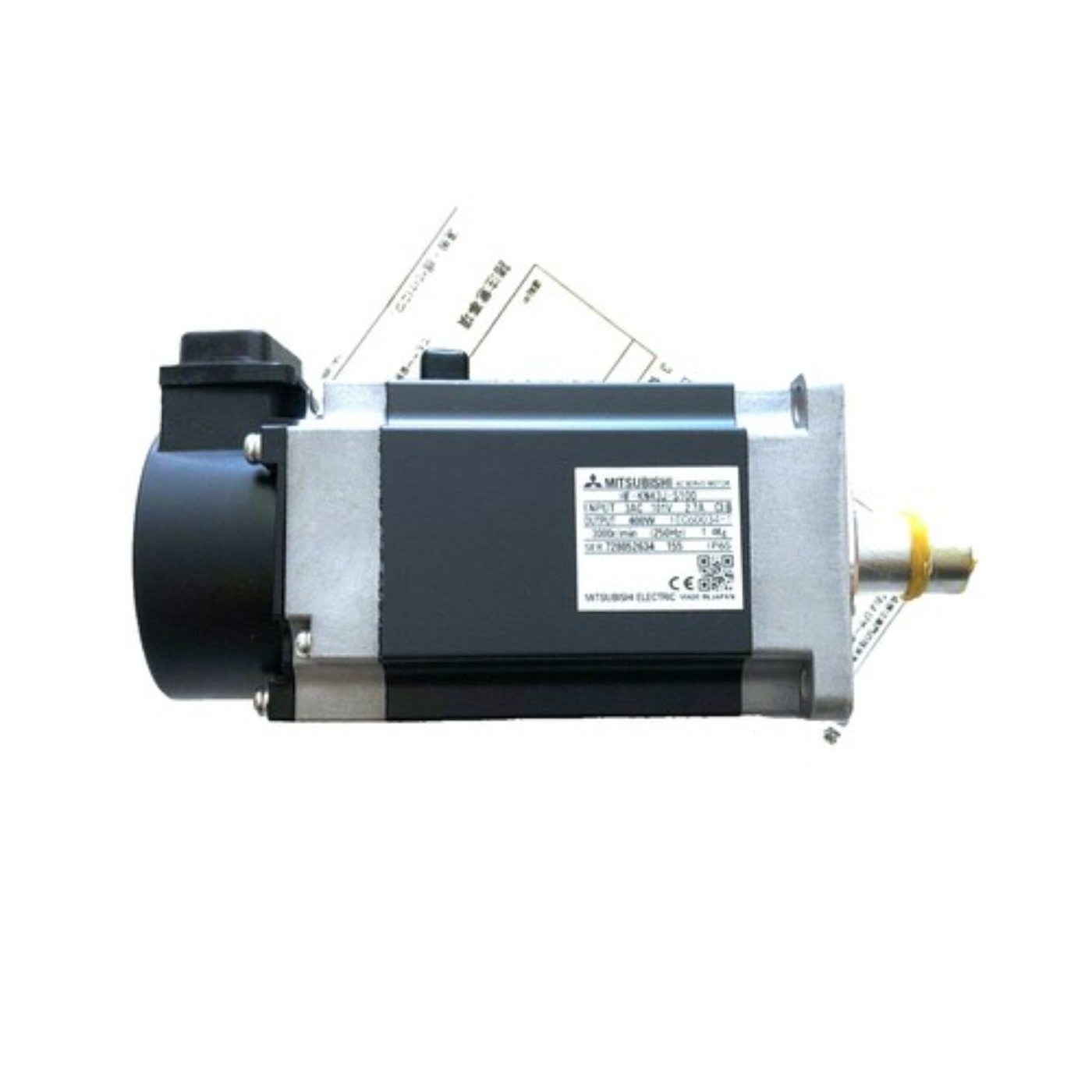
- Mitsubishi publishes a separate page of amplifier and motor combinations for the MR-J4 series.
Hence the practical rule. A motor of another brand that is "the same in kilowatts" has a different encoder and different parameters. Your drive will most likely not recognize it.
What the letters in the model mean: Delta ECMA as an example
For most manufacturers a servo motor model is built from fields: series, voltage and speed, encoder, flange size, power, shaft version. Let us break down the motor from our catalog, Delta ECMA-L11875R3, using the Delta ASDA-A2 catalog.
| Part of the model | Meaning | What it means for a replacement |
|---|---|---|
| ECMA | Delta servo motor series | you need a drive of the Delta ASDA series |
| L | 400 V, rated speed 1500 rpm | the drive voltage must match |
| 1 | 20-bit incremental encoder | the drive must support this encoder |
| 18 | 180 mm flange | this decides whether the motor fits in place |
| 75 | power 7.5 kW | the drive is chosen by power |
| R | shaft with key and threaded hole, no brake, with oil seal | key, brake and seal must match the machine |
| 3 | special shaft version instead of standard (S) | checked against the manufacturer's catalog |
The brake letter matters separately. On a vertical axis (a lift, a press) a motor with a brake holds the load when power is off. A replacement without a brake is dangerous there.
Other options in the same catalog: instead of 1 in the encoder position there can be 2 (17-bit incremental) or A (absolute). An absolute encoder remembers the position after power is switched off, an incremental one does not, and the machine needs to return to zero. If you had an absolute one, fit an absolute one.
Example: XINJE MS6
XINJE uses the same logic with different fields. The motor from our catalog is MS6G-180CN15BZ2-45P5, supplied with the drive DS5K2-45P5. According to the XINJE manual for the DS5 series:
- MS6 is the series, and the next letter is the rotor inertia;
- 180 is the flange size;
- C is a magnetic encoder (T is photoelectric);
- 15 is the rated speed, 1500 rpm;
- B is a shaft with key, oil seal and threaded hole;
- Z means with brake;
- 2 is an aviation-type connector;
- 4 is the voltage class, 380 V;
- 5P5 is the power, 5.5 kW.
We did not find one letter (N, encoder accuracy) in the open manual: its table lists other options. Such places are clarified with the plant, not guessed. The nameplate of this motor also carries a motor code, 895D. This is the code the XINJE drive checks against its parameter.
Three replacement paths
| Situation | What to do | What to check |
|---|---|---|
| The motor burnt out, the drive is fine | order a motor of the same full model | motor code and drive parameters; encoder, brake, shaft |
| The drive burnt out, the motor is fine | order a drive from the combination table for this motor | series, voltage, power, control type (pulses, network) |
| The needed model is not available | replace the "motor + drive" pair with a new series | flange, shaft, link to the controller, retuning and commissioning |
The third path affects more than the drive. The new drive may accept commands from the controller differently. Then the wiring or the program is changed; see the article on discontinued controllers.
What to copy from the nameplates before ordering
- The full motor model, all letters and digits. The motor code, if there is one.
- The full drive model.
- The serial numbers of the motor and drive.
- Photos of the nameplates, of the motor in place and of the cable connectors: power and encoder.
- Whether the axis is vertical or horizontal, and whether there is a brake.
- What happened: the motor does not turn, the drive shows an error (write down its code), a broken cable.
The cause can also be the encoder cable. Before ordering a motor, it is worth checking the cable and connectors.
How we do it
- From the motor and drive nameplates we look for the same item at the manufacturer. We send you what we found before the order: the model, the data and which drive the item works with.
- If the exact model is not available, we show what the manufacturer offers as a replacement and write plainly what will change: drive, cables, setup.
- Where we need the plant's answer on compatibility, we pass on its word, not our own assumption.
What this article relies on
Below are the documents and materials we refer to, so that you can check what is said for yourself.
Reference materials
- Delta Electronics. ASDA-A2 Series AC Servo Drive & Motor, catalog (Model Explanation section, motor and drive tables)wmsc.lcsc.com ↗
- XINJE. DS5C1 Series Servo Driver User Manual (sections 1.1–1.2: motor code check, MS5/MS6 motor designation)download.plcsystems.ru ↗
- Mitsubishi Electric. MELSERVO-J4: servo amplifier and servo motor combinationsmitsubishielectric.com ↗