Vacuum boxes under the felt: what wears out in them
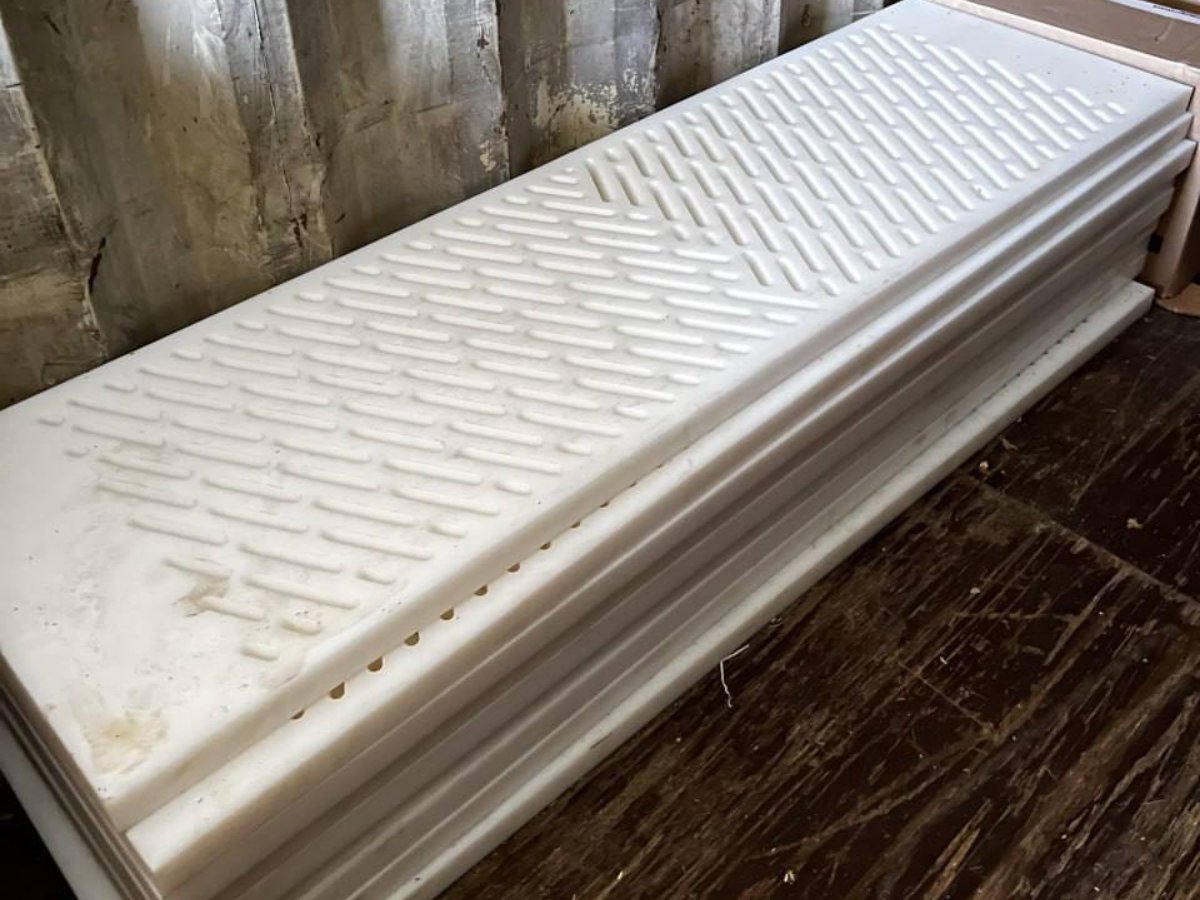
In a vacuum box the cover (polyethylene or ceramic strips), the slot edges and the seals at the ends and joints wear out. A worn cover cuts the felt, gives uneven suction and a sheet of varying thickness. Check them at every stop and keep cover strips in stock.
In short
4minutes to read
6sections
5sources
2catalog items
In this article
- 01What the box does
- 02Polyethylene or ceramic
- 03What wears out and how to notice it
- 04What to check at a stop
- 05What to tell us when ordering strips
Contents
In the vacuum box under the felt, what wears first is the cover: the strips the felt slides over, and the edges of the slots or holes in them. Next come the seals at the ends and joints, through which the box draws in air, and the body itself, if the slurry eats into it over the years. A worn cover does harm twice: it cuts and rubs through the felt, and it gives uneven suction across the width, so the sheet comes out of varying thickness. The cover strips are a consumable, and they are kept in stock to the size of your boxes.
What the box does
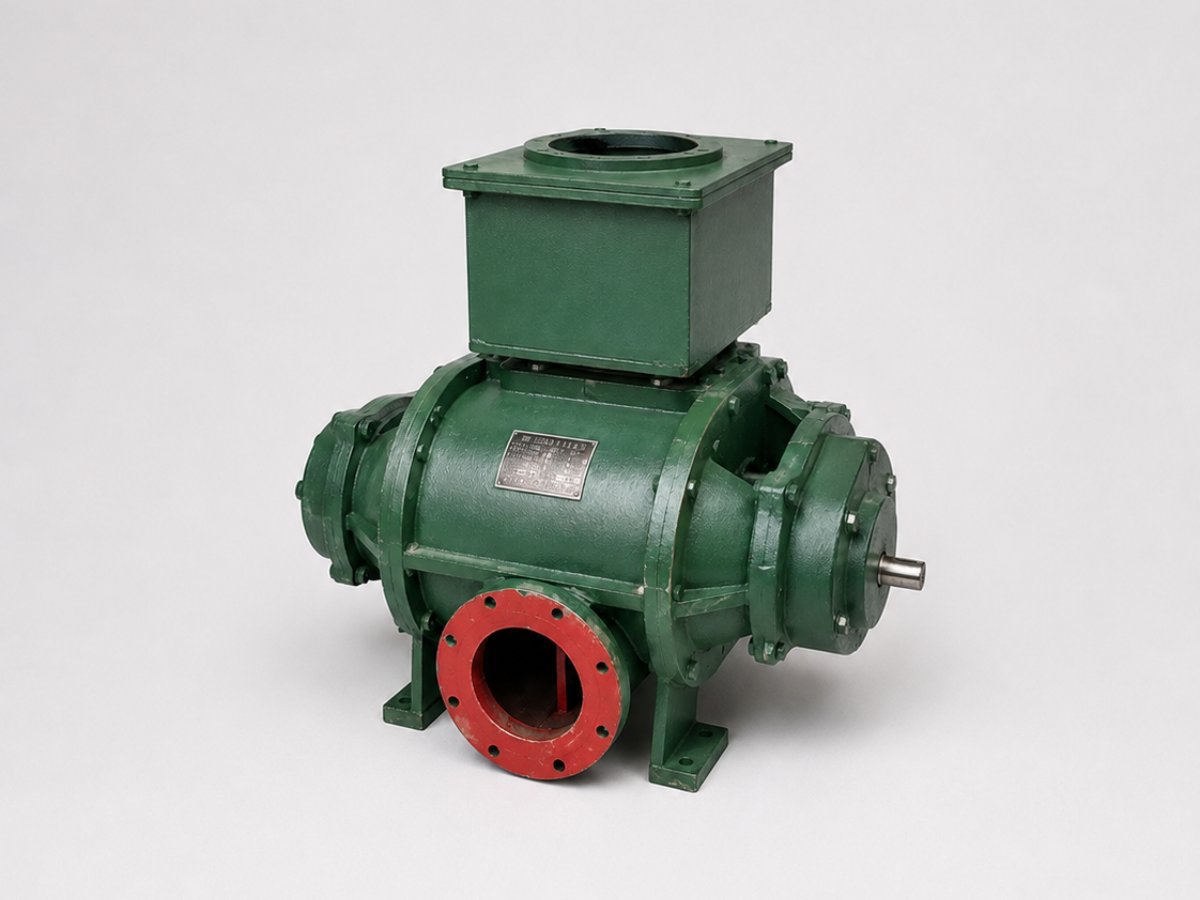
After the cylinder moulds, the felt of a Hatschek machine carries the wet layers of slurry over one or several vacuum boxes. The box has a cover with slots or holes on top and a connection to the vacuum pump underneath. The vacuum draws water out of the layer through the felt. The more even the suction across the width, the more even the moisture and thickness of the blank.
The same box often works in a pair with a spray: the jet knocks dirt out of the felt, and the box sucks it away. If the box is weak, the felt clogs faster.
Polyethylene or ceramic
Box covers are made from two groups of materials.
- Polyethylene (often ultra-high molecular weight). Slippery, gentle on the felt, inexpensive. The downside is that it wears itself and needs frequent replacement, and so stoppages. Worn polyethylene loses its flat surface, the slot edges round off, and the suction across the width "drifts".
- Ceramic (aluminium oxide, silicon carbide and others). It hardly wears itself. But if the slot shape is unfortunate, ceramic wears the felt more, especially where the straight wall of a slot turns into a rounded end. That is why slots of wavy and zigzag shape were devised for ceramic covers.
There is a third problem, common to any cover. A long straight slot across the full width leaves the felt without support, and the slot edges work like a knife. Old patents on box covers describe exactly this: heavy wear along the slot edges and at the wire junctions.
Which is better for your machine depends on the slurry, the speed, the felt and how often you can stop. If the original cover worked well, it is reasonable to fit the same one.
What wears out and how to notice it
| Where | What happens | How it shows |
|---|---|---|
| Cover surface | wear, a step between strips | stripes on the felt, moisture stripes on the sheet |
| Slot edges | rounding or, on the contrary, a sharp edge, chipped ceramic | cuts and rubbed tracks on the felt |
| Strip joints | a gap, a height difference | a repeating line on the felt |
| End seals | air leakage | vacuum on the box drops, the pump "does not pull" |
| Body and connection | caked slurry, corrosion | uneven vacuum, the box drains water poorly |
A separate sign is when the felt wears faster than usual and specifically in stripes along its length. Almost always this is the box cover or a roll, not the felt.
What to check at a stop
- Run a ruler or a straight bar along the cover: are there steps or sag.
- Feel the edges of the slots and holes: anything sharp or chipped is due for replacement.
- Check the gaps at the strip joints.
- Inspect the end seals and fasteners.
- Wash the box and connection of caked slurry.
- Compare the vacuum on each box with what it was when the cover was new.
Records of the vacuum on each box are the best way to notice wear before it ruins the felt.
What to tell us when ordering strips
- The length, width and thickness of the strip, the number and size of slots or holes, their pitch.
- The material of the old strip: polyethylene, ceramic, other.
- How the strip is fixed: in a groove, on screws, on glue.
- Photos of the working side and the end next to a ruler; a drawing, if there is one.
The catalog has a vacuum panel 1900 × 490 × 50 mm with channels on the working surface. Whether it fits your boxes is decided by the dimensions, the construction and the line model, and these are checked before ordering.
How we do it
- By number, drawing or photo of the unit, we look for the item at the manufacturing plant. What we find, with the price, photos and specifications, we send before the order.
- We inspect the lot at the plant before shipment: part number, dimensions, lot, packaging.
What this article relies on
Below are the documents and materials we refer to, so that you can check what is said for yourself.
Reference materials
- Application EP 0964088, background section: suction boxes of the Hatschek machine and their role in dewateringdata.epo.org ↗
- Patent US 4909906 "Cover piece for a suction box with wavelike or zigzag passage": felt wear on a ceramic cover at the ends of the slotspatents.justia.com ↗
- Patent US 3975568 "Low-friction, wear-resistant material and process for making the same": polyethylene and ceramic for covers, fast wear of polyethylene and stoppages for replacementpatents.justia.com ↗
- Patent US 2543870 "Suction box cover for papermaking machines": wear along the edges of long slotspatents.google.com ↗
- taminota.com catalog: vacuum panel TMN-WP-1900, dimensions per the manufacturer.
The materials on box covers are taken from papermaking, where the design is the same. The inspection order is general operating practice.