Autoclave at a slate plant: what it is for and what gets serviced
An autoclave is needed where the mix contains ground quartz sand: under saturated steam pressure the sand reacts with the lime from the cement, and the sheet gains strength in a single cycle. What wears out in it: the seal of the quick-opening lid and its mechanism, steam traps and drainage, valves and safety valves, rails and cars. In Uzbekistan the autoclave is pressure equipment and falls under technical regulation CMR No. 493.
In short
6minutes to read
6sections
7sources
3catalog items
In this article
- 01What the owner and the buyer need to decide
- 02What an autoclave consists of
- 03What wears out and how you can see it
- 04Requirements in Uzbekistan: what CMR No. 493 says
- 05What to attach to a spare parts request
Contents
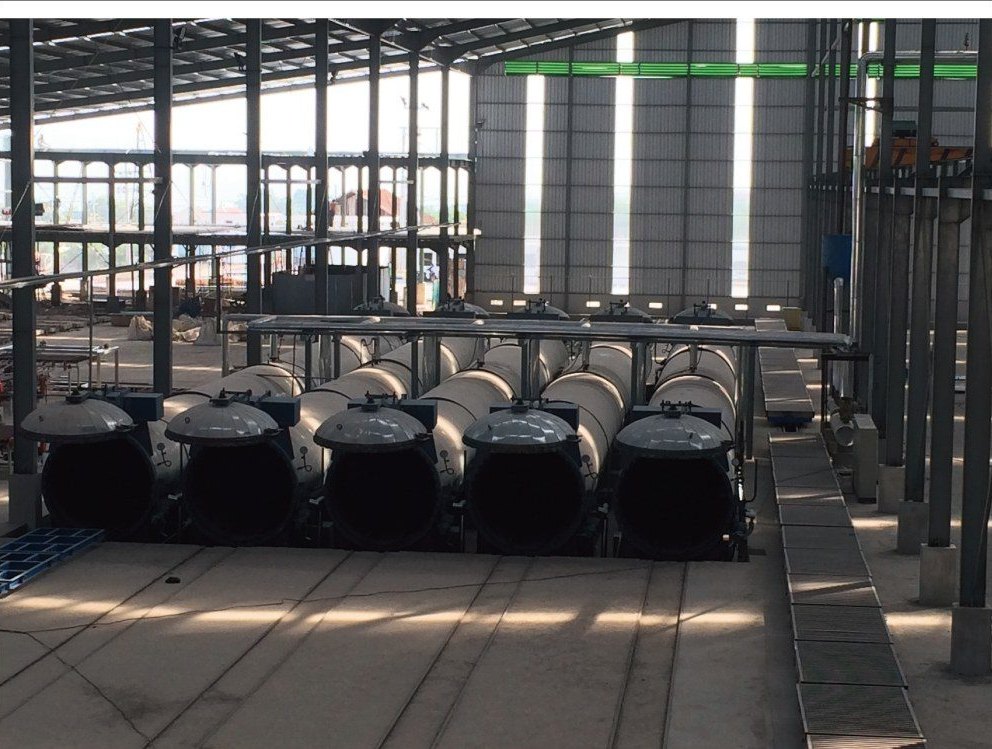
An autoclave at a slate plant is needed when the mix contains ground quartz sand. Under normal conditions the sand hardly works at all. Under saturated steam pressure it reacts with the lime released as the cement hardens and forms calcium silicate hydrate, tobermorite. It binds the remaining sand and the fibre, and in one cycle the sheet gains the strength that takes weeks when curing in air. An autoclave is a long steel vessel with a quick-opening lid, into which stacks of sheets are rolled on cars. The parts most often serviced are the lid seal and lid mechanism, condensate removal, valves and safety valves, and the rails and cars. In Uzbekistan the autoclave falls under the technical regulation on the safety of equipment operating under excess pressure (CMR No. 493 of 04.08.2025).
What the owner and the buyer need to decide
- Whether you need an autoclave at all. It depends on the mix recipe: with PVA fibre an autoclave is not used. The details are in the article on the autoclave versus natural curing.
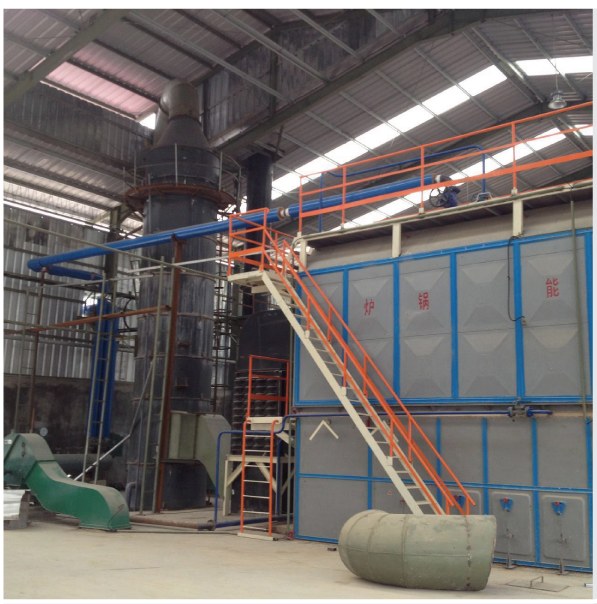
- Whether the steam is enough. The autoclave is the main steam consumer. The boiler, the steam line and condensate removal are calculated together with it.
- Documents. The vessel passport, the manual and the safe operation instruction from the manufacturer: before purchase, not after.
- Spares. The lid seal, steam traps, valve gaskets and the safety valve are what the autoclave cannot run without.
What an autoclave consists of
| Unit | What it does | What wears out in it |
|---|---|---|
| Shell | a horizontal cylinder that withstands the pressure | corrosion, welds, supports |
| Quick-opening lid | opens for loading, seals tightly for the cycle | seal, lid lock (often a bayonet type), lid drive, interlocks |
| Steam system | steam supply and release | gate valves and valves, their seals |
| Condensate removal | removes water from the bottom of the shell | steam traps, drainage, strainers |
| Safety | prevents the pressure from being exceeded and the lid from being opened under pressure | safety valves, pressure gauges, sensors, interlocks |
| Rails and cars | carry the stacks in and out | wheels, axles, rails, pallets |
| Control | runs the cycle: pressure rise, hold, release | pressure and temperature sensors, PLC |
According to the manufacturing plant's description, the cycle of an autoclave for fibre cement has three stages: pressure rise, hold and release. The key one is the hold, when tobermorite forms. Every line has its own mode, and it is written into the process regulations.
What wears out and how you can see it
The lid and its seal
The lid seal works under pressure and temperature and is squeezed on every cycle. A worn seal lets steam through: pressure builds slowly, the lid hisses, there are streaks on the shell. The lid mechanism (the bayonet ring, the teeth, the rotation drive) wears with every opening. The sign is a lid that closes stiffly or crooked.
Regulation CMR No. 493 requires equipment with quick-opening lids to have protective means: pressure must not be applied when the lid is not fully closed, and the lid must not be opened while there is pressure inside. A faulty interlock is a reason to stop the autoclave, not to bypass it.
Condensate
The steam gives up its heat to the stacks and turns into water. If the water does not leave, it collects at the bottom. The lower stacks end up in water, the top and bottom of the autoclave heat differently, and sheets in one cycle come out with different strength. For laboratory autoclaves a clogged steam trap is called the most frequent cause of an under-heated cycle; on a large industrial autoclave the principle is the same. Steam traps and drainage are checked regularly, strainers are cleaned.
Pressure rise and release
A pressure rise or release that is too fast is dangerous for the sheet: in an American patent on fibre-cement products, a smoother pressure rise and release is named among the measures against delamination. If delamination or cracks appear after the autoclave, the first thing to look at is the pressure record for the cycle.
Cars and rails
Misaligned rails and jammed car wheels cause shocks during loading, sheet breakage, and wear of the lid seal if the car catches on the threshold.
Requirements in Uzbekistan: what CMR No. 493 says
Below is what was read in the regulation itself. This is not legal advice: before purchase and start-up, show the documents to the certification body and to an industrial safety specialist.
- Scope. The regulation applies to vessels under excess pressure if the design pressure is above 0.05 MPa and the volume and the product of pressure and volume are above thresholds that depend on the group of the working medium (clause 2). An industrial autoclave for sheets falls under these conditions.
- List for mandatory conformity assessment. Annex 2 lists types of equipment with HS codes. Steam boilers are named directly; there is no separate line for "autoclave" there, but there is a line for industrial machines for the thermal treatment of materials with one code from heading 8419. Whether your autoclave falls into the list is decided by its HS code: check with a customs broker and a certification body.
- Vessel passport (clause 139): manufacturer, date, serial number, design service life and permissible number of loading cycles; working, design and test pressure; working and design temperature; medium; corrosion allowance; volume; information on the main parts, nozzles and lids; safety devices, fittings, instruments; drawings.
- Marking (clauses 147-149): name and model, working, design and test pressure, material, manufacturer, serial number, date and country of manufacture, on the equipment itself or on an attached metal plate.
- Operation. The instruction for safe use is drawn up by the manufacturer (clause 143); the rules for safe operation are set by the authorized state body (clause 144). Supervision is carried out by the Committee for Industrial, Radiation and Nuclear Safety, the Agency for Technical Regulation and other authorized bodies (clause 166).
The procedure for registering an autoclave, for industrial safety expert review and for the admission of personnel is not described in the regulation. Clarify it with the Industrial Safety Committee or an expert organization before the autoclave arrives on site. For boilers the same is covered in the article on boiler permits.
What to attach to a spare parts request
- The autoclave passport or the plate from the shell.
- Photos of the lid, of the seal in its groove, and of the lock.
- Seal dimensions: diameter along the groove, cross-section, material if known.
- Nameplates of steam traps, valves and safety valves.
- Working pressure and temperature according to the regulations.
How we do it
- From the photo, dimensions and the passport of the unit, we look for the item at the manufacturing plant. What we find, with the price, photos and specifications, we send before the order.
- Where the answer has to come from the plant (the content of the passport, calculations, instructions), we agree it with them in writing before production.
What this article relies on
Below are the documents and materials we refer to, so that you can check what is said for yourself.
Standards and documents
- Resolution of the Cabinet of Ministers of the Republic of Uzbekistan No. 493 of 04.08.2025 "On approval of the Technical Regulation on the safety of equipment operating under excess pressure": clause 2 (scope), clause 29 (quick-opening lids), clause 139 (vessel passport), clauses 143-144 (instruction and rules of operation), clauses 147-149 (marking), clause 166 (supervision), Annex 2 (list for mandatory conformity assessment)text ↗
Reference materials
- Patent US 7972433 "Fiber reinforced cement composition and products and manufacturing process": autoclave, silica and tobermorite, pressure rise, hold, releasepatents.google.com ↗
- Patent US 6346146 "Building products": smooth pressure rise and release in the autoclave as a measure against delaminationpatents.google.com ↗
- CDC, autoclave job aid: inspection of the door seal, steam leak when it is damagedreach.cdc.gov ↗
- CASRAI, "Autoclave preventive maintenance checklist: steam traps": a clogged steam trap as a cause of an under-heated cyclecasrai.org ↗
- Rybyev I. A. "Building Materials Science" (Строительное материаловедение), section "Fundamentals of asbestos-cement product manufacturing": autoclave curing with sandy cementstudme.org ↗
- taminota.com catalog: autoclave for fibre cement sheet, manufacturing plant description (cycle stages, tobermorite, loading on cars).
The text of the resolution on lex.uz is in the state language; the summary is ours, not an official translation. Checked against the edition of 22.10.2026.