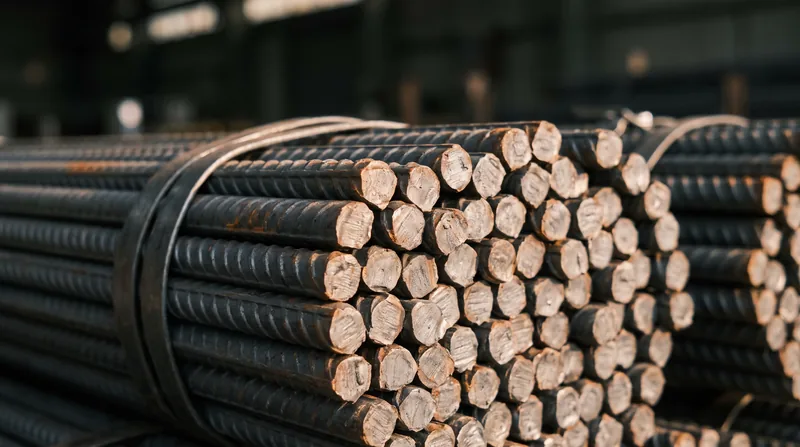
This is the most common pairing in specifications for plate, coil, angle and welded pipe: the project is written for St3sp, the Chinese mill offers Q235B, the export certificate refers to S235JR or A36. All four are low-carbon structural steels with a yield strength around 235–250 N/mm². The differences begin after that, and they are not about strength.
What the letters mean
St3sp to GOST 380-2005: St is ordinary-quality steel, 3 is the grade number, sp means fully killed; there are also ps (semi-killed) and kp (rimming). Q235B to GB/T 700-2006: Q stands for yield strength, 235 is its minimum in N/mm², B is the impact category: 27 J at +20 °C; A has no impact test, C is tested at 0 °C, D at minus 20 °C. S235JR to EN 10025-2: S is structural, 235 the yield strength, JR means 27 J at +20 °C; J0 at 0 °C, J2 at minus 20 °C. A36 to ASTM A36/A36M: 36 is the yield strength in ksi, that is 250 MPa.
Four standards in one table
| Property | St3sp · GOST 380, GOST 14637 | Q235B · GB/T 700 | S235JR · EN 10025-2 | A36 · ASTM A36 |
|---|---|---|---|---|
| Carbon, max, % | St3sp · GOST 380, GOST 146370.22 | Q235B · GB/T 7000.20 | S235JR · EN 10025-20.17 | A36 · ASTM A360.25 |
| Manganese, % | St3sp · GOST 380, GOST 146370.40–0.65 | Q235B · GB/T 700max 1.40 | S235JR · EN 10025-2max 1.40 | A36 · ASTM A36per A36 table |
| Phosphorus, max, % | St3sp · GOST 380, GOST 146370.040 | Q235B · GB/T 7000.045 | S235JR · EN 10025-20.035 | A36 · ASTM A360.040 |
| Sulphur, max, % | St3sp · GOST 380, GOST 146370.050 | Q235B · GB/T 7000.045 | S235JR · EN 10025-20.035 | A36 · ASTM A360.050 |
| Yield strength, min, N/mm² | St3sp · GOST 380, GOST 14637245 | Q235B · GB/T 700235 | S235JR · EN 10025-2235 | A36 · ASTM A36250 |
| Tensile strength, N/mm² | St3sp · GOST 380, GOST 14637370–480 | Q235B · GB/T 700370–500 | S235JR · EN 10025-2360–510 | A36 · ASTM A36400–550 |
| Elongation, min, % | St3sp · GOST 380, GOST 1463726 | Q235B · GB/T 70026 | S235JR · EN 10025-226 | A36 · ASTM A3623 on 50 mm |
| Impact toughness | St3sp · GOST 380, GOST 14637by category 1–6 | Q235B · GB/T 70027 J at +20 °C | S235JR · EN 10025-227 J at +20 °C | A36 · ASTM A36not specified |
Three things the table shows. First: in strength the four grades stand side by side, the yield strength differs by no more than 15 N/mm². Second: in chemistry they do not coincide, GOST keeps manganese in a narrow 0.40–0.65 % window while GB and EN allow up to 1.40 %; sulphur and phosphorus are lowest in EN. Third: impact toughness for St3sp depends on a category written separately, for Q235B and S235JR it is built into the letter at +20 °C, and for A36 it is not specified at all.
Killed steel and the letter B
“sp” in GOST is the degree of deoxidation, “B” in GB is the impact category. These are different axes. GB/T 700-2006 allows Q235B to be either killed (Z) or rimming (F), so Q235B on its own does not guarantee what “sp” means. If the project needs killed steel for welded structures, the specification to the mill says Q235B-Z, and the deoxidation is confirmed in the certificate. EN 10025-2 does not allow rimming steel for S235JR.
What to write into the contract
- The grade to the mill’s standard and the grade in the project side by side: “Q235B-Z to GB/T 700-2006, equivalent of St3sp to GOST 380-2005”.
- The impact category if the structure works in frost: Q235D or S235J2 are tested at minus 20 °C, the letter B does not cover that.
- Thickness and its tolerance to the dimension standard, GOST 19903 or GB/T 709, separately from the grade.
- A mill certificate with the ladle analysis of the heat: the bureau’s inspector uses it to check the actual manganese, sulphur and phosphorus against the standard written in the contract.
Grade equivalents
| GOST | GB (China) | ASTM | EN | Note |
|---|---|---|---|---|
| St3sp / St3ps | GB (China)Q235B | ASTMA36 | ENS235JR | NoteNearest equivalents. Q235B and S235JR specify impact toughness at +20 °C, GOST 14637 by category; A36 has a higher yield strength, 250 MPa. |
Equivalents are the closest match, not identical: chemistry and tolerances differ between standards. The exact grade and standard are written into the contract.