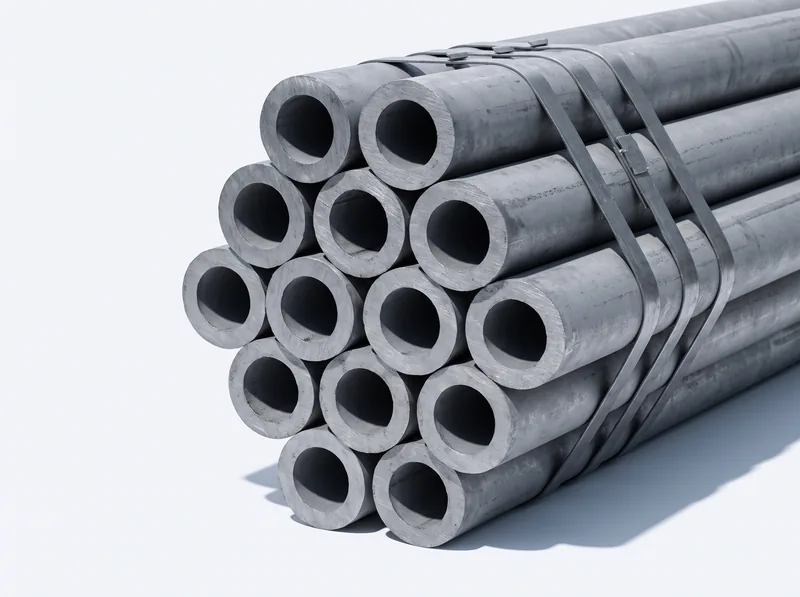
Steel 20 · 09G2S · Ø32–426 · GOST 8732
Seamless hot-finished pipe
Pipe without a weld from a solid billet for pressure, steam and hydraulics. Steel 10, 20, 45, 09G2S
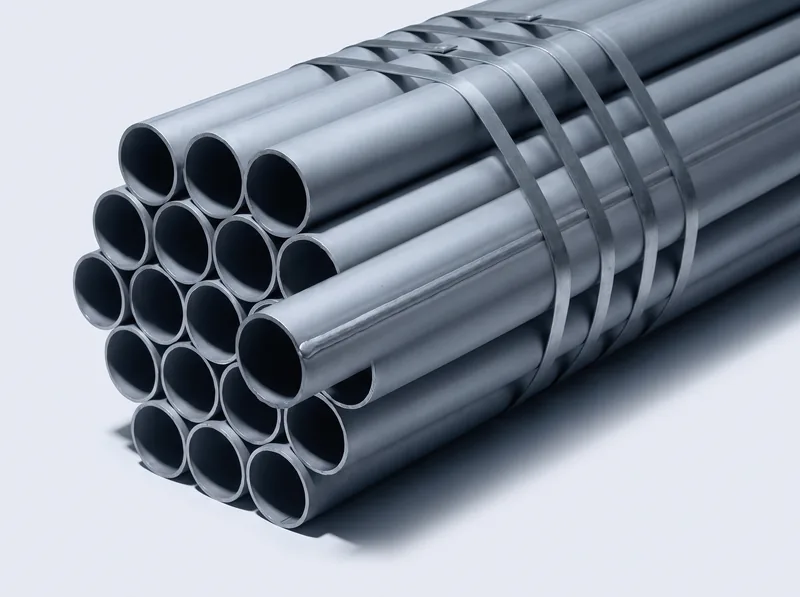
St3sp · Q235B · Ø57–530 · GOST 10704
Round pipe from strip with a high-frequency weld. Structures, fencing, low-pressure water and gas
| Parameters | |
|---|---|
| Outside diameter | 57–530 mm; per GOST 10704 the size range is 10–1 420 mm |
| Wall thickness | 3–12 mm |
| Length | random length 6–12 m; fixed length to specification |
| Steel grade | St2sp, St3sp, St3ps, 10, 20; Q195, Q235B per GB |
| Supply group under GOST 10705 | V or D to specification |
| Weld | longitudinal, high-frequency welded; outer weld bead removed, inner to specification |
| Testing | hydrostatic test; for group V — non-destructive weld testing |
| Size, mm | Weight, kg/m | Metres per tonne |
|---|---|---|
| 57×3 | 4 | 250.3 |
| 76×3.5 | 6.26 | 159.8 |
| 89×3.5 | 7.38 | 135.5 |
| 108×4 | 10.3 | 97.5 |
| 133×4 | 12.7 | 78.6 |
| 159×4.5 | 17.1 | 58.3 |
| 219×6 | 31.5 | 31.7 |
| 273×7 | 45.9 | 21.8 |
| 325×8 | 62.5 | 16 |
| 377×9 | 81.7 | 12.2 |
| 426×10 | 102.6 | 9.75 |
| 530×10 | 128.2 | 7.8 |
Theoretical weight at steel density 7.85 g/cm³. Actual batch weight is by scale and mill certificate.
Longitudinally welded pipe is formed from hot-rolled strip on a pipe welding mill: the strip is rolled into a cylinder by forming rolls, the edges are brought together and welded by high-frequency current without filler metal, and the outside flash is removed by a cutter directly behind the welding unit. There is one weld, running along the pipe. Size range to GOST 10704-91, technical requirements to GOST 10705-80; mills in China produce to GB/T 3091-2015, for export to ASTM A53/A53M and EN 10217-1. Diameters from 426 mm are made with a submerged-arc longitudinal weld; their technical requirements are in GOST 10706-76.
The main grades are St2sp, St3sp and St3ps under GOST 380, steel 10 and 20 under GOST 1050; at mills in China these are Q195, Q215 and Q235B, in the export version A53 Gr.B. St3sp and Q235B are close in composition and yield strength, so in the specification the grade is written as a pair: what the mill rolls and what it corresponds to under GOST. The supply group under GOST 10705 defines what the mill confirms in the certificate: group V — chemical composition and mechanical properties, group D — hydrostatic test only. The inside flash is not removed by default; if the pipe is for fluid transport, inside flash removal is written into the specification.
During inspection at the mill, the weld of welded pipe is checked: examination along the full outside length for lack of fusion, edge offset and quality of flash removal, measurement of the residual flash height. Outside diameter and wall thickness are measured with a micrometer and callipers at the ends of the sampled pipes; ovality is checked with callipers in two directions. The strip heat number in the pipe marking is matched against the mill test certificate (MTC): chemical composition, mechanical properties, hydrostatic test, non-destructive weld test result for group V. The bundle tag and strapping are checked. Rejects recorded in the report are replaced; the replacement is supplied by the manufacturing mill under its contract with the bureau.
Bundles strapped with steel band, diameters from 219 mm — loose, piece by piece; every pipe carries the mill marking with grade, size and heat number, the bundle carries a tag.
| GOST | GB (China) | ASTM | EN | Note |
|---|---|---|---|---|
| Steel 20 | 20# | A106 Gr.B | P235GH | Seamless pipes. Nearest equivalents by composition and strength; test requirements differ between the standards |
| Steel 45 | 45# | 1045 (A519) | C45 | Seamless pipes for machining, nearest equivalents. A519 is a standard for mechanical tubing; C45 under EN 10083 is a steel grade, tubes in it are made to EN 10297-1 |
| 09G2S | Q355B | A572 Gr.50 | S355J2H | Low-alloy steel, nearest equivalents. Before GB/T 1591-2018 the grade was designated Q345B; A572 is a standard for rolled products, not for pipe; S355J2H is a hollow section grade under EN 10219 |
| St3sp | Q235B | A53 Gr.B | P235TR1 | Welded pipes. A53 Gr.B is the nearest equivalent: its tensile strength is higher than that of Q235B |
| St3sp | Q235B | A500 Gr.B | S235JRH | Hollow sections. A500 specifies a higher yield strength than Q235B; structural design uses the standard stated in the specification |
| St2sp, St3sp | Q195, Q235 | A53 Gr.A | S195T | Water and gas pipes. GOST 3262 does not specify mechanical properties, so the grade comparison is nominal |
| K42 (GOST 20295) | L245 (GB/T 9711) | API 5L Gr.B | L245NB | Spiral-welded pipes. A strength class by tensile strength, not a steel grade |
| 08Kh18N10 | 06Cr19Ni10 | TP304 | 1.4301 | Stainless pipes. Austenitic 18-10 steel; 03Kh17N14M3 corresponds to TP316L and 1.4404 |
Equivalents are the closest match, not identical: chemistry and tolerances differ between standards. The exact grade and standard are written into the contract.
Steel 20 · 09G2S · Ø32–426 · GOST 8732
Pipe without a weld from a solid billet for pressure, steam and hydraulics. Steel 10, 20, 45, 09G2S
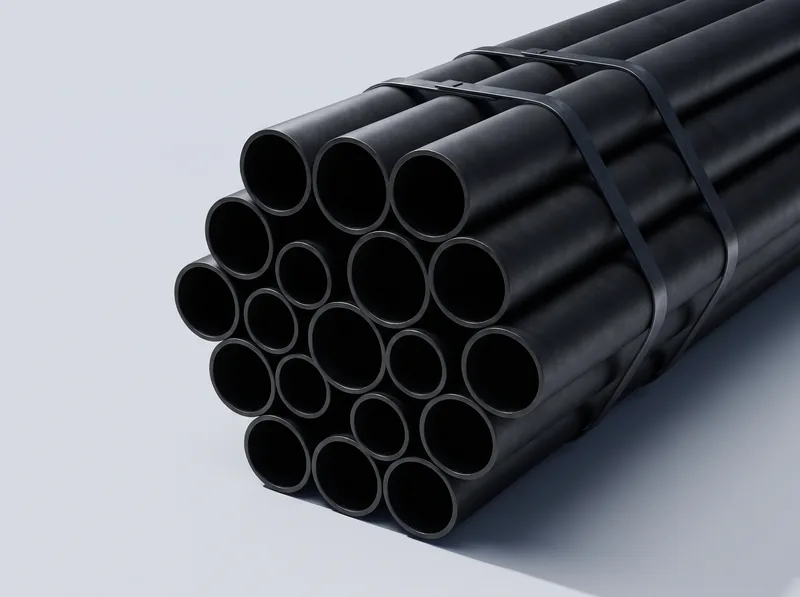
DN 15–100 · black and galvanized · GOST 3262
Water and gas pipe to GOST 3262 for water, gas and heating. Nominal bore 15–100, light, standard, heavy
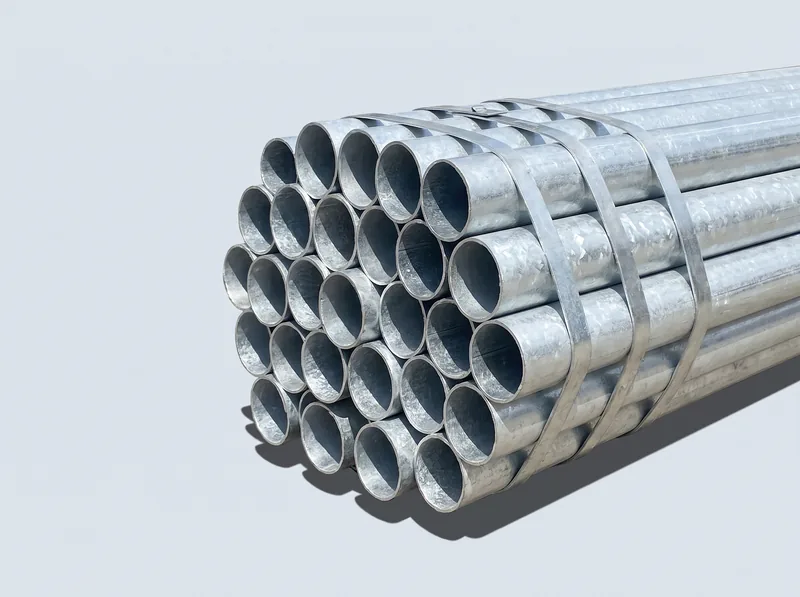
St3sp · Q235B · DN 15–100 · Ø57–219 · zinc 60–80 µm · GOST 3262 · GOST 10704
Welded and water-gas pipe with hot-dip galvanizing. Water supply, external networks, unpainted structures
Price request
Steel pricing depends on grade, size, tonnage and delivery terms on the day of contract. A number on the page would be wrong by the time you read it.
Request received