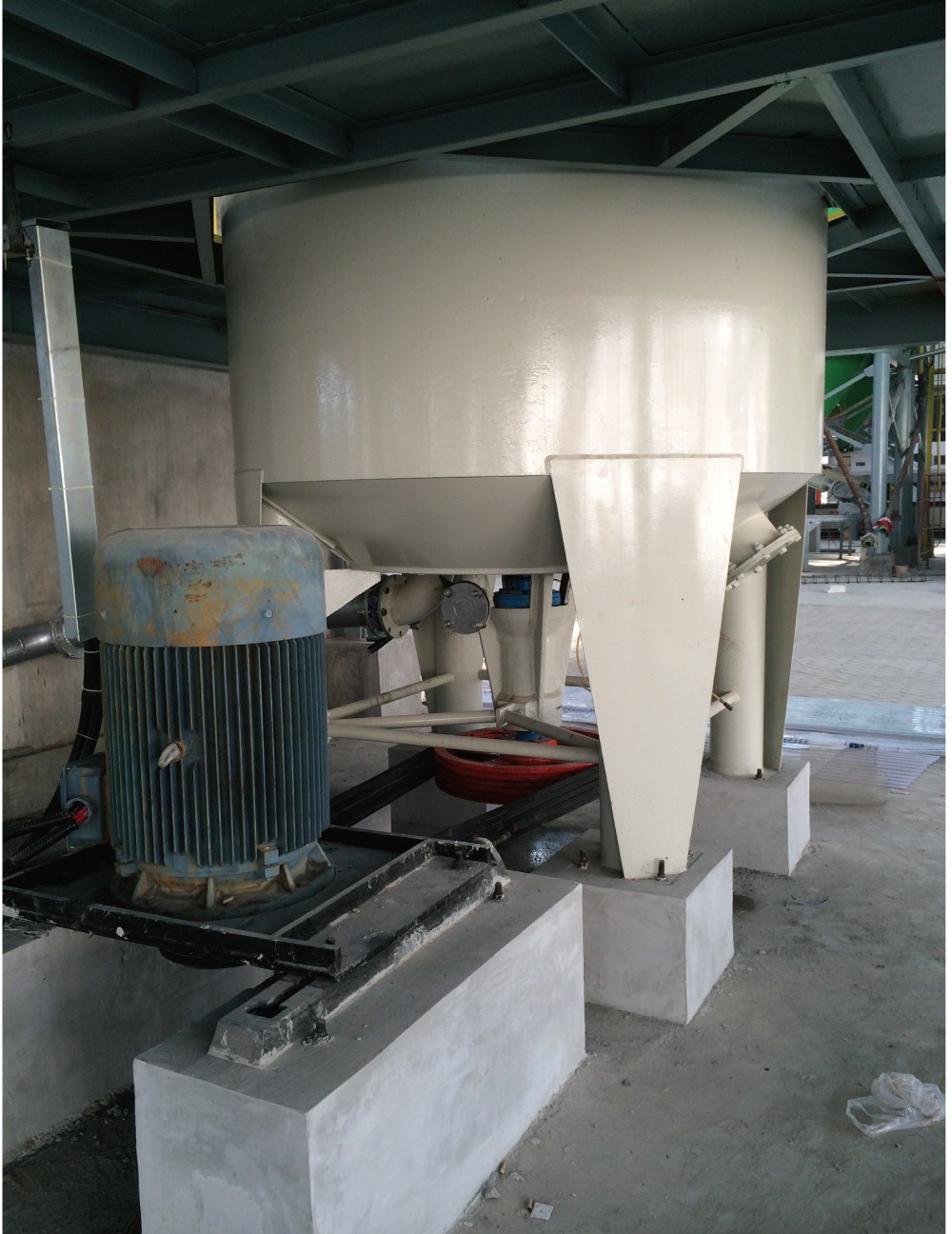
Pulper for cellulose: what wears out inside it
In a pulper the parts that wear are the rotor with its blades, the bottom screen plate, the knives or blade overlays, the shaft seal and the drive bearings under the tub. Poor pulping, lumps and undispersed flakes in the stock, rising vibration and water under the tub all mean the unit needs inspection.
In short
5minutes to read
6sections
6sources
1catalog item
In this article
- 01Why a slate plant needs a pulper
- 02How it is built
- 03What wears out and how to see it
- 04What is repaired and what is replaced
- 05What to record for an order
Contents
Five places wear out in a pulper: the rotor with its blades, the bottom screen plate (the perforated plate under the rotor), the knives or blade overlays, the shaft seal and the drive bearings under the tub. A buyer should keep a spare shaft seal and bearings in stock: they fail suddenly and stop stock preparation. The rotor and the screen plate are changed less often, but they are made for a specific model, so it is better to have the dimensions and the drawing ready in advance.
Why a slate plant needs a pulper
On a fiber cement line, cellulose arrives in bales, which are pressed sheets of dry pulp. Before it is mixed with cement, the bale is broken down in water into separate fibers. This is what the pulper does (it is also called a hydrapulper). The pulped stock then goes to the disc refiner, where the fiber is refined to the required freeness, and after that to the mixer.
Asbestos-cement lines also use cellulose: it is added in small amounts and needs the same processing step. Chrysotile is opened up by other machines, edge runners and a hollander, which have their own article.
How it is built
A pulper is a tub with a rotor in its bottom. The drive turns a shaft, and the rotor sits on the shaft: a bottom disc with knives and helical blades. The rotor works like a pump impeller. It draws the stock down in the middle of the tub and throws it out to the wall; the stock rises along the wall and sinks back to the rotor. In this vortex the bales rub against the blades, against the knives of the disc and against each other, and break down into fibers. Good pulping separates the fibers rather than cutting them.
Under the rotor there is a screen plate, a plate with holes. The finished stock leaves through it, while lumps and foreign objects stay in the tub. Machines for waste paper also have a take-off in the bottom for plastic film and trash. Commercial pulp contains little trash, but baling wire and stray metal are found here too.
The drive, a motor with a gearbox or belt transmission, stands under the tub. Between the tub and the drive there is a shaft seal and a bearing unit.
What wears out and how to see it
| Unit | Why it wears | How to notice |
|---|---|---|
| Rotor blades, overlays and knives | Abrasive in the stock, impacts from foreign objects, cavitation at the blade root | Pulping takes longer, flakes remain in the stock; wear, chips and pitting on the blades |
| Bottom screen plate | Sand, metal, stock rubbing at the hole edges | Stock leaves slowly, the tub overfills; holes are worn out, edges are rounded |
| Rotor-to-plate clearance | Wear of both surfaces | Pulping gets worse while the blades are still sound |
| Shaft seal | Water and fiber under pressure, shaft runout | Leak under the tub, wet bearing unit |
| Drive bearings | Water in the housing washes out the grease; misalignment and shaft runout | Noise, heat, rising vibration |
Two things are linked more closely than they seem. First: a worn or unbalanced rotor causes shaft runout, and runout quickly eats up the seal and the bearings. Second: on vertical machines, water that gets past the seal runs straight into the bearing unit and washes out the grease. Case studies from paper mills describe a lower bearing failing again and again until the leak was eliminated. That is why new bearings alone are only half the job when there is a leak: first remove the cause of the leak.
A separate sign is when pulping has become poor but the rotor and the plate look intact. In that case, check the stock consistency in the tub, the pulping time and the order in which bales are loaded. These are set by the process regulations of your line; an overloaded tub or one that is too thick pulps worse.
What is repaired and what is replaced
On many designs the screen plate can be turned over to its other side and run a while longer. Manufacturers make such plates of wear-resistant steel; the material and hardening of the plate for your machine are confirmed with its manufacturer.
On older designs the rotor blades are welded, and the overlay is often replaced together with the blade, which means removing the whole rotor. On some modern rotors the blades are removable and bolted on, and are replaced one at a time. A worn rotor is restored by hardfacing, but it is balanced after repair, otherwise the runout comes back.
On many machines the stuffing-box packing is replaced with a mechanical seal: it lets less water through to the bearings. Whether such a replacement is possible on your machine is decided by the manufacturer of the machine or the seal.
What to record for an order
- The machine nameplate: manufacturer, model, serial number, tub volume.
- For the rotor and the plate, the drawing from the passport. If there is none, the rotor diameter, number of blades, fit on the shaft, plate diameter and thickness, hole size and pitch, and photos with a ruler.
- For the shaft seal, the type (packing or mechanical), shaft diameter, mounting dimensions and the markings on the old seal.
- For bearings, the markings on the rings and the housing of the unit. How to read bearing markings is covered in a separate article.
- The nameplates of the drive gearbox and motor.
How we do it
- From the number, drawing or photo of the unit, we look for the item at the manufacturing plant. What we find, with the price, photos and specifications, we send before the order.
- Pulpers of the ZGS model range are in the catalog; the whole machine is selected for the capacity of the line.
- We inspect the lot at the plant before shipment: part number, dimensions, lot, packaging.
What this article relies on
Below are the documents and materials we refer to, so that you can check what is said for yourself.
Reference materials
- Patent WO2004064991A2 "Improved pulper rotor and assembly", background section: rotor design, blade wear and cavitation at their base, replacement of welded overlayspatents.google.com ↗
- Kadant, description of the Maximizer extraction plate: bottom plate wear, turning the plate over, wear-resistant materialfiberprocessing.kadant.com ↗
- AESSEAL, case studies on paper mill pulpers: leak through the packing and failure of the lower bearingstatic.aesseal.com ↗static.aesseal.com ↗
- Efficient Plant, article on pulpers: water along the output shaft gets into the gearbox bearingsefficientplantmag.com ↗
- Patent application US 2013/0338269 "Fiber for fiber cement and resulting product": pulping cellulose bales in water and refining before mixing in the Hatschek processpatents.justia.com ↗
- taminota.com catalog, ZGS pulper: rotor and screen plate design as described by the manufacturing plant.