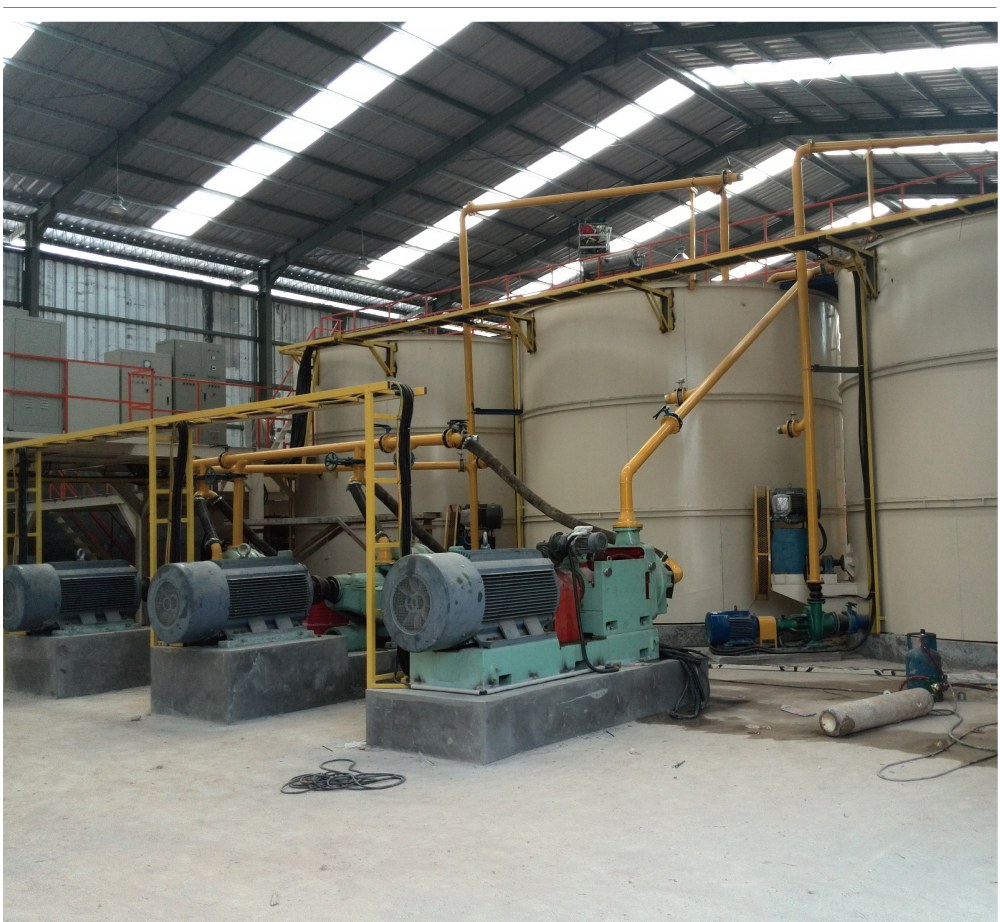
Disc refiner plates: how to choose and when to change
Refiner plates are chosen by the stock, the disc diameter and the refining goal: bar pattern, bar and groove width, material. They are due for replacement when the bar edges have rounded off: refining to the former freeness then needs a smaller gap and more energy, and the stock holds its freeness less steadily.
In short
5minutes to read
5sections
8sources
1catalog item
In this article
Refiner plates are the replaceable discs or segments with bars that sit on the rotor and the stator. They are chosen by four things: what stock goes into the refiner, the disc diameter, the bar pattern that was installed and gave the sheet you need, and the material they are made of. It is time to change the plates when the bar edges have rounded off: to get the former freeness the gap has to be closed more and more, energy consumption rises, and the refining still wanders. A spare set for your refiner is worth having in advance: plates are made for a specific diameter and mounting.
Why a fiber cement line has a refiner
Cellulose after the pulper consists of separate fibers that are still smooth. In the disc refiner they are worked by the bars: the fiber splits at the surface, becomes "hairy" and flexible. Such fiber holds the cement particles in the stock better and acts as a filter when the layer builds up on the mesh cylinder. Synthetic fibers do this job worse, which is why refined cellulose is added to stock with polymer fiber too.
How deeply the fiber has been worked is shown by freeness. It is measured in the laboratory, most often by the Schopper-Riegler method (degrees SR): the higher the number, the slower the stock gives up its water. Refining that is too weak means the fiber holds cement poorly. Refining that is too strong means the stock drains slowly and the fiber gets shorter. The freeness you need is set by the process regulations of your line.
How the plates are built
The rotor and the stator stand facing each other with a small gap. Each has bars and grooves between them. The stock moves from the center to the edge along the grooves and enters the gap, where the rotor bars pass over the stator bars. Every such crossing is an impact on a bundle of fibers.
What distinguishes plates:
- Bar width and groove width. Narrow, closely spaced bars give more crossings and treat the fiber more gently: more splitting, less cutting. Wide bars and wide grooves give a larger flow of stock and a harsher treatment.
- Length of the cutting edge. The greater the total edge length, the lower the load on each meter of edge at the same power. Manufacturers use the specific edge load as the main selection parameter, although for some patterns it describes refining inaccurately.
- Bar angle to the radius and dams in the grooves. Dams hold the stock in the refining zone, and the angle affects how the stock passes through the disc.
- Material and method of manufacture. Cast segments of wear-resistant steel are the most common option. There are also milled and fabricated bars; with fabricated ones the bar width does not change along its height, and the edge stays sharp longer.
When ordering, use as your reference the plates on which your refiner has already delivered the refining you need. Keep their markings and the passport.
How the bars wear
The bars are ground down by friction against the fiber and especially by sand and other hard particles that got into the stock. A sharp edge rounds off. A rounded bar splits the fiber worse: to get the same freeness you need more energy and a smaller gap.
Signs that the plates are near the end of their life:
- The gap for the required freeness is closed almost all the way, yet the refining is still lower than before.
- Noticeably more power goes into the same freeness than with new plates.
- Freeness wanders from batch to batch at the same consistency and the same stock flow.
- On inspection: rounded edges, shallow grooves, chips, uneven wear around the circle.
Closing the gap harder to "squeeze out" worn plates is dangerous: the stock passes through the disc worse, and the risk of the discs touching grows. The service life of plates depends on the stock, the sand in it and the operating mode; there is no general figure, and we do not give one.
Sand in the refiner is a frequent cause of fast wear. That is why the vortex cleaner and the cleanliness of the stock before the refiner directly affect how long the bars last.
What to state when ordering
- The refiner nameplate: manufacturer, model, disc diameter.
- The plate type: a single disc or segments, how many segments per circle, the fastening (bolts, their number and position).
- The drawing from the passport. If there is none, the outer and inner diameter, the thickness, and photos of the working side and the back side with a ruler.
- The pattern: bar width, groove width, bar height, whether there are dams.
- The markings on the old segment.
- The stock and the goal: cellulose for fiber cement, which freeness is needed.
If you change the pattern or the manufacturer, it is sensible to test one set on your own line before ordering a stock.
How we do it
- From the number, drawing or photo of the plates, we look for the item at the manufacturing plant. What we find, with the price, photos and specifications, we send before the order.
- Disc refiners of 450-600 mm are in the catalog; the whole machine is selected for the capacity of the line.
- We inspect the lot at the plant before shipment: part number, dimensions, lot, packaging.
What this article relies on
Below are the documents and materials we refer to, so that you can check what is said for yourself.
Reference materials
- Patents US 5740972, US 5954283 "Papermaking refiner plates": bar and groove width, cutting edge length, specific edge load, limitations of cast segmentspatents.justia.com ↗
- Patent US 5467931 "Long life refiner disc": edge rounding with wear, a rounded edge refines worse, discs have to be replaced oftenpatents.justia.com ↗
- TAPPI Journal, April 2021, "Mechanical modification of softwood pulp fibers using a novel lightweight vertical bar plate": dull bar edges lengthen the time to reach target freeness and shorten plate lifeimisrise.tappi.org ↗
- Patent EP1583607 "Refining element": gap adjustment to freeness, edge wear and segment replacementpatents.google.com ↗
- Nordic Pulp & Paper Research Journal, 2025, study of plates with different bar-to-groove width ratios: limits of applicability of the specific edge loaddegruyterbrill.com ↗
- Siberian Federal University, "Refiner plates of a disc refiner": bar geometry, dams, diagnosing wear and gapscholar.sfu.ru ↗
- Patent application US 2013/0338269 "Fiber for fiber cement and resulting product": cellulose refining and its role as a filter in the Hatschek processpatents.justia.com ↗
- taminota.com catalog, disc refiner: disc diameters and the role of the gap as described by the manufacturing plant.