Hydraulic sheet press: seals, oil and pump
In a hydraulic sheet press the seals of the main and lifting cylinders, the pump, the valves (relief, prefill, directional), the filters and the hoses wear. Oil is a consumable just like them: dirty or overheated oil speeds up the wear of everything else. Pressure most often drops because of internal leakage: past the piston seals, a worn valve or the pump.
In short
5minutes to read
6sections
7sources
4catalog items
In this article
- 01Why a slate line has a press
- 02What wears
- 03Oil: how to monitor it
- 04Why pressure drops
- 05What to record for an order
Contents
In a hydraulic sheet press the seals of the main (pressing) and lifting cylinders wear, as do the pump of the power unit, the valves (relief, prefill, directional), the filters and the high-pressure hoses. Oil is a consumable too: dirty, water-contaminated or overheated oil speeds up the wear of everything listed. Pressure most often drops not because of a "weak pump" but because of internal leakage: oil escapes past the piston seals, through a worn valve or through clearances in the pump. It is worth keeping cylinder seal kits, filter elements, oil and hoses in stock; for the pump and the valve block, know them from the nameplates.
Why a slate line has a press
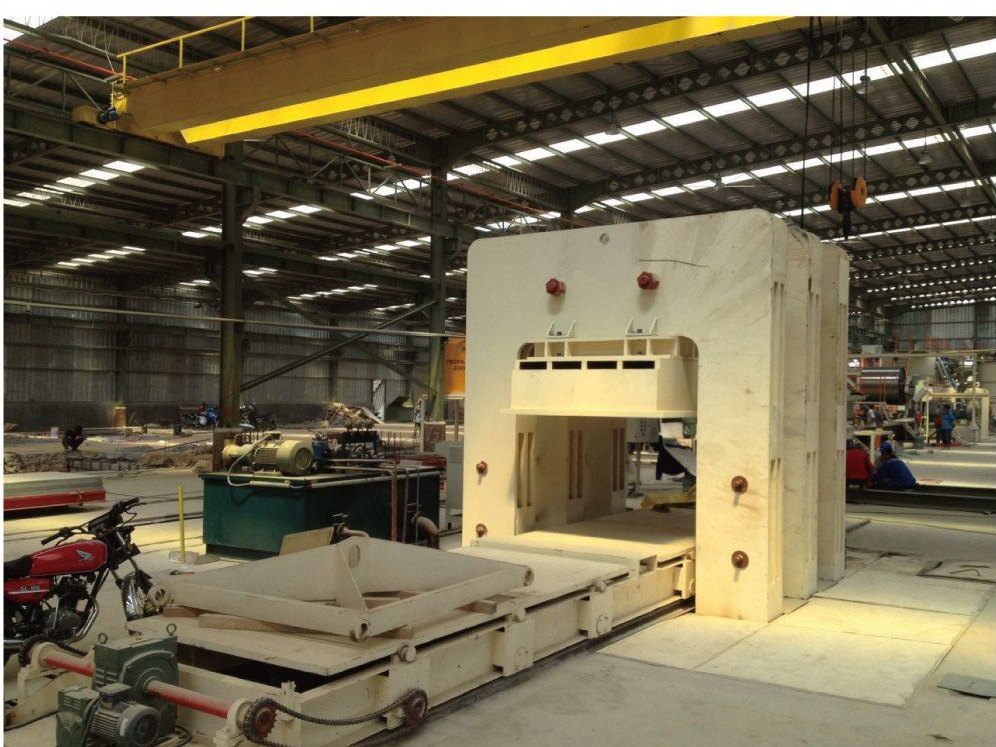
The press compacts the stack of raw sheets after forming. The denser the sheet, the higher its strength and the lower its water absorption. The design is typical: a frame, several large-diameter main cylinders press on the stack, and lifting cylinders raise and lower the platen quickly. The prefill valve lets oil fill the main cylinders quickly on the idle stroke and drain quickly after pressing. A power unit with a pump and a valve block runs the cycle, a pressure sensor shows the load, and a controller sets the pressure steps and the dwell. The pressing regime is set by the regulations of your line.
What wears
| Unit | What happens | Sign |
|---|---|---|
| Piston seals of the main cylinders | Wear, hardening, scoring from dirt | Pressure does not hold during dwell, the platen slowly "settles" |
| Rod seals, wipers | Cement dust on the rod cuts the lips | Leak along the rod, oil on the frame |
| Pump | Wear of vanes, gears or plungers | Pressure builds slowly, noise, heating |
| Relief valve | Seat wear, dirt | Pressure tops out at a limit below normal |
| Prefill valve | Wear, sticking | Slow stroke, shock at switching, drain does not hold |
| Directional valves | Spool wear, dirt | Internal bypass, slow movements |
| Filters | Clogging | Indicator trips, pump is noisy |
| Hoses and joint seals | Aging, vibration | Seepage, bulging of the braid |
Oil: how to monitor it
Most hydraulic failures begin with the oil. Three things are watched:
- Cleanliness. The cleanliness of hydraulic oil is customarily expressed as an ISO 4406 code: three numbers separated by slashes, for example 18/16/13. The numbers are classes of the count of particles of 4, 6 and 14 microns and larger per milliliter of oil. Each step of the code is roughly a doubling of the particle count, so a difference of "just one or two points" means contamination several times higher. The code your press needs is stated by the manufacturer of the press or the pump. The sample is taken from the running system, before the filter, and sent to a laboratory.
- Water. The press stands in a shop with steam and wet sheet. Water in the oil spoils the lubrication of the pump and the seals. Cloudy oil is a reason for analysis.
- Temperature. Hot oil gets thinner, internal leakage grows, pressure falls as it warms up, and the seals age faster. If the press starts to "fall short" toward the end of the shift, look at the oil cooling.
The oil is topped up and changed with the grade stated in the press passport. Different oils must not be mixed without the manufacturer's agreement.
Why pressure drops
The search order runs from simple to complex:
- Oil level and condition, filters. Low level, air in the oil, a clogged suction filter.
- Heating. Whether pressure drops only with hot oil.
- Relief valve. Whether the setting has drifted, whether the seat is worn.
- Directional valves and the prefill valve. Internal bypass to the tank.
- Cylinders. Leakage past the piston seals: the platen slowly sinks under pressure with the valves closed.
- Pump. Wear that shows as a drop in delivery with hot oil.
Where exactly the oil escapes is shown most accurately by a flow meter test: it is placed in the circuit and the pump, valves and cylinders are isolated one by one. The relief valve setting must not be raised to "make up" pressure: this does not cure the leak but overloads the seals and the pump, and it is a safety matter.
What to record for an order
Cylinder seals:
- The press nameplate and the cylinder number on the diagram.
- Piston diameter, rod diameter, stroke.
- Dimensions of the seal grooves; they are taken during disassembly.
- The material of the old seals, the inscriptions on them, photos.
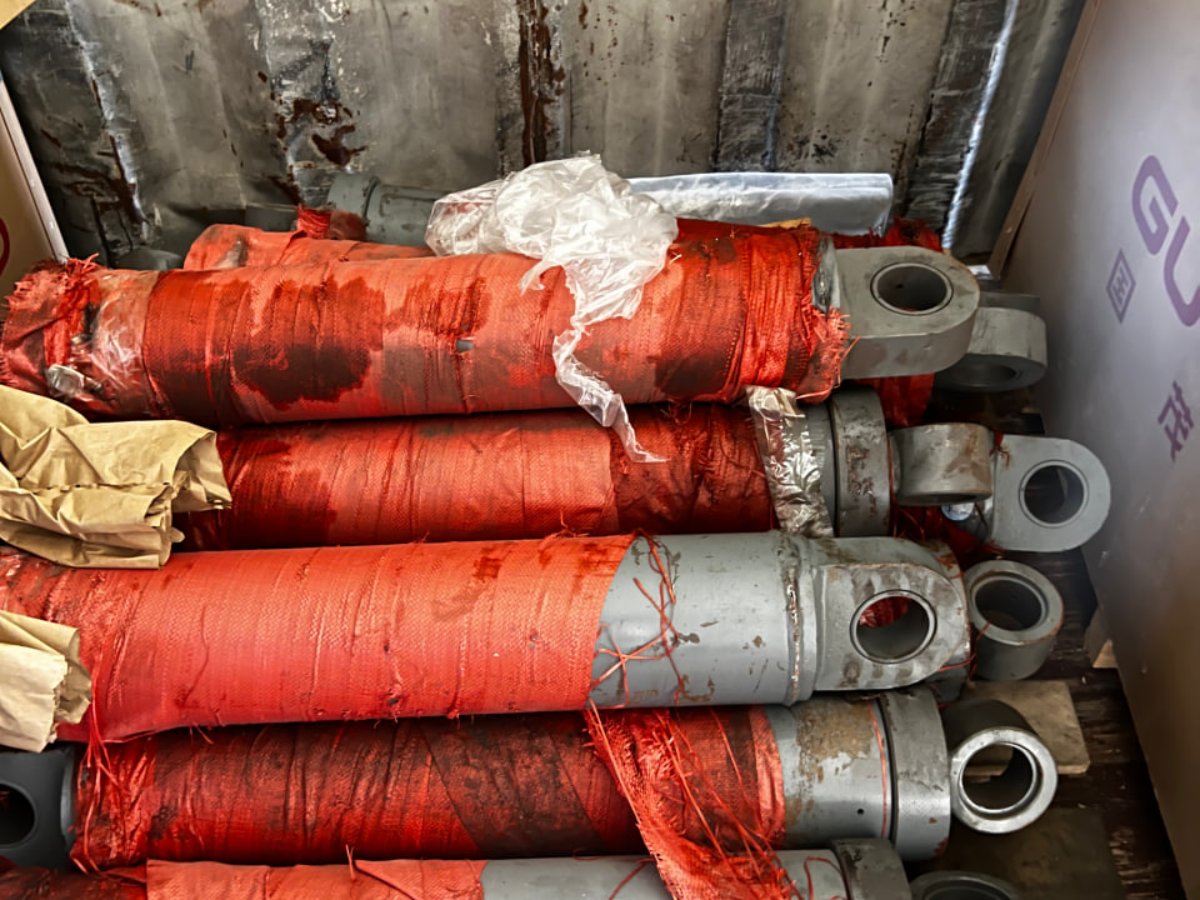
It is most convenient to order a full repair kit per cylinder: piston seals, rod seals, wiper, guide rings, cover rings.
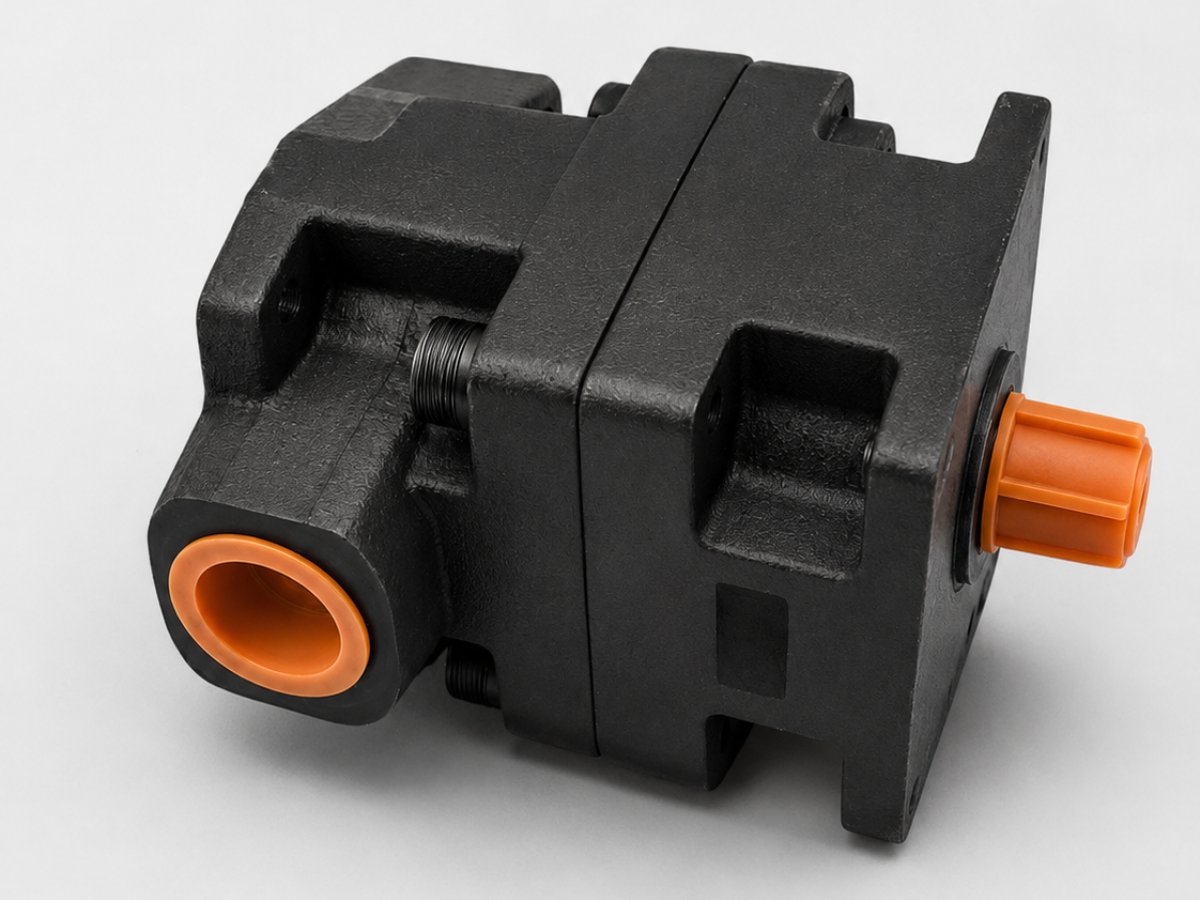
Pump: the pump nameplate: model, displacement, pressure, speed, direction of rotation, shaft and flange type. How to read hydraulic pump marking is covered in a separate article.
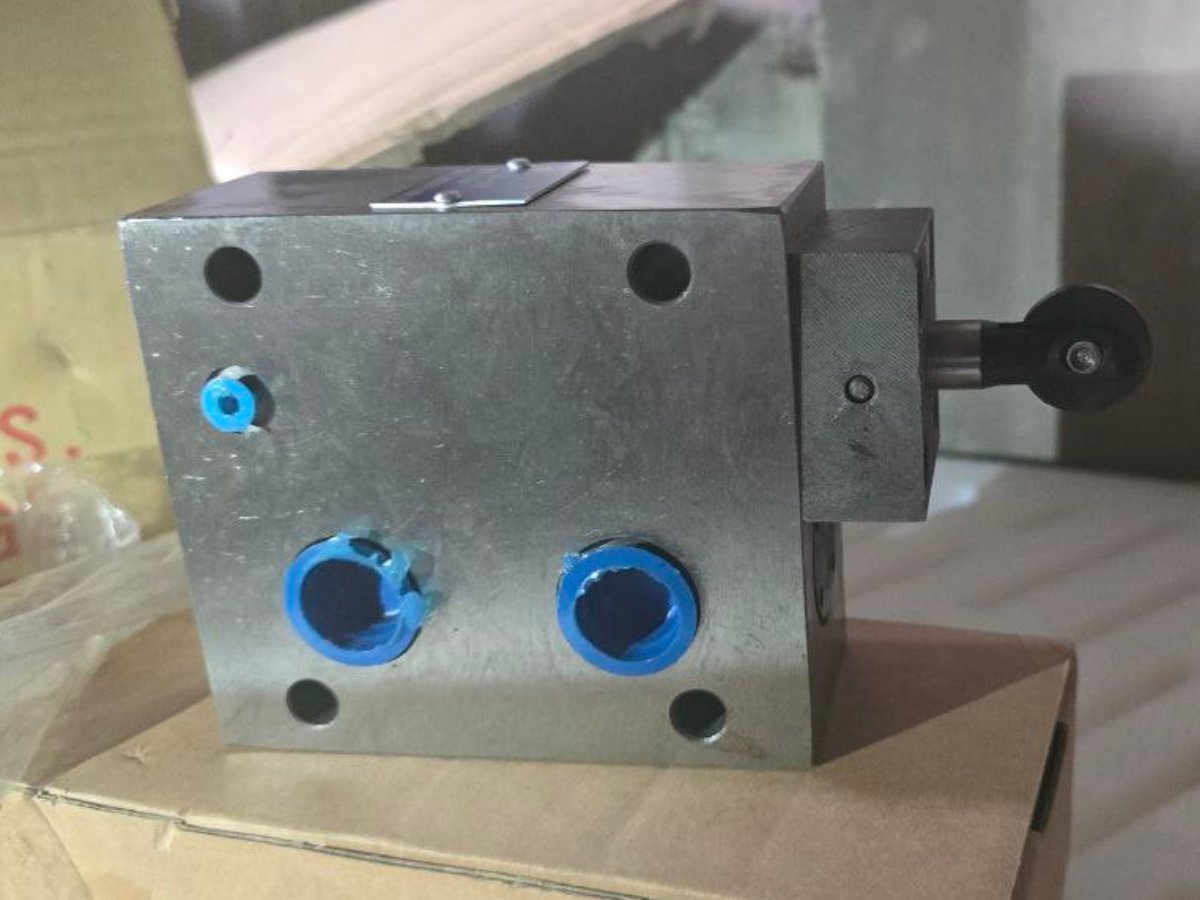
Valves and block: the block nameplate, the hydraulic diagram of the press, photos with the marking of each valve.
Filters: the filter element number and the filtration rating.
How we do it
- From the nameplates, hydraulic diagram and photos, we look for the items at the manufacturing plant. What we find, with the price, photos and specifications, we send before the order.
- A hydraulic press, a vane pump, a hydraulic valve block and a hydraulic cylinder are in the catalog.
- We inspect the lot at the plant before shipment: marking, dimensions, quantity, packaging.
What this article relies on
Below are the documents and materials we refer to, so that you can check what is said for yourself.
Reference materials
- Donaldson, "Understanding ISO cleanliness codes": the three numbers of the code, particle sizes of 4, 6 and 14 micronsdonaldson.com ↗
- Polaris Laboratories, "A Closer Look at ISO Codes": the code scale and the doubling of particle countspolarislabs.com ↗
- Wix Filters, technical bulletin "ISO Cleanliness Code"wixfilters.com ↗
- Machinery Lubrication, "Hydraulic Equipment Slowdown — Nailing Internal Leakage": locating internal leakage with a flow metermachinerylubrication.com ↗
- Industrial Monitor Direct, "Why does a hydraulic system stop maintaining pressure": growth of leakage with hot oil, why the pressure setting must not be raisedindustrialmonitordirect.com ↗
- GES Repair, "6 Reasons HPUs Lose Pressure": leakage past piston seals, internal valve bypassgesrepair.com ↗
- taminota.com catalog, hydraulic press: main and lifting cylinders, prefill valve, pressure sensor, controller-based control as described by the manufacturing plant.