Buying a used slate line: what to check before paying
Before paying for a used line, it is inspected on site while it is still assembled and, best of all, running: year of manufacture and hours of operation, condition of the shafts, vats, screens, format drum and press, electrics and controller programs, autoclave and boiler documents, completeness against the inventory. Separately, decide who will dismantle, transport and reassemble it, and how.
In short
4minutes to read
6sections
4sources
4catalog items
In this article
Contents
A used line can be a good purchase, but everything not checked before payment becomes your concern afterwards. The main rule: look at the line on site while it is assembled and, if possible, running, on sheet. A dismantled line in crates shows neither wear nor what is missing from it. The second rule: the autoclave and boiler are checked separately, by their documents, because without the documents of a pressure vessel it may not be admitted to operation in your country.
What to request from the seller before the trip
- Manufacturer, model, serial numbers and year of manufacture of each machine.
- How many years and in how many shifts the line worked, when it was stopped and why.
- Logs of repairs and replacements: what was changed, when, and to what.
- A list of what is for sale: an inventory by process stage with photos.
- Machine passports, electrical diagrams, controller programs.
- For the autoclave and boiler, the vessel passport, manufacturer data, records of inspections and tests, information on repairs of the shell.
If there are no logs and documents, this is not always a reason to refuse the purchase, but it is a reason to check in more detail on site and to count the risk.
What to look at on site
Forming machine
- Vats and cylinder screens: corrosion and wear of the vats, condition of the cylinder frames, traces of repairs.
- Shafts: runout, wear and delamination of the covering of rubber-covered shafts, condition of the journals.
- Format drum: surface, runout, blank removal mechanism.
- Vacuum boxes: covers and linings, pipes, vacuum pump.
- Bearings and drives: noise, heat and vibration in operation. Write down the bearing numbers in full.
Press
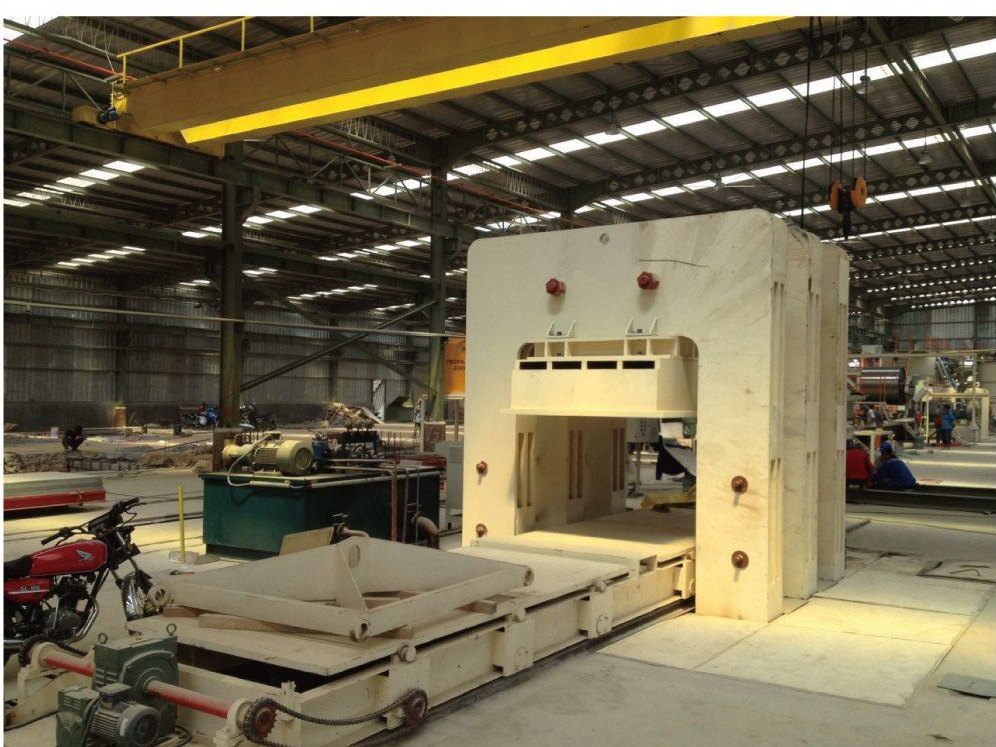
Cylinders and seals (oil leaks), plates, hydraulic power unit, pump, pressure on the gauge in operation, condition of hoses.
Autoclave and boiler
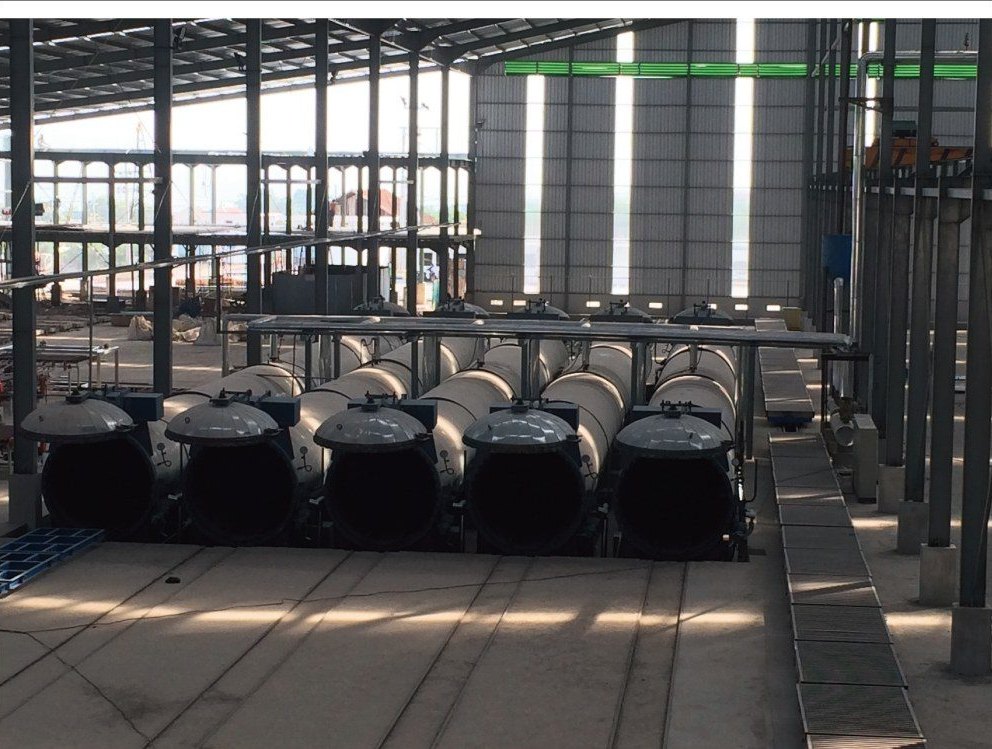
The manufacturer's plate is in place and has not been altered. The lid and its seal, the closure, safety valves, pressure gauges, traces of shell corrosion. Documents are as listed above. The decision on admitting a vessel is made by the supervisory body of your country; find out its requirements for an imported used vessel before buying.
Electrics and automation
Cabinets, cables, motors, frequency converters. Which controllers and panels are fitted and whether they are still produced. Whether the controller programs exist and whether they can be copied. Without the programs, any automation fault after transport turns into a long search.
Other process stages
Slurry preparation, slurry and mass pumps, cutting, stacker, demoulding, pallets, chambers. Go through the inventory: every item must be found and photographed.
Best of all: see the sheet
If the line is still running, look at the output: evenness of thickness, the edge, delamination. Take sheets for testing at your laboratory or an independent one. A sheet from this line will show its condition better than an inspection.
Dismantling, transport, assembly
- Who dismantles: the seller, your crew or a contractor. Who marks the units and cables, who makes the assembly diagram.
- Cables and pipes are often cut during dismantling: count what you will have to buy again.
- Foundations and pits at the new site must be built to drawings: whether they exist.
- Who will install and start up: the seller's former staff, the manufacturer of the line, or your people.
All this is written into the purchase contract together with the inventory.
Engineering layer: the inspection protocol
Keep a protocol for each machine: number, what was checked, how (visually, in operation, by measurement), what was found, photos. Mark what needs replacing right after purchase (felts, screens, seals, bearings) and make this the first spare parts list. To assess vibration, journal wear and the condition of vessels, bring in a specialist with instruments; this is worth writing as a separate item.
How we do it
- From the photo, dimensions and passport of the unit, we look for the item at the manufacturing plant. What we find, with price, photos and specifications, we send before the order.
- Where the answer must come from the plant (make-up of the line, scope of modernization, commissioning), we ask it and pass on its words.
What this article relies on
Below are the documents and materials we refer to, so that you can check what is said for yourself.
Standards and documents
- Technical Safety Authority of Saskatchewan, "Requirements for the acceptance of used pressure vessels": acceptance of used pressure vessels: manufacturer data, unaltered plate, inspector's decision, additional examination and hydrotest in case of doubttext ↗
Reference materials
- Consteril, "6 important questions when purchasing refurbished autoclave": checking the plate and documents of a used autoclave, hydrotest of welded seamsconsteril.com ↗
- Maas Companies, "Tips for buying used machinery: a professional's guide": independent inspection, checking mechanics, electrics, hydraulics, maintenance recordsmaascompanies.com ↗
- SafetyCulture, "Used equipment inspection": what to record when inspecting used equipmentsafetyculture.com ↗
Requirements for admitting a used autoclave and boiler differ by country; the documents given as examples in the article are Canadian and American, so clarify your own requirements with the supervisory body.