Gearboxes on a slate line: what is fitted and what can replace it
On a slate line gearboxes turn the agitators, the felt and format drum drive, conveyors, roller tables and the stacker. Cycloidal, worm and helical gearboxes are the most common. A replacement is chosen by output speed and ratio, by torque with a margin for the duty, and by the connection: mounting position, feet or flange, shaft diameters and keys.
In short
4minutes to read
6sections
6sources
4catalog items
In this article
- 01Where gearboxes sit on the line
- 02Which types occur
- 03What to read off the nameplate
- 04How to choose a replacement
- 05Lubrication in cement dust
Contents
A gearbox on a slate line is chosen not by type but by three things: how many revolutions are needed at the output, what torque it must transmit with a margin for your duty, and how it is attached to the machine. The type (cycloidal, worm, helical, planetary) can be changed if these three conditions are met and the new gearbox fits in place. The easiest is to replace it one for one by the nameplate. If there is no nameplate or the model is discontinued, you need dimensions and drive data.
Where gearboxes sit on the line
| Unit | What it turns | What matters |
|---|---|---|
| Slurry and sludge agitators | the paddle shaft in the tank | vertical position, axial load on the output shaft, long continuous running |
| Forming machine drive | felt, format drum | smooth start, speed matching; often with a frequency converter |
| Conveyors and roller tables | belts, rollers | frequent starts, shock load |
| Stacker, demolding machine | lifting and transfer mechanisms | starts and stops on every cycle |
| Corrugator, cutting | knife shaft, feed mechanisms | matching the speed to the belt |
The exact set of gearboxes on your line is in the machine passport and specification. On old Soviet lines and on Chinese ones they differ.
Which types occur
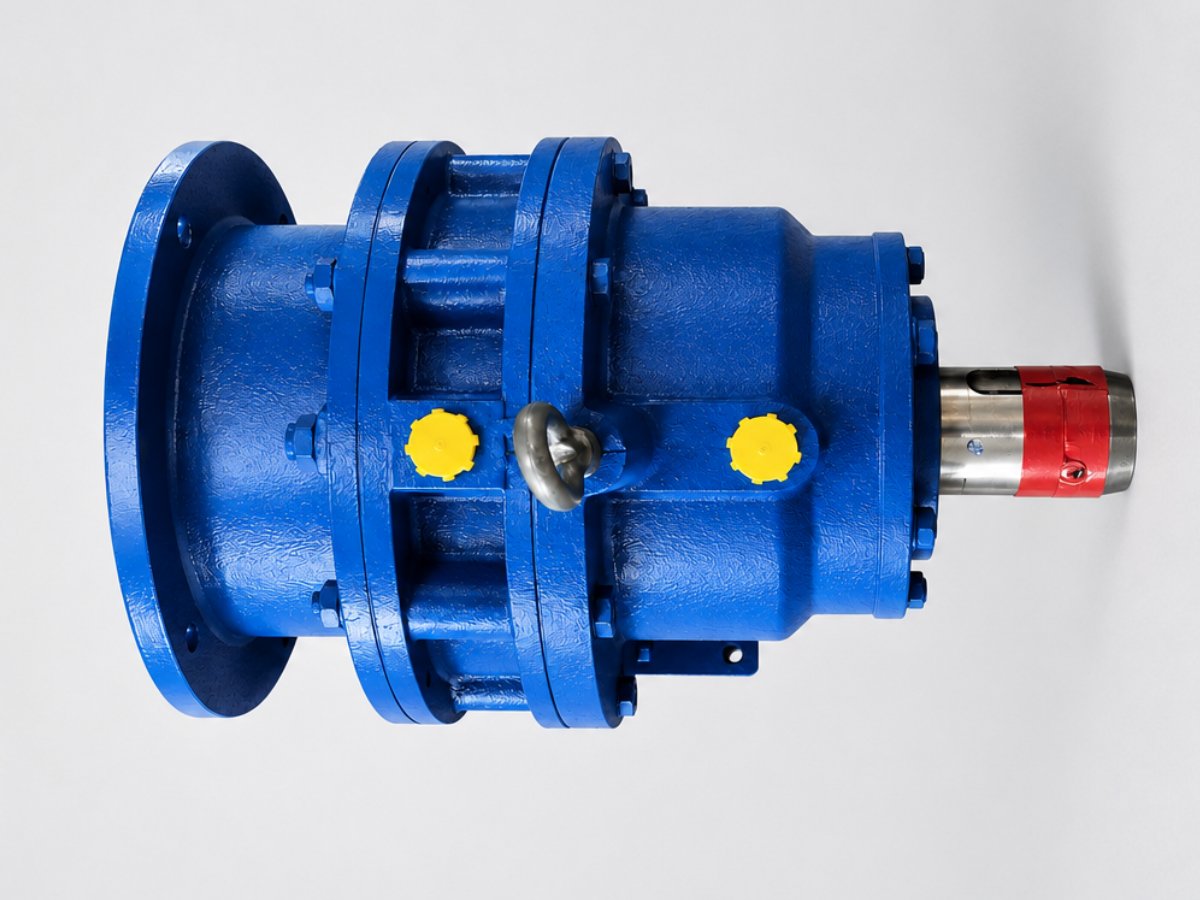
- Cycloidal (摆线针轮减速机). Compact, takes shock load, gives a high ratio in one stage. Often fitted on agitators and conveyors. A catalog example: the cycloidal gearbox BWD2, housing size 4, ratio 35, with a 15 kW motor; its purpose is conveyors, agitators, pumps.
- Worm. Simple, a 90° angle between the shafts, but with lower efficiency, it runs hotter.
- Helical and bevel-helical. High efficiency, for long running and higher powers.
- Planetary. High torque in a small housing.
What to read off the nameplate
- the full designation and serial number;
- the ratio (sometimes written as a fraction of tooth numbers or as a product of stages);
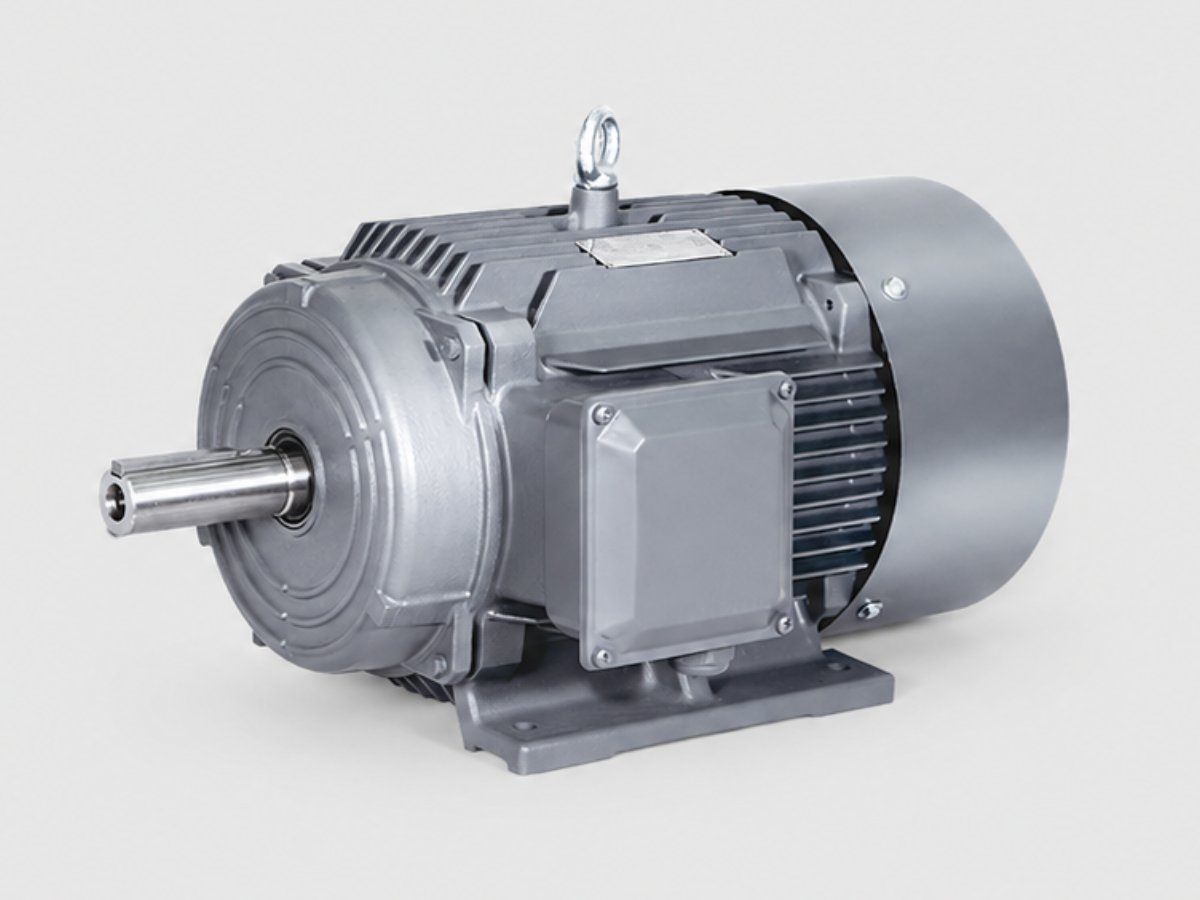
- motor power and speed, if the motor is built in;
- the manufacturer and the year.
Gearbox manufacturers say directly: for spare parts and replacement the full nameplate data are needed: model, number, speed, power, ratio. How to read the letters and digits of the designation is covered in the article on gearbox marking. In cycloidal gearboxes the letter in the designation usually shows the position (horizontal or vertical) and the version with a built-in motor, and the last number is the ratio.
How to choose a replacement
1. Ratio
The ratio is the input speed divided by the output speed. If there is no nameplate, it is calculated from the motor speed and the measured speed of the output shaft. Take the new gearbox with the nearest number in the manufacturer's range; if the speed matters (felt drive, matching conveyors), it is trimmed with a frequency converter.
2. Torque and margin
The right ratio does not guarantee the gearbox will hold up: output torque and the nature of the load matter more than kilowatts. For this, manufacturers use a service factor, a margin on load. It depends on the machine (uniform load, moderate or heavy shocks) and on how many hours a day it runs. An agitator running around the clock and a conveyor with frequent starts need a larger margin than a light drive running a few hours. The values are taken from the new gearbox manufacturer's tables.
3. Connection
- mounting position: horizontal, vertical, shaft up or down; lubrication depends on it;
- mounting: on feet or by flange, dimensions of the feet and holes, shaft height;
- input and output shafts: diameter, length, key; hollow or solid output shaft;
- load on the output shaft: a pulley, sprocket, an overhung agitator; the manufacturer checks it against the permitted radial and axial load;
- direction of rotation, if the gearbox is non-reversible;
- room around it: if the new gearbox is larger, an adapter plate will be needed.
4. Motor
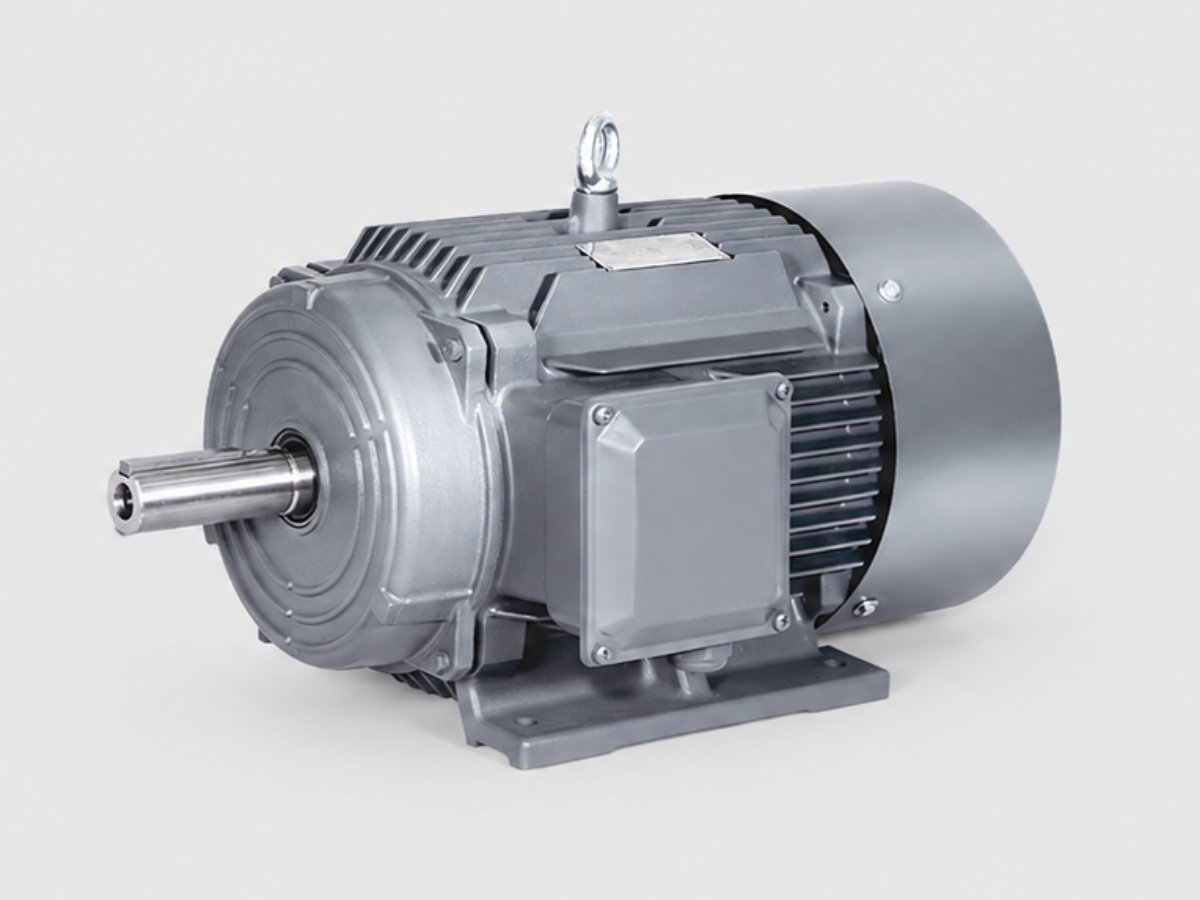
If the gearbox comes with a motor, the motor is checked too: power, speed, voltage, flange. How to choose a motor is covered in a separate article.
Lubrication in cement dust
Gearboxes on a slate line work in water, alkali and cement dust. When replacing, ask the manufacturer about shaft seals and the breather: dust drawn in through the breather and water through a worn seal ruin a gearbox faster than load does.
How we do it
- From the nameplate we find the manufacturing plant and decode the designation from its catalog, not from other people's descriptions.
- If the exact model is not available, we select a replacement by torque, ratio and connection dimensions. Before ordering we send a dimensional drawing.
- Where a decision needs the plant's answer, on torque, lubrication, version, we pass on its word.
What this article relies on
Below are the documents and materials we refer to, so that you can check what is said for yourself.
Reference materials
- Rexnord (Falk), gearbox manual 2360: which nameplate data are needed for spare parts, checking loads when the ratio is changedrexnord.com ↗
- Worldwide Electric, "Selecting an appropriate gear reducer": ratio, torque, service factor under AGMA, mounting and shaftsworldwideelectric.com ↗
- Cotta, "How to select and size a speed reducer": calculating the ratio, checking torque and overhung loadcotta.com ↗
- Omega, HDR speed reducers: taking the service factor into account when selecting by torqueassets.omega.com ↗
- Catalog of cycloidal gearboxes, "Example of type designation": series, position and version letters, the ratio in the designationyunzhan365.com ↗
- Maigoo, "Cycloidal gearboxes: advantages and disadvantages": ratio ranges of single- and multi-stage cycloidal gearboxesm.maigoo.com ↗
The list of installation places follows the design of the Hatschek line; the gearboxes of your line come from the machine passport.