Oversize equipment (press, autoclave): how it is shipped
Oversize cargo is cargo that does not fit an ordinary container or the road clearance in width, height, length or weight. It travels on platforms and in open containers, with transit permits and a planned route. The main decisions are made before packing: what the plant will dismantle, what packages that leaves and how each one will be lifted.
In short
4minutes to read
5sections
5sources
4catalog items
In this article
- 01What to settle with the plant before packing
- 02What it travels on
- 03Permits and route
- 04What to check in the photos before shipment
- 05How we do it
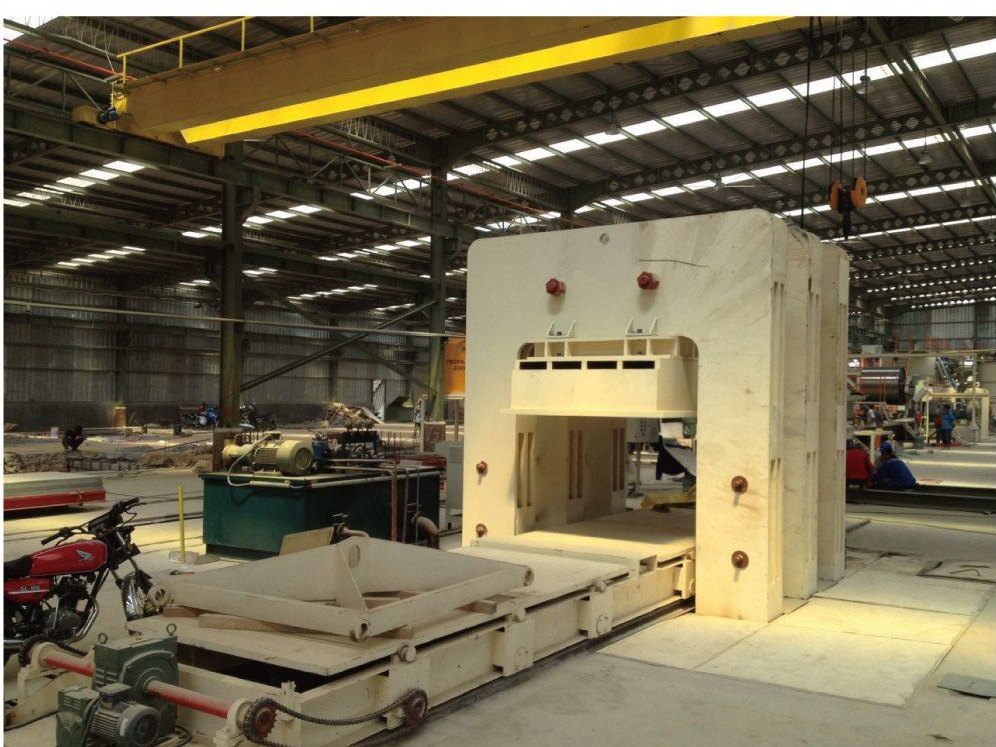
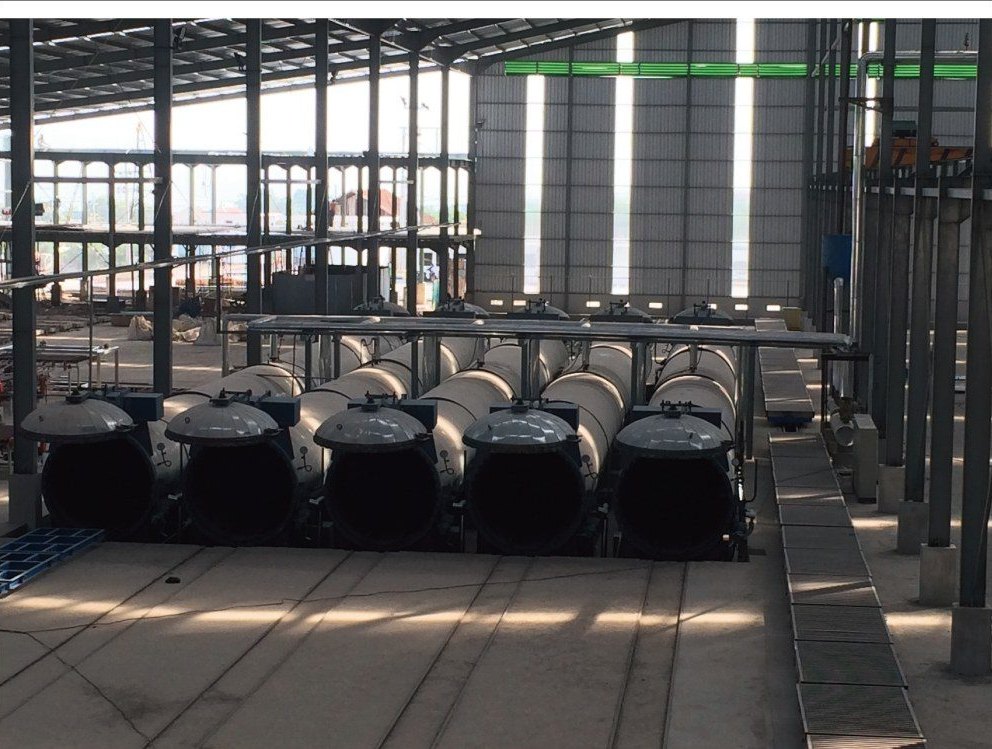
Oversize cargo is cargo that, by width, height, length or weight, does not fit an ordinary container or exceeds the clearance allowed on the road or railway. At a slate plant this means a hydraulic press, an autoclave, the frame of a forming machine, long shafts and large vessels. Such cargo travels on platforms and in open containers, transit permits are obtained for it, and the route is checked in advance: bridges, tunnels, bends, cranes at the transshipment points. Almost everything that later makes the journey more expensive and slower is settled before packing: what the plant will dismantle, how many packages that gives and how each package will be lifted.
What to settle with the plant before packing
The first question is whether the cargo can be brought within standard dimensions. The plant knows its machine and can usually:
- remove protruding parts: platforms, guards, the hydraulic unit, cabinets, piping;
- split the frame or bed at the assembly joints, if the design allows it;
- send shafts and drums as separate packages in their own cradles.
Every part removed is work at installation. So dismantling is agreed together with the supervised installation: what is taken apart, how the joints are marked and who reassembles on site.
The second question is the packing drawing of each package: dimensions, weight, center of gravity, slinging and securing points. Without these data the carrier cannot choose a platform or agree the route. The center of gravity of a press or an autoclave is offset, and if it is lifted "by eye" the package can tip over.
What it travels on
| Method | When it suits | What matters |
|---|---|---|
| Open-top container | cargo taller than an ordinary container but within its width | loaded from above by crane; covered with a tarpaulin on top |
| Flat rack container | cargo wider or taller than a container | open sides, loaded by crane or by a forklift from the side; secured with straps and lashings |
| Railway platform | large and heavy packages over a long distance | the railway has its own loading gauge; any excess is agreed with the carrier in advance |
| Low-bed trailer | the last leg to the plant, heavy and tall packages | transit permit, sometimes an escort, a route under bridges and wires |
The load capacity of a platform is not the same as what you will be allowed to carry on it: the road, the terminal cranes and the securing points set the limit.
Permits and route
Carrying heavy and oversize cargo by road requires a permit from the authorized body of the country the cargo passes through, and the route is usually stated in it. By rail such cargo is accepted on special terms, with a loading and securing diagram. What exactly is required in China, Kazakhstan, Kyrgyzstan and Uzbekistan is requested from the carrier for the specific route: the rules differ and change.
Along the route they check:
- bridges and overpasses for height and load, wires, tunnels, junctions;
- where the cargo is transshipped: the gauge change at the border, the switch from rail to truck;
- which cranes there are at each transshipment point, and the last crane, at your plant;
- the approach to the workshop: gates, bends, the ground under the crane.
The last point is often forgotten. The autoclave has arrived, but the crane cannot get up to the gates.
What to check in the photos before shipment
- marking of the packages: number, weight, center of gravity, slinging points, "this side up";
- preservation of bare metal and machined surfaces;
- securing inside the crate or on the platform: the cargo must not shift;
- cover against rain and snow: on a platform the cargo travels in the open air;
- removed units are packed and marked according to the assembly diagram.
How we do it
- We choose the route by the value of the lot and by how urgently it is needed: by air, by rail or by truck.
- We agree the packing for transport, not for moving about a workshop.
- The invoice, the packing list and the transport documents are prepared by us, not by you.
- Supervised installation and commissioning are carried out by the manufacturing plant. We arrange the visit of its engineers, interpreting and site access.
What this article relies on
Below are the documents and materials we refer to, so that you can check what is said for yourself.
Standards and documents
- OSJD. Memo O+R 401 “Placing and securing of cargo in large containers” (in force since 01.07.2024; page checked 30.10.2026) — . For wagons, Annex 3 to SMGS “Technical conditions for placing and securing cargo” applies; ask the carrier for the current edition.text ↗
Reference materials
- DP World. Out-of-Gauge Cargo (glossary)dpworld.com ↗
- Bertling. What is OOG?bertling.com ↗
- Ocean Network Express. Special Cargo Handbook 2025kr.one-line.com ↗
- Interlog USA. Guidelines for Out of Gauge Cargointerlogusa.com ↗
The article does not retell the transit permit requirements country by country: ask the carrier for them for your route on the date of carriage.