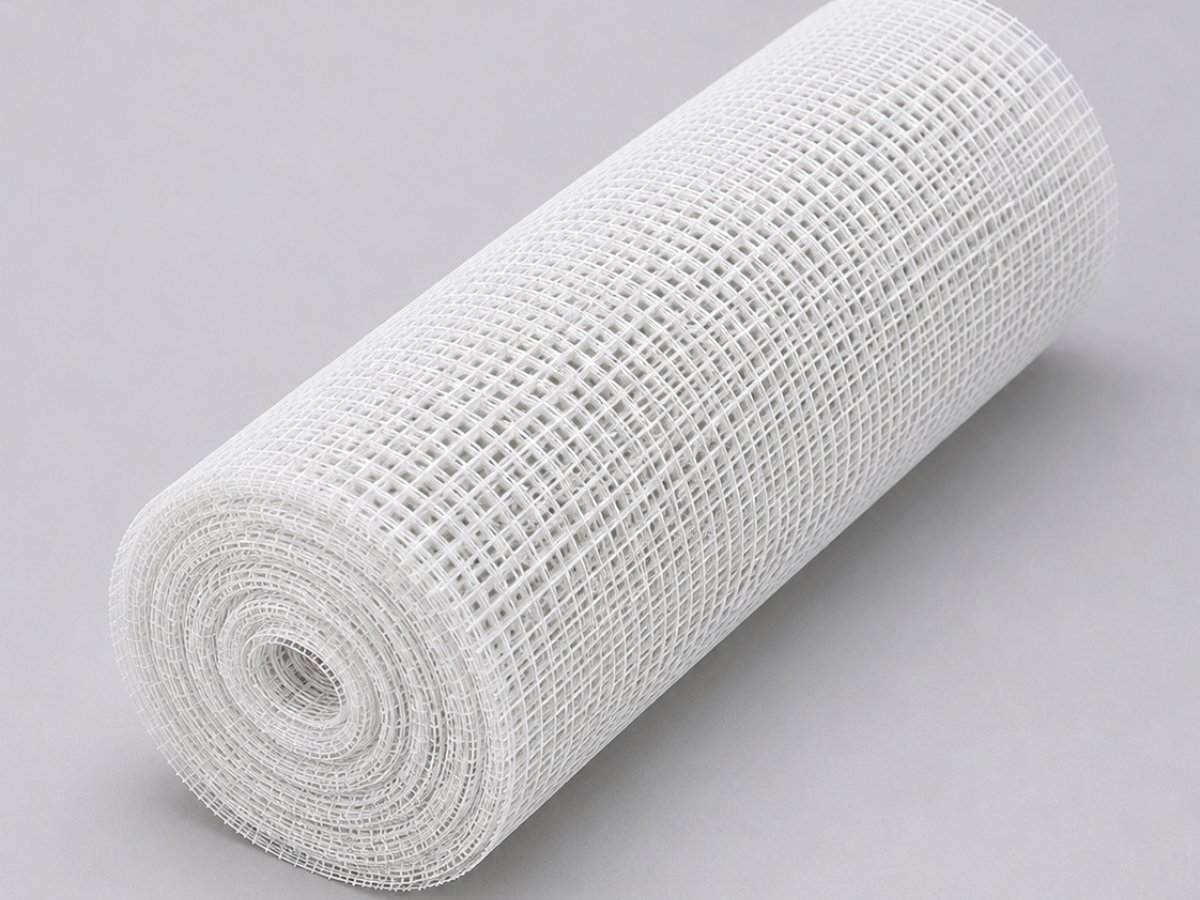
Screen mesh number: mesh, opening in mm and wire diameter
Mesh is the number of openings per inch of length. To get the opening in millimeters, divide 25.4 by the mesh and subtract the wire diameter. So the same mesh with different wire gives different screens. The Russian number under GOST 6613 works the other way round: it is the opening size itself in millimeters. In a request, write the mesh, the wire, the material and the weave.
In short
4minutes to read
6sections
5sources
3catalog items
In this article
- 01What to write in the request
- 02How mesh converts to millimeters
- 03Why the same mesh from different plants means different screens
- 04Screen number under GOST 6613
- 05How to choose the number for a cylinder screen
Contents
Mesh is how many openings fit into one inch (25.4 mm) along the screen. The clear size of the opening cannot be had from the mesh alone: the wire diameter is needed too. The formula is simple: divide 25.4 mm by the mesh, which gives the pitch of the screen, then subtract the wire from the pitch, which gives the clear opening. Hence the main rule of a request: "40 mesh" without the wire is not a screen but half a screen. And do not confuse mesh with the screen number under GOST 6613: there the number is the clear opening itself in millimeters, and the scale runs the opposite way.
What to write in the request
- mesh (or 目 in a Chinese catalog, which means the same);
- wire diameter in millimeters;
- wire material: stainless steel, brass, bronze;
- weave type: plain or twill;
- dimensions of the cloth or shell for your cylinder;
- if available, the passport or tag of the old screen and its photo held against the light next to a ruler.
If there is no old tag, the opening and the wire can be measured with a loupe and a micrometer or from a photo under a microscope. The main thing is not to order by mesh alone.
How mesh converts to millimeters
| Quantity | How it is calculated |
|---|---|
| Pitch (from the center of a wire to the center of the next) | 25.4 ÷ mesh |
| Clear opening | pitch − wire diameter |
| Mesh from a known opening and wire | 25.4 ÷ (opening + wire) |
| Open area, % | (opening ÷ pitch)² × 100 |
Example. A 40 mesh screen: pitch 25.4 ÷ 40 = 0.635 mm.
- With 0.2 mm wire the opening is 0.435 mm and the open area is about 47%.
- With 0.25 mm wire the opening is 0.385 mm and the open area is about 37%.
Same mesh, but water passes through the second noticeably worse. On a cylinder screen that means a different layer of slurry on the screen.
The catalog's filter screens follow the same rule: 40 mesh is given with an opening of about 0.42 mm, 80 mesh with about 0.18 mm. These openings already take the specific wire into account.
Why the same mesh from different plants means different screens
- Different wire. This is the main reason, explained above.
- Weave. In a plain weave the wire goes over one, in a twill weave over two. A twill weave allows thicker wire at the same mesh: the screen is stronger, but the opening is smaller.
- Tolerances. The openings in one screen are not all the same. The permitted spread is set by a standard: the international one is ISO 9044, the Russian one is GOST 6613-86 for non-ferrous screens. European and American tolerances differ, and some Chinese screens do not state an accuracy class at all.
- Metric inch. Old European documents sometimes use not 25.4 mm but a so-called metric inch. If the figures do not match, ask the manufacturer which inch the mesh was counted from.
Screen number under GOST 6613
Under GOST 6613-86 the screen number is the nominal side of the clear opening in millimeters, written without a decimal point: No. 05 is a 0.5 mm opening, No. 1 is 1 mm, No. 004 is 0.04 mm. So the larger the GOST number, the larger the opening. With mesh it is the opposite: the larger the mesh, the smaller the opening.
The GOST designation contains the material, the number and the accuracy class: for example, a semi-tombac screen No. 05 of normal accuracy. The wire diameter for each number is given in a table in the standard.
How to convert one to the other: take the GOST opening, add the wire diameter and divide 25.4 by the sum; the result is the mesh. A fractional result means there is no exact equivalent and you will have to choose the nearest one by opening.
How to choose the number for a cylinder screen
The screen number for a cylinder screen depends on the slurry (asbestos cement or fibre cement), its refining and the machine speed. The rule is one: the smaller the opening, the more fibre and cement stay on the screen, but the slower the water leaves. A number should be changed together with the process engineer and checked on the layer: its thickness, evenness and the loss of solids with the water. For details, see the article on the cylinder screen.
How we do it
- From the dimensions, photo and passport of the old screen, we look for the item at the manufacturing plant. What we find, with the price, photos and specifications, we send before the order. If the plant's designation is different, we tell you how the item differs.
- We inspect the lot at the plant before shipment: part number, dimensions, lot, packaging.
What this article relies on
Below are the documents and materials we refer to, so that you can check what is said for yourself.
Standards and documents
- GOST 6613-86 "Woven wire cloth with square openings. Specifications": screen number as the clear opening size, accuracy classes, designation exampletext ↗
- ISO 9044 "Industrial woven wire cloth — Technical requirements and tests" (tolerances of woven screens; cited via manufacturers' pages, the text of the standard was not opened)
Reference materials
- Wovenwire, "Wire cloth opening formula" and "Formula to determine mesh count": pitch, opening and mesh through wire diameterwovenwire.com ↗
- Robinson Wire Cloth, "Mesh specifications": mesh, wire, tolerances under ISO 9044 and ASTM E2016robinsonwirecloth.co.uk ↗
- Okutani, "Woven wire cloth JIS G 3555": formulas for opening and open area, the effect of wire diameter at one meshokutanikanaami.co.jp ↗