Mesh, bar, inches, hp: how to convert units from a catalog
1 bar = 0.1 MPa, 1 kgf/cm² is almost a bar, but 2% less. 1 inch = 25.4 mm. 1 hp is about 0.74 kW. 40 mesh means an opening of about 0.42 mm. In a Chinese catalog 斤 is half a kilo, and 寸 is not an inch. Below are conversion tables and the mistakes met most often.
Updated
Contents
Chinese catalogs write pressure in MPa, less often in bar or kg/cm², American ones in psi. Sizes come in inches, power in horsepower, screens in mesh. The essentials for conversion: 1 bar = 0.1 MPa; 1 kgf/cm² = 0.098 MPa, almost a bar but not a bar; 1 psi ≈ 0.069 bar; 1 inch = 25.4 mm exactly; 1 hp is 0.735 or 0.746 kW depending on which "horse". 40 mesh means an opening of about 0.42 mm. Below are tables and the mistakes where people most often get confused.
Pressure
| Unit | In Pa | In bar | In MPa |
|---|---|---|---|
| 1 MPa | 1,000,000 | 10 | 1 |
| 1 bar | 100,000 | 1 | 0.1 |
| 1 kgf/cm² (technical atmosphere) | 98,066.5 | 0.981 | 0.0981 |
| 1 atm (standard atmosphere) | 101,325 | 1.013 | 0.101 |
| 1 psi | 6,894.757 | 0.0689 | 0.00689 |
| 1 kPa | 1,000 | 0.01 | 0.001 |
The bar is not part of the SI, but its use alongside the SI is permitted. Chinese plants more often write MPa: for example, a hydraulic pump working pressure of 6.3 MPa is 63 bar.
A common mistake: kgf/cm² and bar are treated as the same. The difference is about 2%. For a gauge on a pipe that is trivial. For a boiler safety valve or the setting of a hydraulic system it is not. If a document says kg/cm² or kgf/cm², convert exactly.
Another mistake: gauge and absolute pressure. A pressure gauge shows gauge pressure, above atmospheric. Vacuum pumps and some boiler documents write absolute. The difference is one atmosphere. Look for the mark "g" (gauge) or "a" (absolute).
Length
| Unit | In mm |
|---|---|
| 1 inch (″) | 25.4 exactly |
| 1/2″ | 12.7 |
| 1 foot | 304.8 |
In Chinese catalogs inches are used for pipe threads, chain pitch, and the sizes of some hoses and valves. The pitch of 08B chain is 1/2 inch, that is 12.7 mm.
The Chinese 寸 is not an inch. The traditional Chinese 寸 equals 1/30 of a meter, about 33 mm. The inch in Chinese is 英寸, "English cun". If the description says just 寸, clarify which one is meant.
Mass
| Unit | In kg |
|---|---|
| 1 t (吨) | 1000 |
| 1 公斤 (gongjin) | 1 |
| 1 斤 (jin) | 0.5 |
| 1 pound (lb) | 0.4536 |
A common mistake: 斤 is taken for a kilogram. In the PRC 1 斤 = 500 g. In Taiwan and Hong Kong the jin is different, about 600 g. Industrial catalogs usually write kg (公斤 or kg), but in correspondence with small suppliers 斤 is met.
Power
| Unit | In kW |
|---|---|
| 1 metric hp (PS, CV) | 0.7355 |
| 1 mechanical hp (American and British) | 0.7457 |
| 1 electrical hp | 0.746 |
In Russian documents "л. с." is usually the metric one. In American catalogs hp is mechanical. The difference is about 1.4%. For selecting a motor this is not critical, for comparing efficiency it is noticeable.
Screens and sieves: mesh
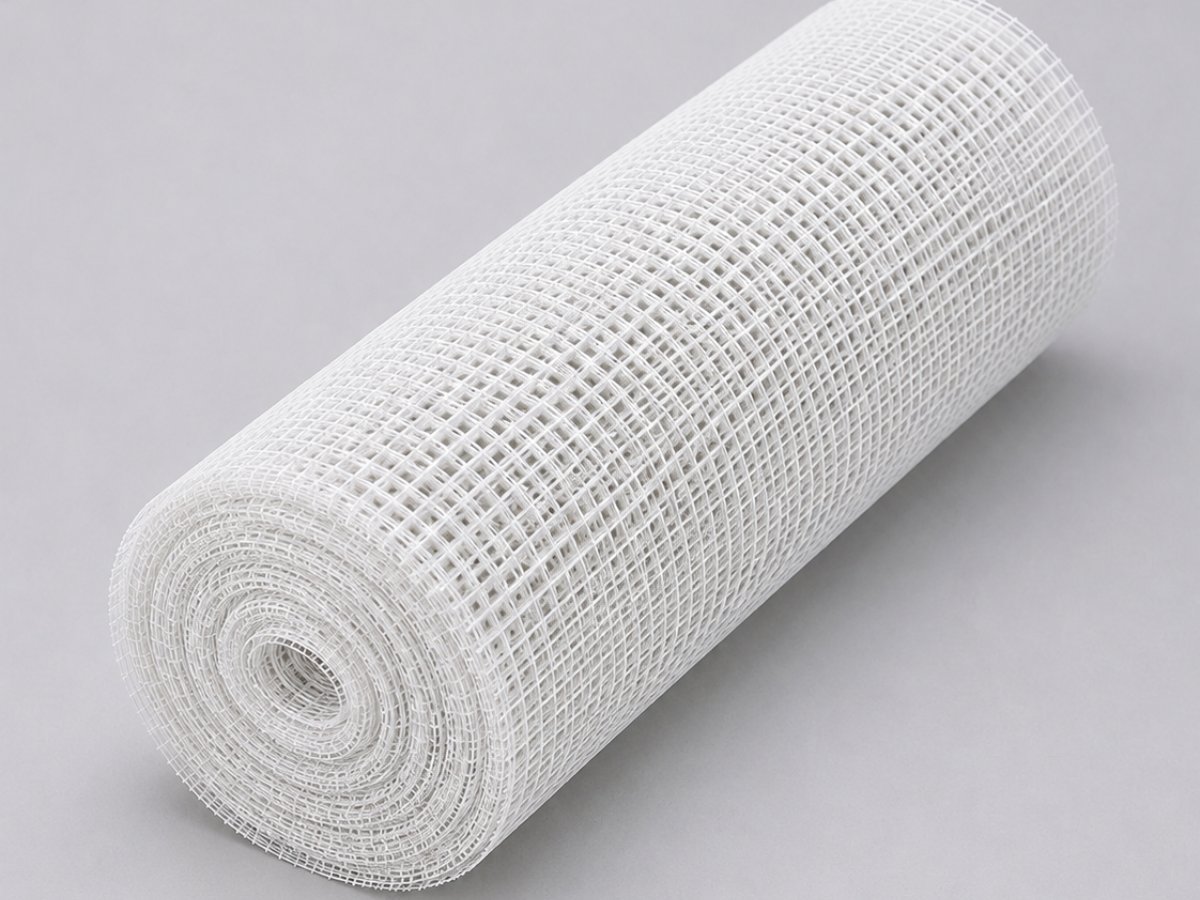
Mesh is the number of openings per inch. The larger the number, the finer the opening. But the opening size also depends on the wire thickness. So the same number in different systems gives slightly different sizes. It is more reliable to look at the opening size in micrometers.
| Mesh | Opening per ASTM E11 table |
|---|---|
| 20 | 850 µm (0.85 mm) |
| 40 | 425 µm (0.425 mm) |
| 80 | 180 µm (0.18 mm) |
| 100 | 150 µm (0.15 mm) |
| 200 | 75 µm (0.075 mm) |
The values for 80, 100 and 200 are confirmed by two sources, for 20 and 40 by one. In older tables the numbers 841, 400, 177, 149 and 74 µm are met. In Chinese catalogs mesh is written as 目 or 目数.
An example from the catalog: filter screens of 40 mesh (opening about 0.42 mm) and 80 mesh (about 0.18 mm) work as a pair, coarse inside, fine outside.
Areal density: g/m²
Fabrics and screens for paper and slate machines are described by the mass of a square meter, in g/m². This is not thickness or opening size. Two screens of the same mass can have different permeability. An example from the catalog: spiral dryer screen 820A, 1100 g/m². In a request write both the plant's screen number and g/m².
Boilers: tons of steam per hour
Steam boilers in China are described by steam output in t/h, how many tons of steam the boiler gives in an hour (蒸发量). Power in MW is stated less often. As a guide, a Chinese industry reference gives: 1 t/h of steam ≈ 0.7 MW of thermal power at a pressure of about 0.7 MPa and feed water at 20 °C. At higher pressure this number grows. This comes from one source, and it is a conversion as a guide, not the data of a specific boiler: take the exact thermal power from the passport.
What to do if a unit is unclear
- Do not convert "by eye": ask the plant which unit and which system: inch or 寸, gauge or absolute pressure.
- For screens ask for the opening size in mm or µm, not only mesh.
- In a request write the original unit and the conversion: "6.3 MPa (63 bar)".
How we do it
- We send the characteristics from the plant's catalog in familiar units and write next to them what the original said.
- If a catalog has an ambiguous unit, we clarify it with the plant before the order, not after.
- For screens and fabrics we agree with the plant the number, opening size and mass per square meter.
What this article relies on
Below are the documents and materials we refer to, so that you can check what is said for yourself.
Reference materials
- NIST. Special Publication 811, Appendix B.8: Factors for units listed alphabeticallynist.gov ↗
- NIST. Special Publication 811, Appendix B.9: Factors for units listed by kind of quantitynist.gov ↗
- NIST. Special Publication 811, Chapter 5: Units outside the SInist.gov ↗
- Energy Education. Barenergyeducation.ca ↗
- Wikipedia (English). Mesh (scale)en.wikipedia.org ↗
- ConductScience. Mesh to micron converter (ASTM E11)conductscience.com ↗
- Wikipedia (English). Chinese units of measurementen.wikipedia.org ↗
- MDBG Chinese Dictionary (CC-CEDICT). 斤mdbg.net ↗
- Wiktionary. 斤en.wiktionary.org ↗
- MDBG Chinese Dictionary (CC-CEDICT). 目数mdbg.net ↗
- Baidu 爱采购 (industry reference on converting steam t/h to MW)b2bwiki.baidu.com ↗
- TAMINOTA catalog: TMN-FM-040, TMN-FM-080, TMN-XHB-F08, TMN-HP-50 — item data.