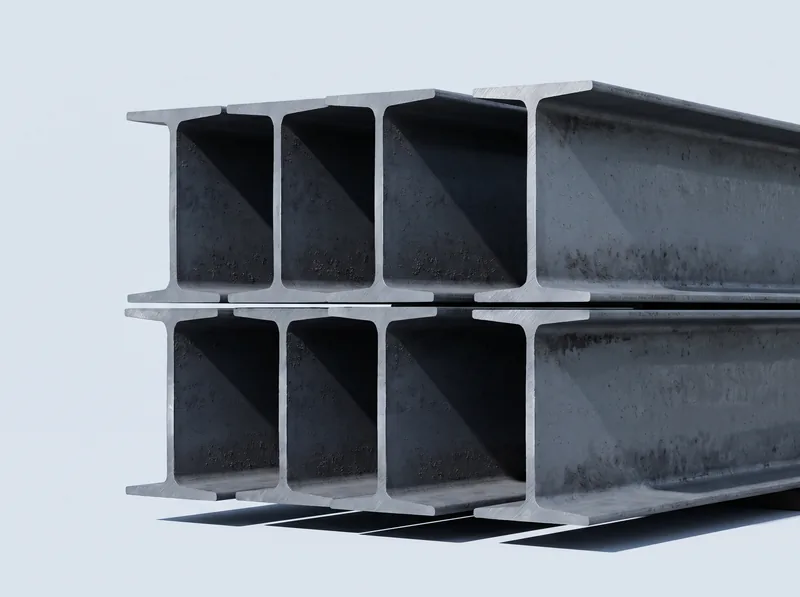
No.10–60 · h 100–600 · St3sp5 / C245 / 09G2S · GOST 8239
I-beam GOST 8239
Hot-rolled I-beam with tapered inner flange faces, No. 10–60 to GOST 8239-89; nearest equivalents are IPN and GB/T 706
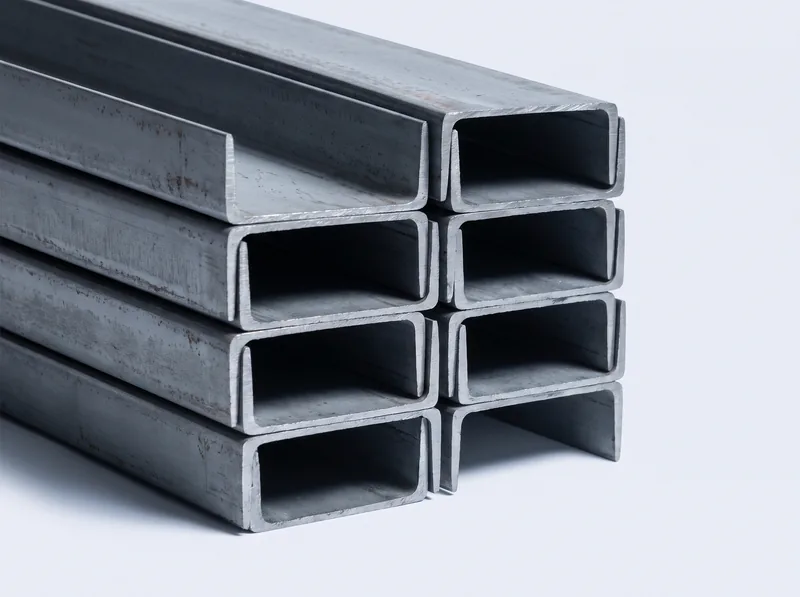
No.5–40 · U / P · h 50–400 · St3sp5 / 09G2S · GOST 8240
Hot-rolled channel No. 5–40 to GOST 8240-97: U series with tapered flange faces and P series with parallel faces
| Parameters | |
|---|---|
| Profile number | 5–40 |
| Series | U with tapered flanges, P with parallel flanges |
| Depth h | 50–400 mm |
| Flange width b | 32–115 mm |
| Web thickness s | 4.4–8.0 mm |
| Length | 6–12 m, fixed length and multiples of fixed length |
| Steel grade | St3sp5, St3ps5, C245, 09G2S, C345 |
| No. | h, mm | b, mm | s, mm | t, mm | Weight, kg/m |
|---|---|---|---|---|---|
| 5 | 50 | 32 | 4.4 | 7.0 | 4.84 |
| 6.5 | 65 | 36 | 4.4 | 7.2 | 5.90 |
| 8 | 80 | 40 | 4.5 | 7.4 | 7.05 |
| 10 | 100 | 46 | 4.5 | 7.6 | 8.59 |
| 12 | 120 | 52 | 4.8 | 7.8 | 10.4 |
| 14 | 140 | 58 | 4.9 | 8.1 | 12.3 |
| 16 | 160 | 64 | 5.0 | 8.4 | 14.2 |
| 18 | 180 | 70 | 5.1 | 8.7 | 16.3 |
| 20 | 200 | 76 | 5.2 | 9.0 | 18.4 |
| 22 | 220 | 82 | 5.4 | 9.5 | 21.0 |
| 24 | 240 | 90 | 5.6 | 10.0 | 24.0 |
| 27 | 270 | 95 | 6.0 | 10.5 | 27.7 |
| 30 | 300 | 100 | 6.5 | 11.0 | 31.8 |
| 33 | 330 | 105 | 7.0 | 11.7 | 36.5 |
| 36 | 360 | 110 | 7.5 | 12.6 | 41.9 |
| 40 | 400 | 115 | 8.0 | 13.5 | 48.3 |
A channel is a C-shaped section with a web and two flanges on one side. The number equals the depth in centimetres; the GOST 8240 range runs from No. 5 to No. 40. The U series has tapered inner flange faces, the P series has parallel faces; depth, flange width, thicknesses and weight per metre of U and P profiles of the same number are identical, the difference lies in the flange shape. Channels are rolled on section mills from blooms or square billets through grooved rolls; rolling accuracy is A (high) or B (standard).
The channel from mills in China to GB/T 706 is designated 5#–40# and differs from GOST in section: 10# has a 48 mm flange, a 5.3 mm web and a weight of 10.0 kg/m against 46 mm, 4.5 mm and 8.59 kg/m for No. 10 to GOST 8240. Substituting one for the other without recalculation changes both the tonnage and the load-bearing capacity, so the bureau either finds a mill with roll passes for GOST or agrees the substitution with the designer. Grades: St3sp5 and St3ps5 to GOST 535, S245 and S345 to GOST 27772, 09G2S to GOST 19281; at the mill in China, Q235B and Q355B with testing to the requirements of the specification.
During inspection at the mill we measure depth and flange width with callipers, web and flange thickness with a micrometer at several points along the length; for the P series we check flange parallelism, for both series camber, twist and length. We examine the surface for laps, scabs and cracks. We compare the mill test certificate (MTC), its heat number, chemical composition and mechanical properties, against the marking on the flange and the bundle tag; packing and loading are recorded with photographs in the inspection report.
Bundles up to 5 t strapped with steel band at three points; paint marking on the flange: mill, steel grade, profile number, heat number; the bundle tag duplicates the certificate.
| GOST | GB (China) | ASTM | EN | Note |
|---|---|---|---|---|
| St3sp5 / S245 | Q235B | A36 | S235JR | Impact toughness is specified at different temperatures: at −20 °C for St3sp5, at +20 °C for Q235B and S235JR. A cold-climate requirement is written into the specification separately. |
| S275 | Q275B | — | S275JR | Nearest equivalent by yield strength; chemical composition and scope of testing differ between the three standards. |
| 09G2S / S345 | Q355B | A572 Gr.50 | S355JR | Before GB/T 1591-2018 the grade was designated Q345B; certificates for earlier batches may still carry the old name. |
| S355 | Q355C | A572 Gr.50 | S355J0 | Nearest equivalent by yield strength of 355 MPa; impact test temperature and method are specific to each of the three standards. |
| — | Q355B | A992 Gr.50 | S355JR | A992 is a grade for wide-flange beams with an upper limit on yield strength. Nearest equivalent, not an exact match. |
| — | Q345P | A572 Gr.50 | S355GP | Sheet-pile grades. L4 and L5 to GOST 4781-85 are rolled from St3sp and St3ps; GOST has no dedicated sheet-pile grade. Nearest equivalent, not an exact match. |
Equivalents are the closest match, not identical: chemistry and tolerances differ between standards. The exact grade and standard are written into the contract.
No.10–60 · h 100–600 · St3sp5 / C245 / 09G2S · GOST 8239
Hot-rolled I-beam with tapered inner flange faces, No. 10–60 to GOST 8239-89; nearest equivalents are IPN and GB/T 706
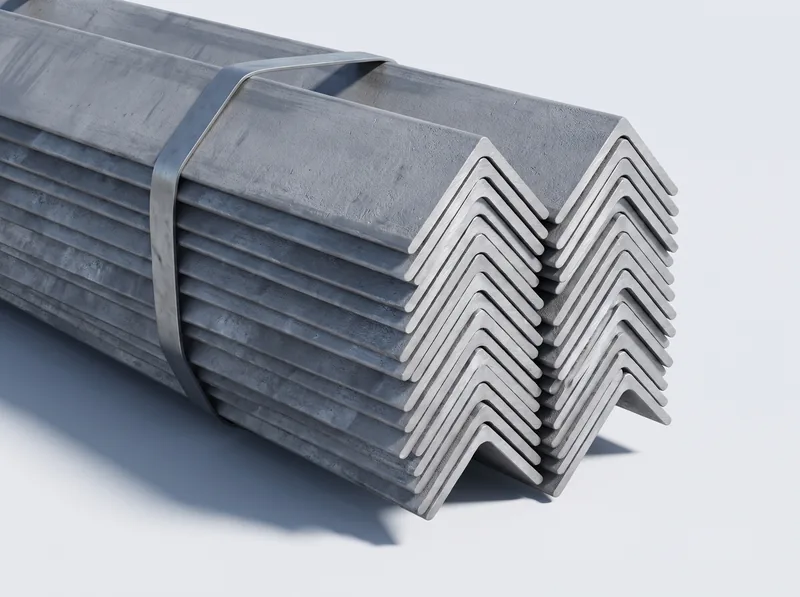
20×20–200×200 · t 3–16 · St3sp / 09G2S · GOST 8509
Hot-rolled equal angle, legs 20–200 mm, thickness 3–16 mm, GOST 8509-93; equivalents to GB/T 706 and EN 10056
Price request
Steel pricing depends on grade, size, tonnage and delivery terms on the day of contract. A number on the page would be wrong by the time you read it.
Request received