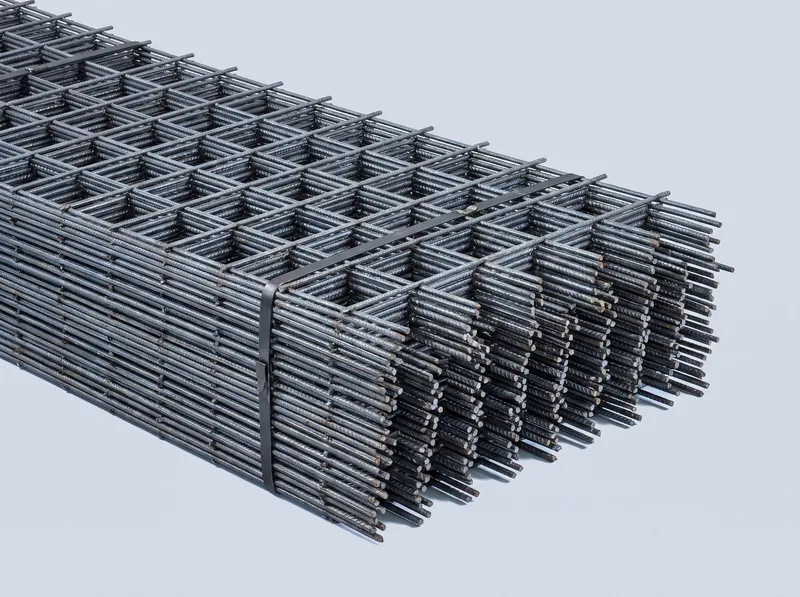
A500C · Ø6–12 · 100×100–200×200 · sheets 2×6 m · GOST 23279
Welded reinforcing mesh
Mesh of A500C rebar 6–12 mm in 2×6 m sheets for slabs, floors and foundations
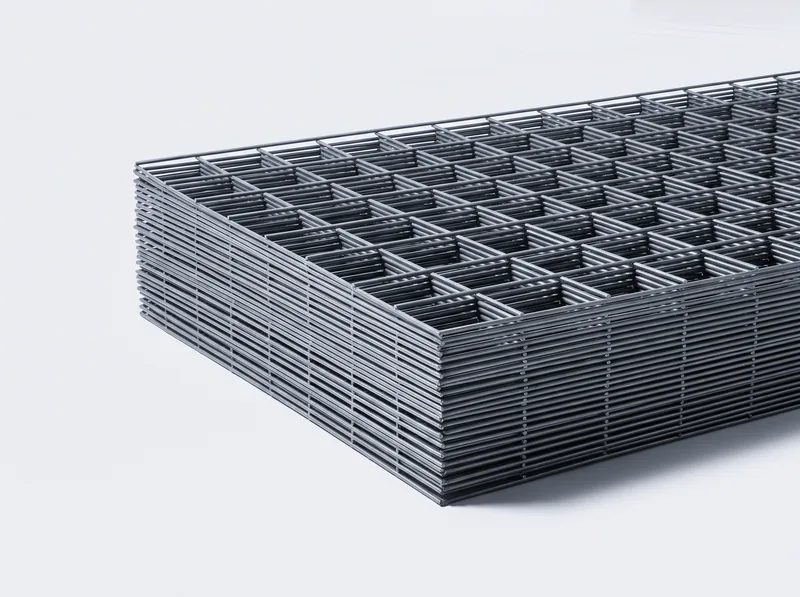
VR-1 · Ø3–6 · 50×50–200×200 · GOST 8478 · GOST 23279
Mesh of 3–6 mm cold-drawn wire with 50–200 mm openings in sheets and rolls
| Parameters | |
|---|---|
| Wire diameter | 3, 4, 5, 6 mm |
| Opening | 50×50, 100×100, 150×150, 200×200 mm |
| Sheet | 0.5–2.0 × 2–6 m, to specification |
| Roll | width up to 2 m, for Ø3–4 mm |
| Wire | VR-1 Ø3–5 per GOST 6727, CRB550, plain per GOST 3282 |
| Surface | black, galvanized to order |
| Opening, mm | Ø, mm | Weight, kg/m² |
|---|---|---|
| 50×50 | 3 | 2.22 |
| 50×50 | 4 | 3.95 |
| 50×50 | 5 | 6.17 |
| 100×100 | 3 | 1.11 |
| 100×100 | 4 | 1.97 |
| 100×100 | 5 | 3.08 |
| 100×100 | 6 | 4.44 |
| 150×150 | 4 | 1.32 |
| 150×150 | 5 | 2.06 |
| 150×150 | 6 | 2.96 |
| 200×200 | 4 | 0.99 |
| 200×200 | 5 | 1.54 |
| 200×200 | 6 | 2.22 |
Welded mesh is made from VR-1 cold-drawn indented wire to GOST 6727-80 or from plain wire to GOST 3282, joined by resistance spot welding at every intersection on multi-electrode machines. Welded mesh for reinforcing concrete structures is governed by GOST 8478-81 and GOST 23279-2012; Chinese mills weld it to GB/T 1499.3 from Q195–Q235 wire or CRB550 to GB/T 13788. Masonry mesh with 50×50 and 100×100 openings comes in rolls and sheets of masonry width; road mesh with 100–200 mm openings comes in sheets up to 2×6 m.
The difference between the wires lies in profile and strength: VR-1 and CRB550 have indentations or ribs for bond with concrete and strength class B500, while plain St2kp–St3 wire is used for masonry and render, where bond is not specified. GOST 23279 sets tolerances on mesh opening, wire diameter, sheet dimensions and weld joint strength; the number of unwelded joints is limited by the standard.
During inspection at the mill the bureau measures the wire diameter with a micrometer on longitudinal and transverse wires, the mesh opening and sheet dimensions with callipers and a tape, checks the shear strength of weld joints and counts unwelded intersections on sheets from different bundles. The mill test certificate (MTC) is checked against the wire heat, strength class and test results; the bundle marking, tag and strapping preventing sheet deformation during handling are checked.
Sheets in bundles strapped with wire or steel band in four places, rolls tied in three places; bundle weight is agreed in the specification. A mill tag on the bundle with opening, diameter, sheet size and wire heat.
| GOST | GB (China) | ASTM | EN | Note |
|---|---|---|---|---|
| St1kp (GOST 380) | Q195 | AISI 1006 | C4D (EN 10016-2) | Nearest equivalent by carbon content; wire rod steel for soft tying wire |
| St2kp, St3kp (GOST 380) | Q215, Q235 | AISI 1008 | C7D (EN 10016-2) | Nearest equivalent; for galvanized wire and chain-link mesh. Q235 is stiffer than St2kp; the grade is fixed in the specification |
| O wire (annealed, GOST 3282) | 退火钢丝 (GB/T 343) | ASTM A853 annealed | EN 10218-2 | Equivalence by delivery condition, not by steel grade: EN 10218-2 sets only diameter tolerances |
| 1Ts, 2Ts (GOST 3282) | 热镀锌 / 电镀锌 (GB/T 343) | ASTM A641 Class 1, Class 3 | EN 10244-2 class A–D | Classes are defined by zinc weight per m² and do not match directly; the specification states the coating weight in g/m² |
| VR-1 (GOST 6727) | CRB550 (GB/T 13788) | ASTM A1064 D-wire | B500A (EN 10080) | Nearest equivalent: VR-1 is cold-drawn with indentations, CRB550 is cold-rolled ribbed; strength is close, the profile differs |
| A500C (GOST 34028) | HRB400E, HRB500E | Grade 60 (ASTM A615) | B500B (EN 10080) | Nearest equivalent by yield strength is HRB500E (500 N/mm²); HRB400E is lower (400 N/mm²); for reinforcing mesh the specification states the class to GOST 34028 and the grade to GB/T 1499.2 |
Equivalents are the closest match, not identical: chemistry and tolerances differ between standards. The exact grade and standard are written into the contract.
A500C · Ø6–12 · 100×100–200×200 · sheets 2×6 m · GOST 23279
Mesh of A500C rebar 6–12 mm in 2×6 m sheets for slabs, floors and foundations
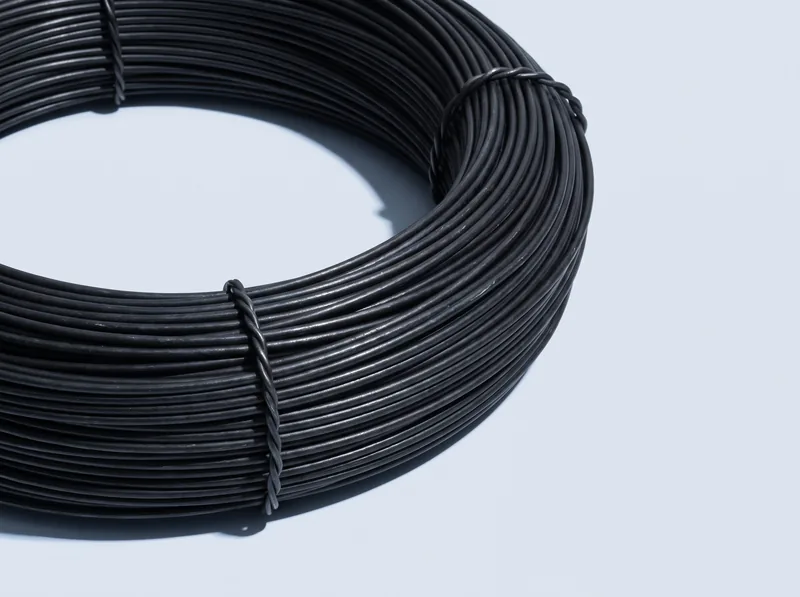
O · Ø0.8–4.0 · St1kp–St3 · GOST 3282
Soft heat-treated wire 0.8–4 mm for tying reinforcement cages and mesh
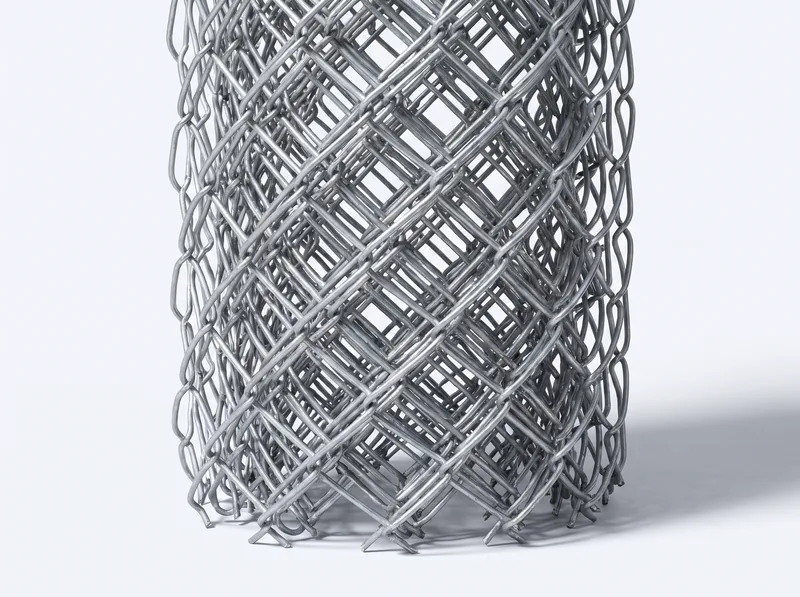
Mesh 20–60 · Ø1.4–3.0 · black · galvanized · GOST 5336
Single-woven mesh with 20–60 mm openings from black and galvanized wire in rolls
Price request
Steel pricing depends on grade, size, tonnage and delivery terms on the day of contract. A number on the page would be wrong by the time you read it.
Request received