Cement plant spare parts from China: what is ordered and how
At a cement plant what is changed most often is what rubs against clinker and raw meal: grinding balls and mill liners, kiln lining, filter bags, elevator belts and buckets. Next come large bearings, gearboxes and kiln rollers. Standard units are ordered by number, cast wear parts by drawing or sample with the material grade.
Updated
Contents
Cement plant spare parts fall into three groups, and they are ordered differently. The first is standard units: bearings, gearboxes, motors, couplings, chains. They are ordered by the number from the nameplate or passport, from the maker of the unit. The second is wear parts that rub against clinker and raw meal: grinding balls, mill liners, diaphragms, crusher hammers, cooler grates, elevator buckets. They are ordered by drawing or sample and necessarily with the material grade. The third is units the line manufacturer designed for its own process: the separator rotor, the kiln burner, the control system. These are safer to take from the line manufacturer or per its documentation.
What wears out at a cement plant
| Section | What wears out | Why |
|---|---|---|
| Crushing | hammers, blow bars, plates, grates of crushers | impact and abrasion by limestone and clinker |
| Ball mill | grinding balls, liners, diaphragm, discharge grate | constant impact and friction of balls against material and shell |
| Vertical mill | roller tyres, table segments | abrasion under pressure |
| Rotary kiln | refractory lining, seals at the kiln ends | temperature and the chemical action of clinker |
| Kiln supports and drive | support rollers and their bearings, tyres, girth gear, gearbox | kiln weight, dust and heat |
| Clinker cooler | grate plates | hot clinker |
| Conveying | elevator belts and buckets, chains, conveyor rollers | abrasive dust and load |
| Dust collection | filter bags, cages, pulse valves | dust, temperature, gas humidity |
| Drives throughout | bearings, gearboxes, couplings, motors | load and dust |
Ball mill: balls and liners
A ball mill is a horizontal rotating drum, usually divided by a diaphragm into two compartments. In the first compartment large balls crush the clinker granules, in the second small balls grind the material further. Balls for cement mills are usually made of high-chromium steel. According to open reference data, the first compartment takes balls of 60–80 mm and the second 15–40 mm. This is a guide, not a norm: the size and ratio of balls are chosen for the material and the mill.
What to state in an order for grinding media:
- diameter and quantity for each size, in tons;
- material: the steel or cast iron grade and the required hardness;
- under which standard the plant gives and checks hardness;
- for which compartment and which material: clinker, raw meal, coal.
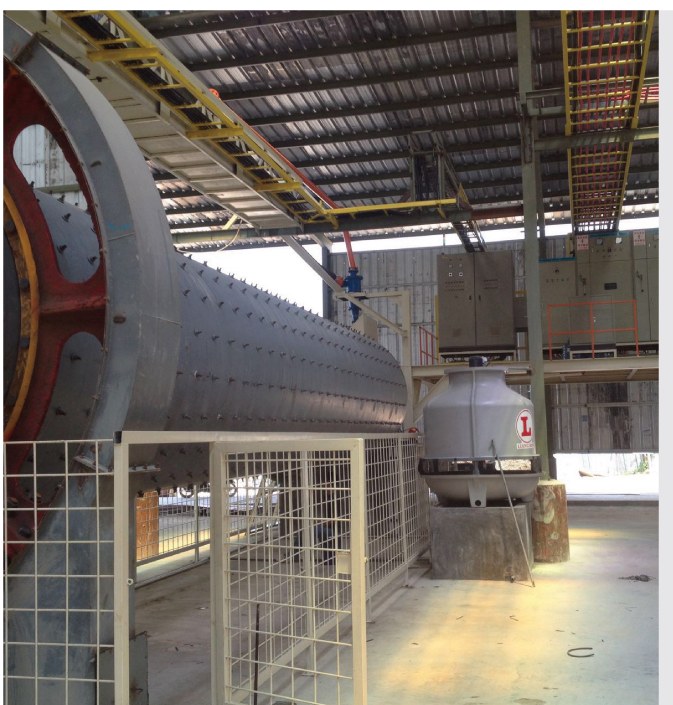
Liners and diaphragms are ordered by the mill drawing. If there is no drawing, dimensions are taken from the worn plate and from a new one from stock, if one is left. The plate shape, the pitch and diameter of the bolt holes, the profile of the working surface, the casting grade must all be in the request. The ball mill for quartz sand from the taminota.com catalog is built the same way: compartments, charge of grinding media, discharge grate.
Kiln: supports, drive, lining
A rotary kiln rests on tyres, steel rings on the shell. The tyres rest on pairs of support rollers, thrust rollers keep the kiln from creeping. The kiln is turned by a girth gear through a gearbox and motor. A hot kiln must not be stopped for long, or the shell deforms. So it has an auxiliary drive with a separate power supply, which slowly turns the kiln when the main drive is off.
Hence the priorities for stock:
- support roller bearings: large ones, kept by number;
- auxiliary drive units: motor, coupling, gearbox; if the main drive fails, they are needed at once;
- refractories: ordered by the brick grade and shape from the lining design.
Refractory lining is a topic of its own. The grade, shape and laying pattern are set by the kiln design. They must not be changed without a process engineer.
How to order each group
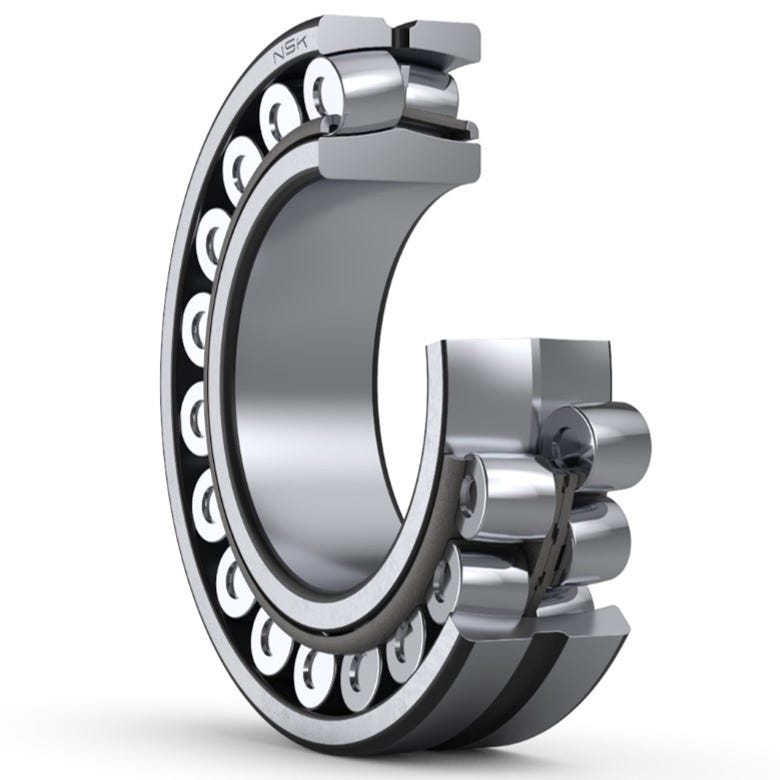
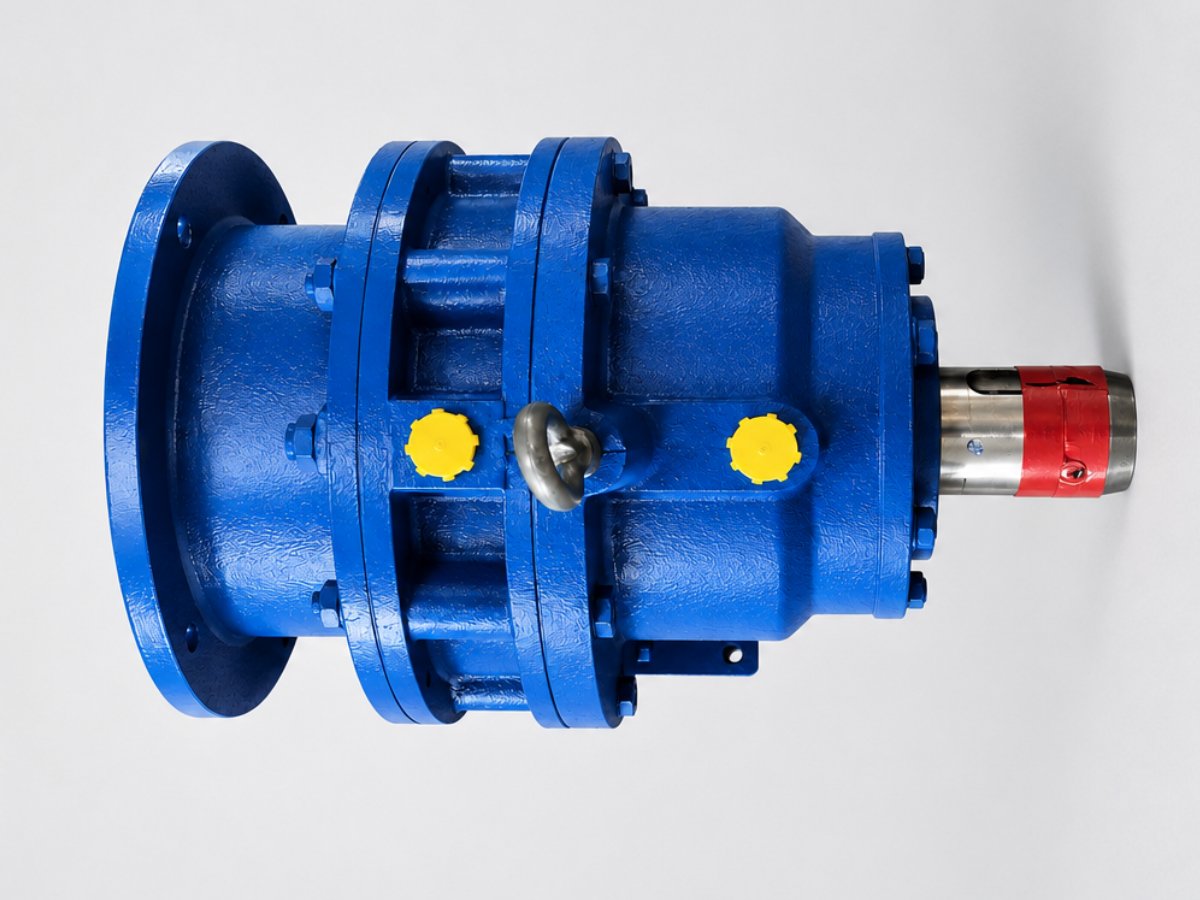
Standard units. You need the number from the nameplate: for a bearing the full designation with the letters after the digits, for a gearbox the model, ratio and number, for a motor the whole nameplate. How to read these nameplates is covered in the articles on bearing and gearbox marking.
Cast wear parts. You need a drawing or sample, the material grade and the required hardness. It helps to have a photo of the worn part: from the wear pattern the plant may propose a different casting grade. For the first lot it is reasonable to take a sample and test it in service.
Line manufacturer's units. The separator rotor, the burner and the control system are made for the process. Without the manufacturer's documentation such a unit can be made, but the risk is higher that it will not fit or will work worse. If the line is old and the manufacturer is gone, a full survey and a description of the operating mode are needed.
How to put the request together
A cement plant usually orders many items at once. Put them in one table: item, section and machine, number or drawing, material, quantity, photo. How to build such a table is covered in the article on a request for several spare parts. Which items to keep in stock all the time is covered in the article on the line spares kit.
How we do it
- We look for the manufacturing plant by number, drawing or photo of the unit. What we find, with the price, photos and specifications, we send before the order.
- Where the answer must come from the plant (material, hardness, tolerance), we ask it and pass on its word.
- We inspect the lot at the plant before shipment: part number, dimensions, lot, packaging.
What this article relies on
Below are the documents and materials we refer to, so that you can check what is said for yourself.
Reference materials
- Wikipedia, article "Cement mill": construction of the ball mill, compartments, material and sizes of grinding mediaen.wikipedia.org ↗
- Wikipedia, article "Rotary kiln": tyres, support and thrust rollers, girth gear, auxiliary drive, refractory liningen.wikipedia.org ↗
- taminota.com catalog: ball mill for quartz sand, NSK 22318 spherical roller bearing, GUOMAO BWD2 gearbox.
The sizes of grinding media are taken from one reference source and given as a guide. Standards for grinding media and liners were not opened.