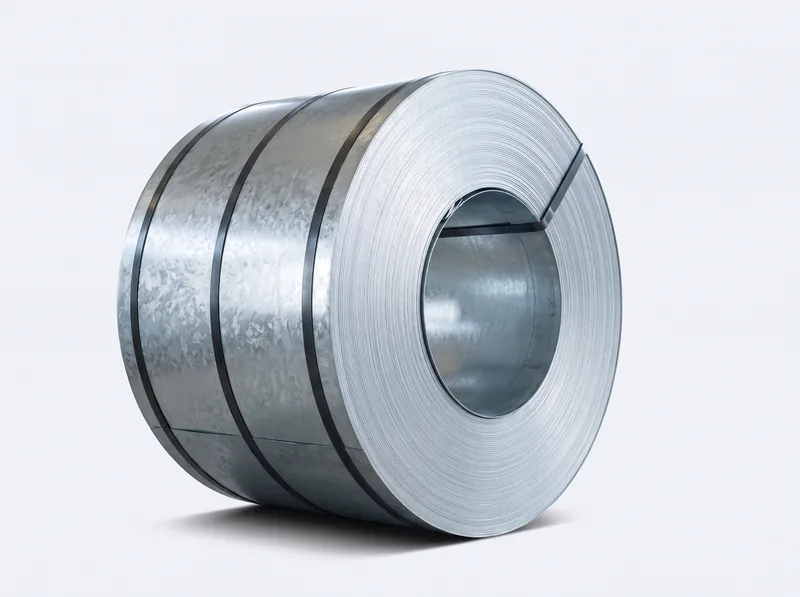
DX51D+Z · Z100–Z275 · 0.3–3 mm · width 1 000–1 500 · GOST 14918
Galvanized coil
Hot-dip galvanized coil DX51D+Z with zinc weight Z100–Z275, 0.3–3 mm thick, for profiled sheeting, ventilation and profiles
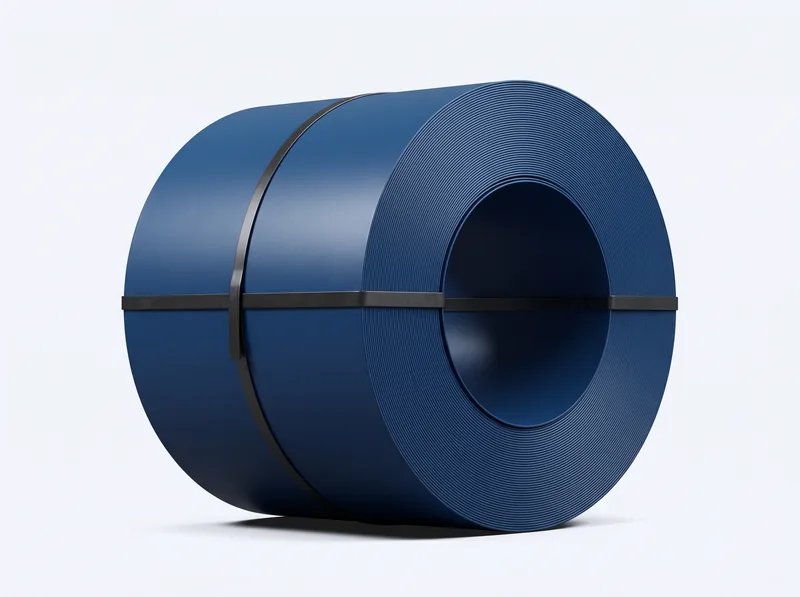
PPGI · PPGL · RAL · 0.3–1.2 mm · width 1 000–1 250 · GOST 34180
Prepainted coil PPGI and PPGL on a galvanized or aluminium-zinc base, polyester and PVDF, RAL colours, 0.3–1.2 mm
| Parameters | |
|---|---|
| Thickness with coating | 0.3–1.2 mm |
| Width | 1 000–1 250 mm; common 1 000, 1 200, 1 250 |
| Base | DX51D+Z (Z100–Z275) or DX51D+AZ (AZ150) |
| Coating type | PE, SMP, HDP, PVDF |
| Coating thickness | top side 20–25 µm, reverse side 5–10 µm |
| Colour | per RAL catalogue; matte or glossy finish to specification |
| Coil inside diameter | 508 or 610 mm |
| t, mm | Weight, kg/m² | Sheet 1 500×6 000, kg |
|---|---|---|
| 0.3 | 2.36 | 21.2 |
| 0.35 | 2.75 | 24.7 |
| 0.4 | 3.14 | 28.3 |
| 0.45 | 3.53 | 31.8 |
| 0.5 | 3.93 | 35.3 |
| 0.6 | 4.71 | 42.4 |
| 0.7 | 5.49 | 49.5 |
| 0.8 | 6.28 | 56.5 |
| 1 | 7.85 | 70.6 |
| 1.2 | 9.42 | 84.8 |
Theoretical weight at steel density 7.85 g/cm³. Actual batch weight is by scale and mill certificate.
Colour-coated coil is galvanized (PPGI) or aluminium-zinc coated (PPGL) strip painted on a continuous line: the surface is degreased, a conversion layer is applied, then primer and top coat, each layer cured in an oven. The face side carries 20–25 µm, the reverse 5–10 µm of backing paint or a full two-sided coating to specification. The colour is specified from the RAL catalogue; for roofing and cladding the common shades are RAL 3005, 5005, 6005, 8017 and 9003.
The coatings differ in resistance to ultraviolet and corrosion. Polyester (PE) is the base coating for roofing and fencing; silicone-modified polyester (SMP) and high-durability polyester (HDP) hold colour and gloss longer; fluoropolymer-based PVDF is used on facades where the requirements for colour and gloss retention are higher. The PPGI base is DX51D+Z with zinc class Z100–Z275 to GOST 14918 and EN 10346; the PPGL base is DX51D+AZ with aluminium-zinc AZ150. Mills in China paint to GB/T 12754, where the base grades are designated TDC51D+Z and TS250GD+Z; GOST 34180 and EN 10169 list the same groups by intended use and yield strength.
Inspection at the mill before shipment: total thickness with a micrometer at the edges and in the middle of the width, polymer layer thickness with a magnetic coating gauge, colour compared with the RAL reference sample in daylight, uniformity of shade and gloss along the wrap, absence of runs, skips, blisters and scratches under the protective film; adhesion by the mill’s bend and cross-cut test results in the certificate. The mill test certificate (MTC) is checked against the heat number on the tag: base grade and zinc class, coating type and thickness, colour, mechanical properties. Marking, the protective film, the wrapping and the strapping are checked.
The surface is covered with protective film to specification; the coil is wrapped in moisture-proof paper and steel sheet, the end faces are closed with rings, strapped with steel band; mill tag with heat number, base grade, zinc class, coating type, RAL colour, thickness, width and weight.
| GOST | GB (China) | ASTM | EN | Note |
|---|---|---|---|---|
| St3sp | Q235B | A1011 CS Type B / A36 | S235JR | Correspondence by mechanical properties; the chemical composition and impact toughness requirements differ between the standards — check against the MTC. |
| 09G2S | Q355B (Q345B) | A572 Grade 50 | S355JR | Nearest analogue: yield strength is comparable, but 09G2S carries more manganese and silicon alloying. |
| 08ps | DC01 / SPCC | A1008 CS Type B | DC01 | Cold-rolled low-carbon steel for general use; deep drawing calls for DC03–DC04 or 08Yu. |
| 08ps ZN (GOST 14918) | DX51D+Z | A653 CS Type B | DX51D+Z | Galvanized base for bending and roll forming; the zinc class is specified separately (Z100–Z275). |
| 250 / 350 (GOST 14918) | S250GD+Z / S350GD+Z | A653 SS Grade 37 / 50 | S250GD+Z / S350GD+Z | Structural galvanized grades with a specified yield strength; ASTM SS is the nearest analogue by strength. |
| 08Kh18N10 | 06Cr19Ni10 | 304 | 1.4301 | Austenitic chromium-nickel steel; the GOST grade allows a higher carbon content than 304L. |
| 03Kh17N14M3 | 022Cr17Ni12Mo2 | 316L | 1.4404 | Molybdenum-bearing low-carbon austenitic steel; close correspondence. |
| 12Kh17G9AN4 | 12Cr17Mn6Ni5N | 201 | 1.4372 | Nearest analogue: chromium-manganese steel with nitrogen, nickel partly replaced by manganese; corrosion resistance is lower than that of 304. |
Equivalents are the closest match, not identical: chemistry and tolerances differ between standards. The exact grade and standard are written into the contract.
DX51D+Z · Z100–Z275 · 0.3–3 mm · width 1 000–1 500 · GOST 14918
Hot-dip galvanized coil DX51D+Z with zinc weight Z100–Z275, 0.3–3 mm thick, for profiled sheeting, ventilation and profiles
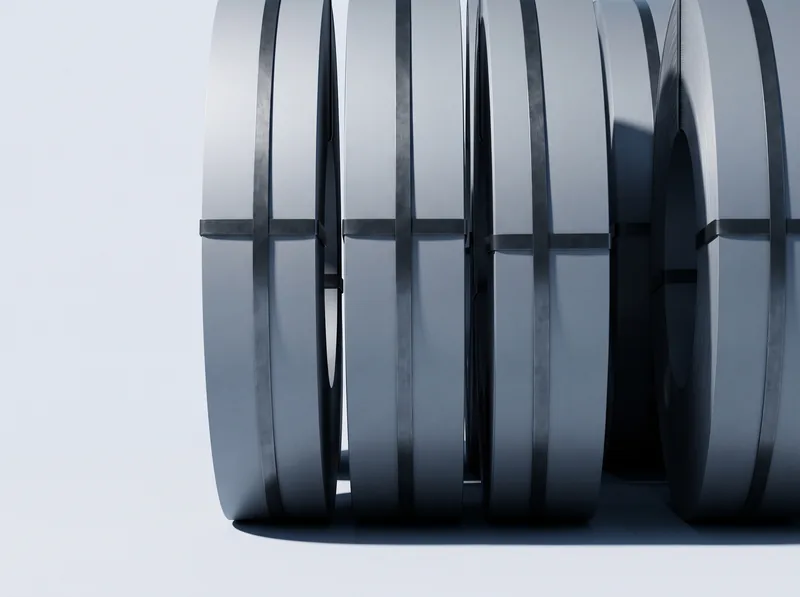
St3sp · Q235B · DC01 · 0.5–6 mm · width 20–630 · GOST 6009
Strip slit lengthwise from coil, 20–630 mm wide and 0.5–6 mm thick, for electric-welded tube, profiles and banding
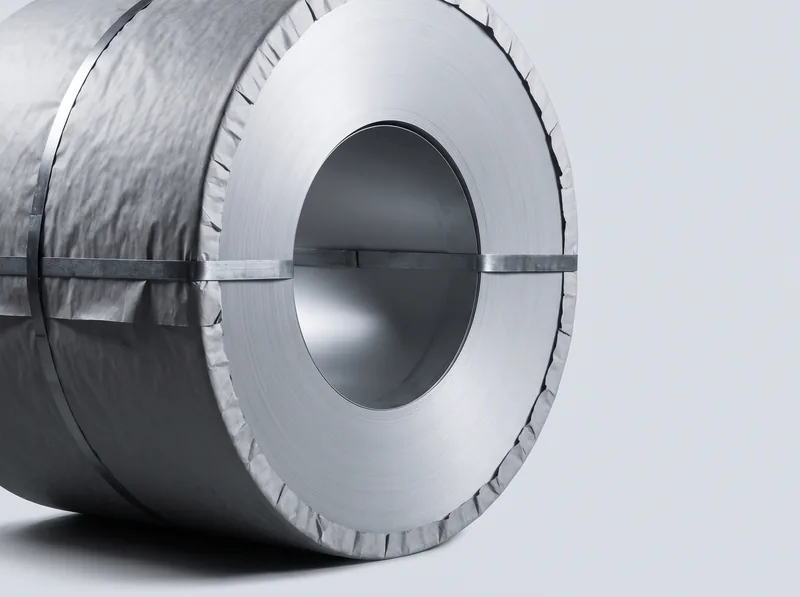
DC01 · 08ps · SPCC · 0.4–3 mm · width 1 000–1 500 · GOST 19904
Cold-rolled annealed coil in DC01, 08ps and SPCC, 0.4–3 mm thick, for pressing, painting and galvanizing
Price request
Steel pricing depends on grade, size, tonnage and delivery terms on the day of contract. A number on the page would be wrong by the time you read it.
Request received