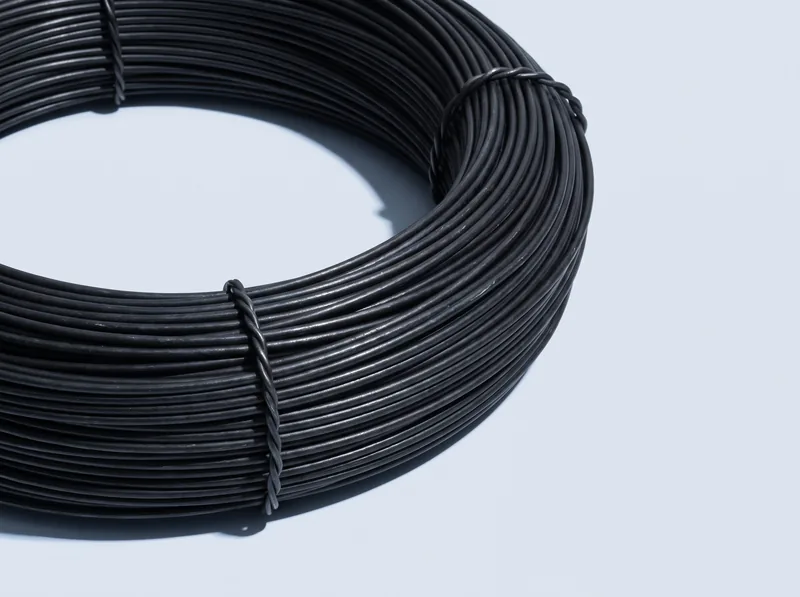
O · Ø0.8–4.0 · St1kp–St3 · GOST 3282
Annealed tying wire
Soft heat-treated wire 0.8–4 mm for tying reinforcement cages and mesh
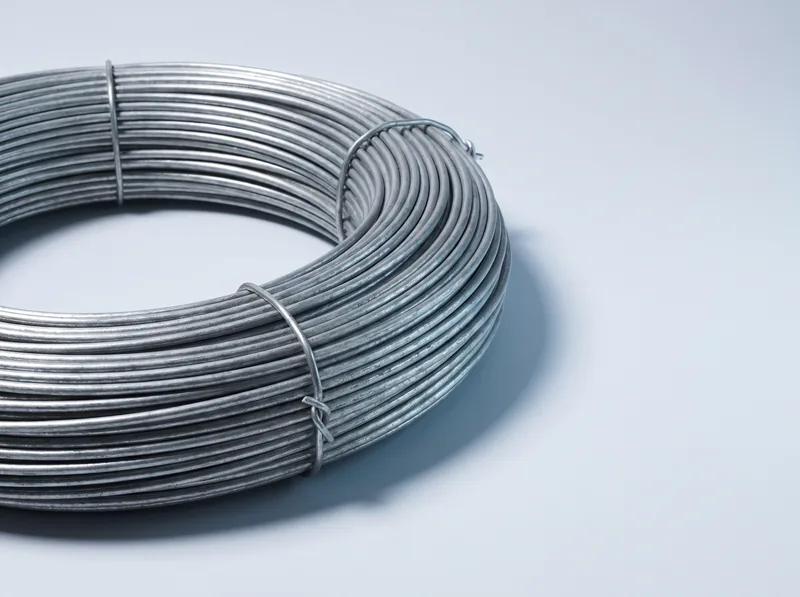
1Ts · 2Ts · Ø0.5–6.0 · GOST 3282 · ASTM A641
Low-carbon wire 0.5–6 mm with zinc coating for outdoor work and fencing
| Parameters | |
|---|---|
| Diameter | 0.5–6.0 mm |
| Coating | zinc, class 1Ts or 2Ts per GOST 3282 |
| Galvanizing method | hot-dip, electrolytic |
| Condition | O — heat treated (annealed); without heat treatment to specification |
| Steel grade | St2kp, St3ps / Q195, Q235 |
| Delivery form | coils, bundles, spools |
| Ø, mm | Weight, kg/m | Metres per tonne |
|---|---|---|
| 0.5 | 0.002 | 648 784 |
| 0.8 | 0.004 | 253 431 |
| 1 | 0.006 | 162 196 |
| 1.2 | 0.009 | 112 636 |
| 1.6 | 0.016 | 63 358 |
| 2 | 0.025 | 40 549 |
| 2.5 | 0.039 | 25 951 |
| 3 | 0.055 | 18 022 |
| 4 | 0.099 | 10 137 |
| 5 | 0.154 | 6 488 |
| 6 | 0.222 | 4 505 |
Theoretical weight at steel density 7.85 g/cm³. Actual batch weight is by scale and mill certificate.
Galvanized wire is the same general-purpose low-carbon wire to GOST 3282-74, but with a zinc coating of class 1Ts or 2Ts; Chinese mills produce it to GB/T 343-2012, and for export orders to ASTM A641/A641M and EN 10244-2. The wire is drawn from Q195, Q235 or St2kp, St3 wire rod and galvanized either by hot-dipping in a bath of molten zinc or electrolytically. Hot-dip galvanizing gives a thick layer for outdoor use; electrolytic plating gives a thin, even layer for indoor work and woven products.
Coating classes differ by zinc weight per square metre of surface: 2Ts to GOST 3282 carries more zinc than 1Ts; ASTM A641 sets the same division as Class 1 and Class 3, EN 10244-2 as classes A–D. Supplied in the heat-treated (O) and non-heat-treated condition: annealed wire is softer and goes to tying and weaving, unannealed wire is stiffer and holds tension in fencing and guy wires.
During inspection at the mill the bureau measures the diameter with a micrometer over the coating and without it, checks the zinc weight by the gravimetric method on samples from different coils and coating adhesion by wrapping around a mandrel: the zinc must not flake or crack. The mill test certificate (MTC) is checked against the wire rod heat, chemical composition, coating class and zinc weight; the tags on the coils, the marking and the packaging protecting the coating from white rust in transit are checked.
Coils tied in three places, covered with moisture-resistant paper and film, on pallets; coil weight is agreed in the specification. A mill tag on each coil with diameter, coating class and heat.
| GOST | GB (China) | ASTM | EN | Note |
|---|---|---|---|---|
| St1kp (GOST 380) | Q195 | AISI 1006 | C4D (EN 10016-2) | Nearest equivalent by carbon content; wire rod steel for soft tying wire |
| St2kp, St3kp (GOST 380) | Q215, Q235 | AISI 1008 | C7D (EN 10016-2) | Nearest equivalent; for galvanized wire and chain-link mesh. Q235 is stiffer than St2kp; the grade is fixed in the specification |
| O wire (annealed, GOST 3282) | 退火钢丝 (GB/T 343) | ASTM A853 annealed | EN 10218-2 | Equivalence by delivery condition, not by steel grade: EN 10218-2 sets only diameter tolerances |
| 1Ts, 2Ts (GOST 3282) | 热镀锌 / 电镀锌 (GB/T 343) | ASTM A641 Class 1, Class 3 | EN 10244-2 class A–D | Classes are defined by zinc weight per m² and do not match directly; the specification states the coating weight in g/m² |
| VR-1 (GOST 6727) | CRB550 (GB/T 13788) | ASTM A1064 D-wire | B500A (EN 10080) | Nearest equivalent: VR-1 is cold-drawn with indentations, CRB550 is cold-rolled ribbed; strength is close, the profile differs |
| A500C (GOST 34028) | HRB400E, HRB500E | Grade 60 (ASTM A615) | B500B (EN 10080) | Nearest equivalent by yield strength is HRB500E (500 N/mm²); HRB400E is lower (400 N/mm²); for reinforcing mesh the specification states the class to GOST 34028 and the grade to GB/T 1499.2 |
Equivalents are the closest match, not identical: chemistry and tolerances differ between standards. The exact grade and standard are written into the contract.
O · Ø0.8–4.0 · St1kp–St3 · GOST 3282
Soft heat-treated wire 0.8–4 mm for tying reinforcement cages and mesh
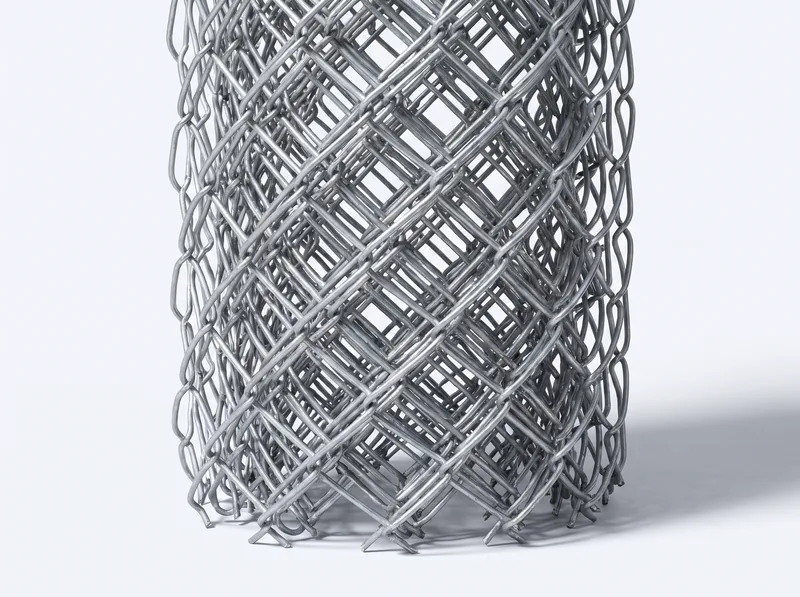
Mesh 20–60 · Ø1.4–3.0 · black · galvanized · GOST 5336
Single-woven mesh with 20–60 mm openings from black and galvanized wire in rolls
Price request
Steel pricing depends on grade, size, tonnage and delivery terms on the day of contract. A number on the page would be wrong by the time you read it.
Request received