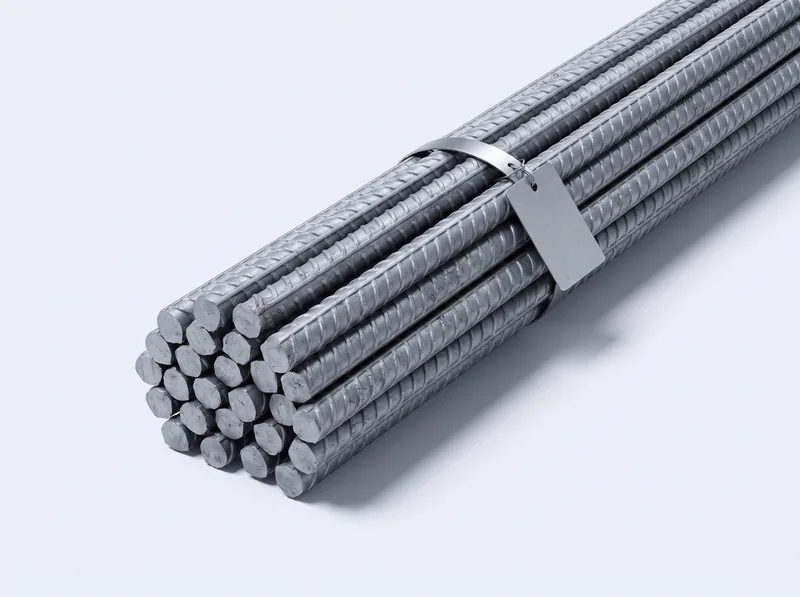
HRB400E · Ø6–50 · 9–12 m · GB/T 1499.2-2018
HRB400E rebar
Hot-rolled seismic grade 400 rebar to GB/T 1499.2-2018, Ø6–50 mm, the standard product of mills in China
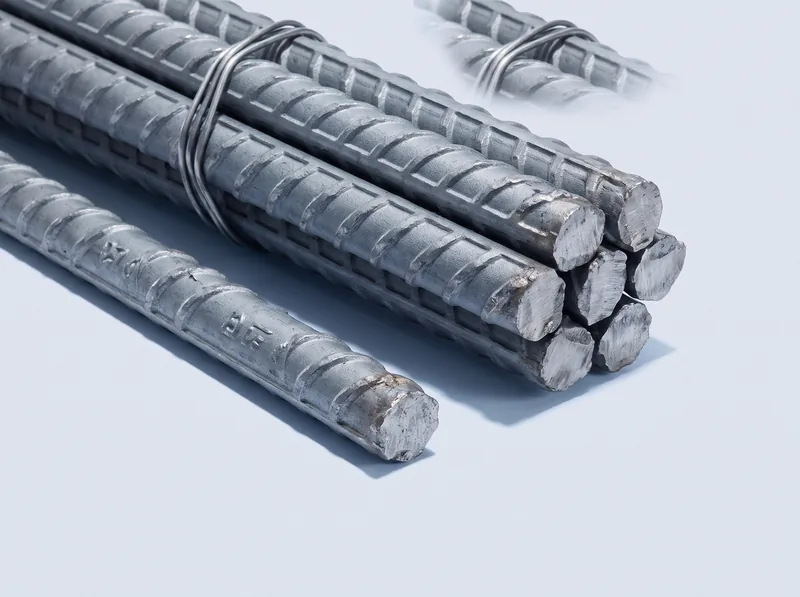
Grade 60 [420] · #10–#57 · 12 m · ASTM A615/A615M
Grade 60 [420] rebar to ASTM A615/A615M, sizes #10–#57 (9.5–57.3 mm), for projects to US codes
| Parameters | |
|---|---|
| Grade | Grade 60 [420] |
| Sizes | #10, #13, #16, #19, #22, #25, #29, #32, #36, #43, #57 |
| Nominal diameter | 9.5–57.3 mm |
| Length | 12 m, other lengths 6–18 m to specification |
| Yield strength | from 420 N/mm² (60 ksi) |
| Tensile strength | from 620 N/mm² (90 ksi) |
| Weldability | not provided for by the standard; for welding — ASTM A706 |
| Ø, mm | Weight, kg/m | Metres per tonne |
|---|---|---|
| 9.5 | 0.556 | 1 797 |
| 12.7 | 0.994 | 1 006 |
| 15.9 | 1.56 | 641.6 |
| 19.1 | 2.25 | 444.6 |
| 22.2 | 3.04 | 329.1 |
| 25.4 | 3.98 | 251.4 |
| 28.7 | 5.08 | 196.9 |
| 32.3 | 6.43 | 155.5 |
| 35.8 | 7.9 | 126.6 |
| 43 | 11.4 | 87.7 |
| 57.3 | 20.2 | 49.4 |
Theoretical weight at steel density 7.85 g/cm³. Actual batch weight is by scale and mill certificate.
Grade 60 [420] is the principal rebar grade under ASTM A615/A615M with a yield strength of 420 N/mm² (60 ksi) or more and a tensile strength of 620 N/mm² or more. Elongation on a 200 mm gauge length is 9 % or more for sizes #10–#19, 8 % or more for #22 and #25, and 7 % or more for #29–#57. Sizes are designated by number: the metric number equals the nominal diameter rounded to the millimetre — #10 is 9.5 mm, #13 is 12.7 mm, #57 is 57.3 mm. The standard is used in projects to ACI 318 and in supplies to customers in the Gulf states, Africa and Latin America.
It is hot-rolled from carbon steel; of the chemical composition the standard limits only phosphorus — to 0.06 % — and does not set a carbon equivalent, so A615 rebar is not intended for welding. For welded connections ASTM A706 with controlled composition is used; the choice between A615 and A706 is made by the structural designer. The ribs are transverse at an angle to the axis, with or without longitudinal ribs; the mill designation, size number, the letter S as the A615 standard mark and the grade mark — the figure 4 or a single longitudinal line — are rolled into the bar.
During inspection at the mill the bureau checks the mill test certificate (MTC) for every heat — phosphorus content, tensile and bend tests, marking — against the bundle tag and the rolled-in S and 4 marks on the bar. The core diameter and rib spacing are measured with a calliper, the rib height with a micrometer, and the weight of a one-metre sample on scales against the nominal weight; the standard permits the actual weight to deviate by up to −6 % from nominal. Lengths, strapping and tags are checked; the result is an inspection report with photographs.
Bundles of 2–3 t strapped with steel band, mill tag with grade, size number, heat number, length and weight.
| GOST | GB (China) | ASTM | EN | Note |
|---|---|---|---|---|
| A240 (GOST 34028), A-I (GOST 5781) | HPB300 (GB/T 1499.1) | Grade 40 [280] | — | Plain round bar. Yield strengths differ: 240, 300 and 280 N/mm². |
| A400 (GOST 34028) | HRB400 / HRB400E | Grade 60 [420] | — | Nearest equivalents by yield strength of 400–420 N/mm². Grade 60 under ASTM A615 is not intended for welding. |
| A-III / A400 (GOST 5781, 25G2S, 35GS) | HRB400 / HRB400E | Grade 60 [420] | — | Nearest equivalent. Steel 35GS has limited weldability; HRB400 is rolled from microalloyed steel with a carbon equivalent of up to 0.54 %. The GOST 5781 rib pattern is herringbone, the GB pattern is crescent. |
| A500C (GOST 34028) | HRB500 / HRB500E | Grade 75 [520] | B500B | B500B (BS 4449, DIN 488 within EN 10080) is the equivalent by yield strength of 500 N/mm²; HRB500E and Grade 75 are the nearest equivalents. A500C is weldable, carbon equivalent up to 0.52 %. |
| A500C (GOST 34028) | HRB400E | Grade 60 [420] | B500B | Replacing A500C with HRB400E lowers the design strength and requires the reinforcement to be recalculated — only with the structural designer's approval. |
| A600 (GOST 34028) | HRB600 | Grade 80 [550] | — | Nearest equivalents: yield strength 600, 600 and 550 N/mm². |
Equivalents are the closest match, not identical: chemistry and tolerances differ between standards. The exact grade and standard are written into the contract.
HRB400E · Ø6–50 · 9–12 m · GB/T 1499.2-2018
Hot-rolled seismic grade 400 rebar to GB/T 1499.2-2018, Ø6–50 mm, the standard product of mills in China
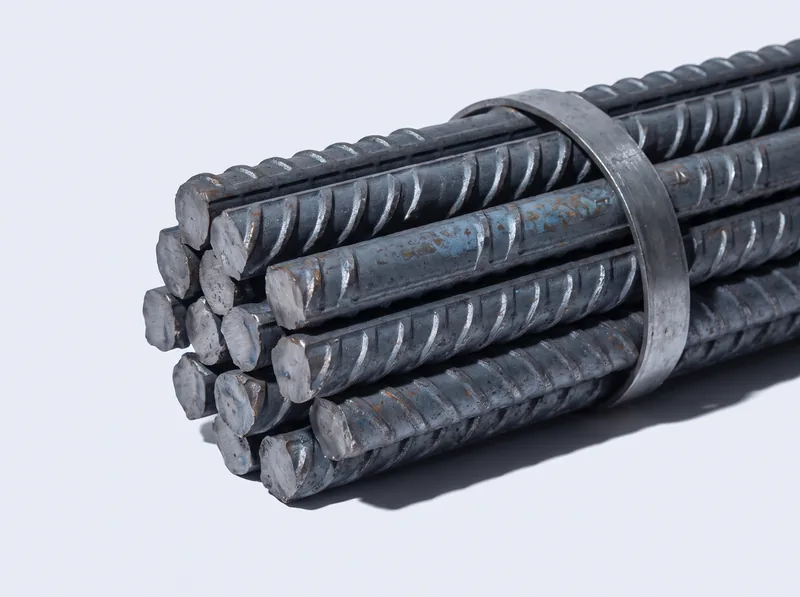
A500C · Ø6–40 · 6–12 m · GOST 34028-2016
Weldable grade 500 rebar to GOST 34028-2016, crescent rib pattern, Ø6–40 mm, from mills in China
Price request
Steel pricing depends on grade, size, tonnage and delivery terms on the day of contract. A number on the page would be wrong by the time you read it.
Request received