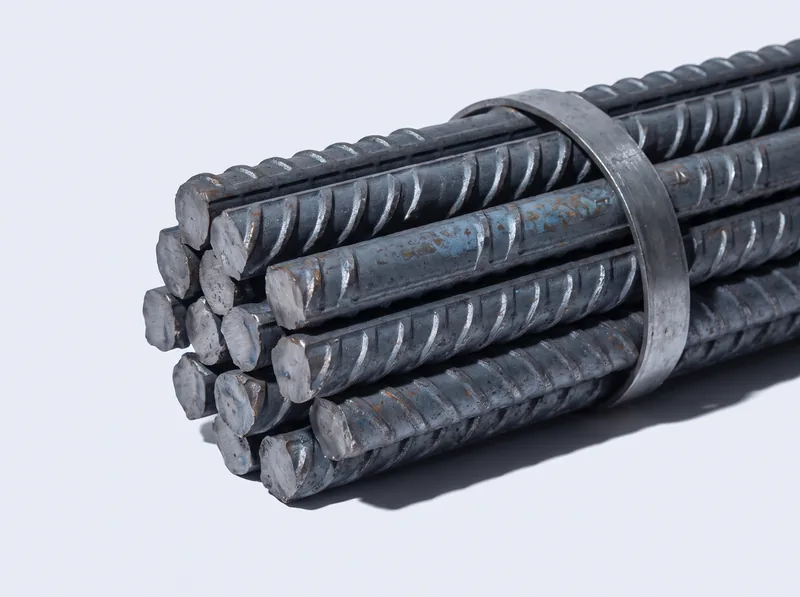
A500C · Ø6–40 · 6–12 m · GOST 34028-2016
A500C rebar
Weldable grade 500 rebar to GOST 34028-2016, crescent rib pattern, Ø6–40 mm, from mills in China
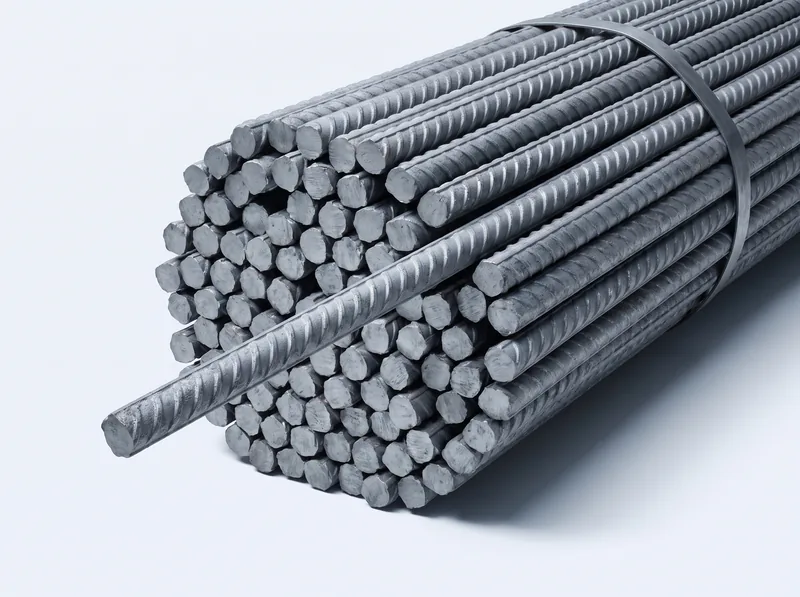
A400 (A-III) · Ø6–40 · 25G2S, 35GS · GOST 5781-82
Hot-rolled grade A-III rebar to GOST 5781-82 from steel 25G2S and 35GS, herringbone rib pattern, Ø6–40 mm
| Parameters | |
|---|---|
| Grade | A-III (A400) |
| Steel grade | 25G2S, 35GS |
| Diameter | 6–40 mm |
| Length | 6–12 m fixed length, 11.7 m; Ø6–8 mm in coils |
| Yield strength | from 390 N/mm² |
| Tensile strength | from 590 N/mm² |
| Rib pattern | two longitudinal ribs, transverse ribs on opposing helical lines — “herringbone” |
| Ø, mm | Weight, kg/m | Metres per tonne |
|---|---|---|
| 6 | 0.222 | 4 505 |
| 8 | 0.395 | 2 534 |
| 10 | 0.617 | 1 622 |
| 12 | 0.888 | 1 126 |
| 14 | 1.21 | 827.5 |
| 16 | 1.58 | 633.6 |
| 18 | 2 | 500.6 |
| 20 | 2.47 | 405.5 |
| 22 | 2.98 | 335.1 |
| 25 | 3.85 | 259.5 |
| 28 | 4.83 | 206.9 |
| 32 | 6.31 | 158.4 |
| 36 | 7.99 | 125.2 |
| 40 | 9.86 | 101.4 |
Theoretical weight at steel density 7.85 g/cm³. Actual batch weight is by scale and mill certificate.
A400 is a rebar grade with a yield strength of 390 N/mm² or more, designated A-III in GOST 5781-82. Tensile strength is 590 N/mm² or more, elongation δ5 is 14 % or more, and the cold bend test is 90° around a mandrel of 3d diameter. The strength comes from alloying the steel rather than from heat treatment, so the mechanical properties are retained under heating and welding.
It is hot-rolled from low-alloy steel 25G2S or 35GS — manganese and silicon provide the strength, with carbon content of 0.20–0.29 % and 0.30–0.37 % respectively. The GOST 5781 pattern is two longitudinal ribs and transverse ribs running along helical lines towards each other — the herringbone pattern. Steel 25G2S is weldable by all methods, 35GS to a limited extent: by resistance welding, while arc welding is by a procedure agreed with the structural designer or with replacement by 25G2S.
During inspection at the mill the bureau checks the steel grade on the mill test certificate (MTC) against the order — for welded cages specifically 25G2S is confirmed — and the heat number against the bundle tag. The diameter is measured with a calliper over the longitudinal ribs and at the core, the height of the transverse ribs with a micrometer, and the weight of a one-metre sample on scales. Lengths, bundle strapping and the rolled-in marks on the bar are checked; the inspection report with photographs is attached to the shipping documents.
Bundles of 2–3 t strapped with steel band, mill tag with grade, steel grade, diameter, heat number and weight; Ø6–8 mm in coils.
| GOST | GB (China) | ASTM | EN | Note |
|---|---|---|---|---|
| A240 (GOST 34028), A-I (GOST 5781) | HPB300 (GB/T 1499.1) | Grade 40 [280] | — | Plain round bar. Yield strengths differ: 240, 300 and 280 N/mm². |
| A400 (GOST 34028) | HRB400 / HRB400E | Grade 60 [420] | — | Nearest equivalents by yield strength of 400–420 N/mm². Grade 60 under ASTM A615 is not intended for welding. |
| A-III / A400 (GOST 5781, 25G2S, 35GS) | HRB400 / HRB400E | Grade 60 [420] | — | Nearest equivalent. Steel 35GS has limited weldability; HRB400 is rolled from microalloyed steel with a carbon equivalent of up to 0.54 %. The GOST 5781 rib pattern is herringbone, the GB pattern is crescent. |
| A500C (GOST 34028) | HRB500 / HRB500E | Grade 75 [520] | B500B | B500B (BS 4449, DIN 488 within EN 10080) is the equivalent by yield strength of 500 N/mm²; HRB500E and Grade 75 are the nearest equivalents. A500C is weldable, carbon equivalent up to 0.52 %. |
| A500C (GOST 34028) | HRB400E | Grade 60 [420] | B500B | Replacing A500C with HRB400E lowers the design strength and requires the reinforcement to be recalculated — only with the structural designer's approval. |
| A600 (GOST 34028) | HRB600 | Grade 80 [550] | — | Nearest equivalents: yield strength 600, 600 and 550 N/mm². |
Equivalents are the closest match, not identical: chemistry and tolerances differ between standards. The exact grade and standard are written into the contract.
A500C · Ø6–40 · 6–12 m · GOST 34028-2016
Weldable grade 500 rebar to GOST 34028-2016, crescent rib pattern, Ø6–40 mm, from mills in China
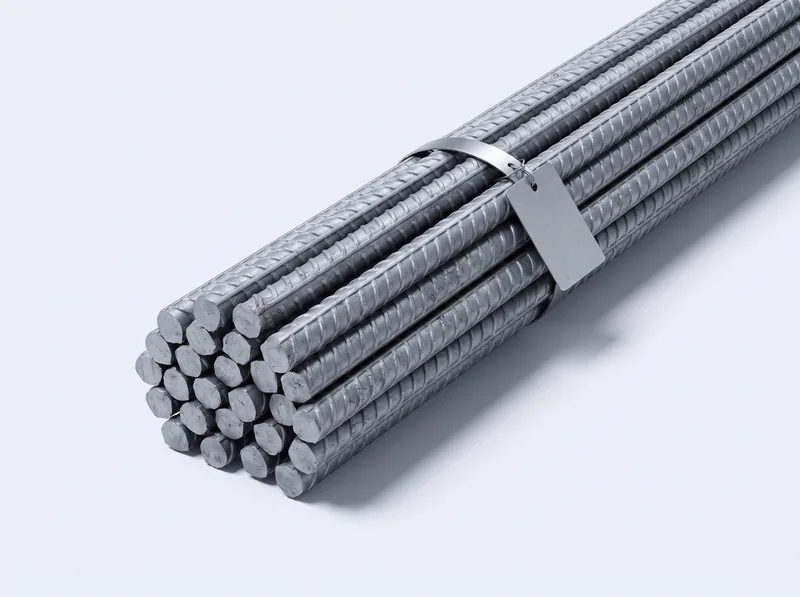
HRB400E · Ø6–50 · 9–12 m · GB/T 1499.2-2018
Hot-rolled seismic grade 400 rebar to GB/T 1499.2-2018, Ø6–50 mm, the standard product of mills in China
Price request
Steel pricing depends on grade, size, tonnage and delivery terms on the day of contract. A number on the page would be wrong by the time you read it.
Request received